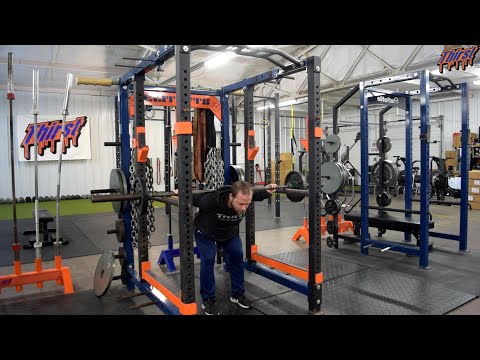
Good Morning Off Pins Overview
The good morning off pins builds strong hips and hamstrings. Your hamstrings are the back of your thighs. Your glutes are your butt muscles. Your lower back helps too. You use a barbell in a squat rack. Safety pins hold the bar at thigh height. You start each rep from the pins. Starting from the pins lets you begin from a dead stop. There is no bounce to help you. This makes your hamstrings and glutes work harder. It also teaches a strong, safe hip hinge. This move is for lifters with some training. Add the good morning off pins on leg days or back days.
What Is The Point of the Good Morning Off Pins?
The good morning off pins exercise builds serious hamstring and glute strength from a dead stop. It teaches you to hinge properly while crushing your posterior chain.
How To Do The Good Morning Off Pins
- Set the safety pins in a squat rack at about mid-thigh height and place a loaded barbell across them. Working off pins lets you start each rep from a dead stop and control the depth precisely.
- Duck under the bar and position it across your upper back, resting on your traps and rear delts, not on your neck. Grip the bar firmly to lock it against your back.
- Set your feet about hip to shoulder width apart and take the bar off the pins by standing up slightly, then step back a touch. Brace your core hard and set a proud chest.
- Take a big breath into your belly and brace as if bracing for a punch. This intra-abdominal pressure protects your lower back under the hinge.
- Begin the movement by pushing your hips back, keeping your chest up and a slight bend in your knees. Think of your hips traveling straight back, not down.
- Lower under control until you feel a strong stretch in your hamstrings, keeping your back flat and your spine neutral the whole way. Do not round your lower back to go deeper.
- Let the bar settle back onto the pins at the bottom of each rep. Starting from a dead stop removes the stretch reflex and forces your hamstrings and glutes to do the work.
- Drive your hips forward to stand back up, squeezing your glutes hard at the top. Keep your chest up and your back flat as you rise.
- Reset your brace and repeat from the pins each rep. This is a technical hinge, so keep the reps moderate at 5 to 8 for 3 to 4 sets and prioritize a flat back.
Good Morning Off Pins Form Tips
- Push your hips back to start the hinge.
- Keep your back flat, never rounded.
- Keep your chest up the whole time.
- Rest the bar on your upper back, not your neck.
- Bend your knees just a little.
- Lower until you feel your hamstrings stretch.
- Drive your hips forward to stand up.
- Keep your belly braced to protect your spine.
- Breathe in down, breathe out up.
Common Mistakes to Avoid for the Good Morning Off Pins
- Rounding your lower back to reach more depth. A rounded spine under a loaded bar is one of the fastest ways to hurt your lower back on any hinge. Keep your back flat and stop lowering the moment your spine wants to round.
- Turning it into a squat by bending your knees too much. Dropping your hips straight down shifts the work to your quads and defeats the purpose of the hinge. Keep your knees only slightly bent and push your hips straight back.
- Not bracing your core before you descend. Hinging with a loose midsection leaves your spine unprotected under load. Take a big breath, brace hard, and hold that tension through the whole rep.
- Going too heavy for the movement. The good morning is a technical exercise that punishes ego loading with back strain. Start light, master the hinge, and add weight slowly as your form holds.
- Resting the bar on your neck instead of your upper back. Placing the bar too high sits it on bony, vulnerable structures and feels awful. Rack it across your traps and rear delts on the meaty part of your upper back.
- Losing your chest position and folding forward. Letting your chest cave down rounds your upper back and shifts strain to your spine. Keep your chest proud and your upper back tight throughout.
- Bouncing off the pins instead of controlling the start. Slamming the bar down and rebounding off the pins defeats the dead-stop purpose and can jar your spine. Let the bar settle, then start each rep from a controlled dead stop.
- Hyperextending your lower back at the top. Cranking into a big back arch to finish loads your spine instead of your glutes. Stand tall and squeeze your glutes to a neutral, upright finish without overarching.
- Setting the pins at the wrong height. Pins set too low tempt you into ranges you cannot control with a flat back. Set them so you reach a strong hamstring stretch while keeping your spine neutral.
- Holding your breath poorly or exhaling at the bottom. Losing your brace at the deepest, most loaded point is exactly when your spine is most at risk. Keep your breath held and braced until you are driving back up.
- Letting the bar drift away from your body. If the bar slides up your back or your torso pitches too far, the load pulls harder on your spine. Keep the bar locked to your upper back and your torso controlled.
Good Morning Off Pins Workout Tips
- Use the pins to start every rep from a dead stop. Removing the stretch reflex forces your hamstrings and glutes to do the real work and builds strength right out of the bottom.
- Keep the movement a true hip hinge, not a squat. Pushing your hips straight back with soft knees loads your hamstrings and glutes and keeps the emphasis where it belongs.
- Brace hard before every rep. A big breath and a tight core turn your trunk into a rigid pillar that protects your lower back under the loaded hinge.
- Keep your back flat and your spine neutral. A flat back is non-negotiable here, so stop lowering the instant your spine wants to round rather than chasing extra depth.
- Start light and earn your load. The good morning rewards patience and punishes ego, so master the hinge with a modest bar before adding real weight.
- Set the pins to reach a strong hamstring stretch. The right pin height lets you load the stretch fully while keeping your spine safe from a dead-stop start.
- Program it as accessory hamstring and glute work. It fits well after your main squat or deadlift when you want to build the posterior chain and reinforce your hinge.
- Squeeze your glutes hard at the top. Finishing with a strong glute contraction, without overarching, teaches you to lock out powerfully and safely.
- Keep the reps moderate, around 5 to 8. This range lets you build strength while keeping your technique sharp on a movement that demands a flat back.
- Feel the stretch in your hamstrings on the way down. Chasing that stretch tension helps you target the hamstrings and confirms you are hinging rather than squatting.
- Use it to strengthen your deadlift and squat. The dead-stop hinge builds a powerful posterior chain and reinforces the flat-back position both lifts depend on.
- Rest the bar on your upper back, not your neck. Placing it on your traps and rear delts is more comfortable and keeps the load off vulnerable structures.
- Film yourself from the side. Video is the best way to check whether your back stays flat and your hips are truly moving back on a hinge.
- Add weight in small, honest steps. Progressive overload builds the posterior chain, but only if you keep your flat-back form, so bump the load up gradually.
- Keep your core braced until you are back at the top. Holding your brace through the hardest, deepest part of the lift is what protects your spine.
- Do not train this to failure. Grinding ugly reps on a spinal-loading hinge is asking for a back tweak, so stop while your form is still crisp.








Questions & Comments
Be the first to ask a question about this exercise.