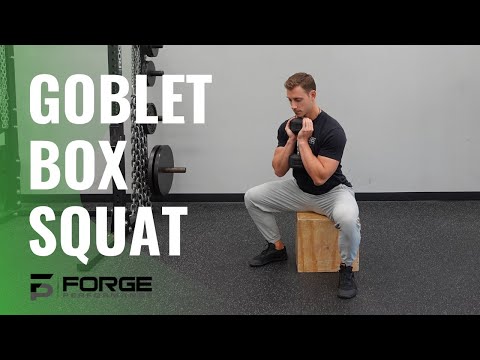
Dumbbell Goblet Box Squat Overview
The dumbbell goblet box squat is a leg move. You hold one dumbbell at your chest. You squat down to sit on a box, then stand back up. It works your quads, the big muscles on the front of your thighs. It also works your glutes, hamstrings, and core. You need a dumbbell and a box or bench. This move is great for learning to squat. The box teaches you how low to go. It also teaches you to sit back with your hips. This keeps your knees and back safe. It fits well on leg days. The dumbbell goblet box squat is perfect for beginners. Older lifters like it too.
What Is The Point of the Dumbbell Goblet Box Squat?
The dumbbell goblet box squat builds leg strength while teaching proper squat depth. The box helps you nail perfect form every time.
How To Do The Dumbbell Goblet Box Squat
- Set a box or bench behind you at a height that puts your thighs roughly parallel to the floor when you sit. Hold a single dumbbell vertically against your chest, cupping the top head with both hands like a goblet.
- Stand just in front of the box with your feet about shoulder width apart and your toes turned slightly out. Keep your elbows tucked in and the dumbbell snug against your sternum.
- Take a big breath into your belly and brace your core hard. Set your chest tall and pull your shoulders back so your upper body stays upright throughout the squat.
- Begin by pushing your hips back toward the box, then bend your knees to lower. Sitting the hips back first grooves the hip hinge and keeps your knees tracking over your toes.
- Descend under control until you sit fully onto the box. Settle your weight down but do not flop or crash, since a hard drop can jar your spine.
- Pause briefly on the box while staying tight. Keep your chest up, your core braced, and your shins in a good position. This pause kills momentum and teaches you to squat from a dead stop.
- Drive up by pushing your feet hard into the floor, leading with your chest and squeezing your glutes as you reach the top. Do not let your knees cave inward as you stand.
- Exhale through the hardest part of the drive and stand tall with your glutes fully squeezed. This is a great beginner squat for learning depth and control, so work in the 8 to 12 rep range for 3 to 4 sets.
Dumbbell Goblet Box Squat Form Tips
- Hold the dumbbell tight against your chest.
- Keep your chest up the whole time.
- Push your hips back as you lower.
- Keep your knees in line with your toes.
- Drive through your heels to stand.
- Keep your core tight to protect your back.
- Sit lightly on the box. Stay in control.
- Breathe in on the way down. Breathe out on the way up.
- Keep your feet flat on the floor.
Common Mistakes to Avoid for the Dumbbell Goblet Box Squat
- Crashing down onto the box. Flopping onto the box in a relaxed heap compresses your spine and loads it while your core is soft, which is a real injury risk. Sit down under control, staying braced the whole way, and settle rather than drop.
- Losing tension while sitting on the box. Relaxing once you touch the box means you start the drive from a loose, unsupported position. Stay tight and braced through the pause so you can explode up safely from the bottom.
- Letting the knees cave inward. When the knees collapse toward each other on the way up, you put the joint in a weak, strained position and lose power. Push your knees out to track over your toes and squeeze your glutes as you stand.
- Rounding the lower back. A rounded spine under load, especially as you sit and stand, strains the discs and robs the lift of power. Keep your chest tall, brace your core, and hold a neutral spine throughout.
- Letting the dumbbell drift away from your chest. If the goblet floats forward it pulls you into a hunch and stresses your back. Keep the dumbbell pinned tight to your sternum with your elbows tucked so your torso stays upright.
- Not pushing the hips back first. Diving straight down by bending only at the knees pushes them far forward and skips the hip hinge. Initiate by sitting your hips back toward the box to load your glutes and hamstrings properly.
- Setting the box too low too soon. A box that drops you below a safe depth before you have the mobility can round your back and stress your knees. Start with a box near parallel and lower it only as your control improves.
- Coming up on your toes. Shifting your weight forward onto the balls of your feet makes you unstable and puts the drive in the wrong place. Keep your weight through your whole foot and drive up through your heels and midfoot.
- Bouncing off the box for momentum. Rocking back and springing off the box uses momentum instead of your muscles and can hurt your lower back. Come to a genuine pause, then drive up from a dead stop.
- Holding your breath the entire set. Failing to reset your breath between reps means you lose your brace and your stability. Take a fresh breath and re-brace at the top before each rep for a solid trunk.
- Letting the chest collapse forward. If your chest drops as you stand, the bar of tension shifts to your lower back. Lead the ascent with your chest up and keep your torso as vertical as the movement allows.
Dumbbell Goblet Box Squat Workout Tips
- Use the box to lock in consistent depth. Sitting to the same box every rep teaches you exactly how far to descend, which is why this is one of the best squats for beginners learning to hit depth.
- Push your hips back to the box first. Leading with the hips grooves a proper hip hinge and keeps your knees from sliding too far forward, building a squat pattern that carries over to heavier lifts.
- Keep the dumbbell glued to your chest. The goblet position acts like a counterbalance that helps you stay upright, so hold it tight to your sternum with your elbows tucked and let it keep your torso vertical.
- Pause on the box under full tension. A genuine pause kills the bounce and forces your muscles to drive from a dead stop, which builds real starting strength out of the hole.
- Drive your knees out on the way up. Pushing the knees out to track over your toes keeps the joint safe and lets your glutes contribute fully to the drive.
- Brace hard before every rep. A big breath into the belly and a tight core create a stable trunk that protects your spine and lets you produce more force.
- Start with a higher box and progress lower. As your mobility and control improve, lower the box gradually to increase depth, using the box height as your progression dial.
- Squeeze your glutes at the top. Finishing each rep with a firm glute contraction reinforces full hip extension and gets more out of the muscle you are trying to build.
- Keep your weight through your whole foot. Driving up through your heels and midfoot keeps you stable and puts the power where it belongs, so avoid rolling forward onto your toes.
- Program this as a main lower body lift for beginners. Its built in depth control and upright torso make it a great teaching squat, so use it early in a leg session before fatigue sets in.
- Progress the load in small jumps. Once your form is clean, add a little weight to the dumbbell over time. Progressive overload done patiently is what builds stronger legs.
- Use it to fix a fear of squatting deep. The box gives you a target to sit to, which builds confidence in the bottom position that transfers to free squats.
- Keep a slight outward toe angle. Turning the toes out a touch opens the hips and lets you sit down comfortably while keeping the knees tracking over the feet.
- Try tempo squats for extra challenge. Lowering slowly over 3 seconds to the box adds time under tension and hammers your quads and glutes without needing more weight.
- Film from the side to check depth and back position. A quick video shows whether you are rounding, caving, or crashing far better than how it feels in the moment.
- Do not train to failure every set. Leaving a rep or two in the tank keeps your squat form sharp and lets you recover to train legs hard again soon.
- Be patient building your squat. Solid technique and steady depth come with consistent practice, so treat the box squat as the foundation that makes every other squat better.








Questions & Comments
Be the first to ask a question about this exercise.