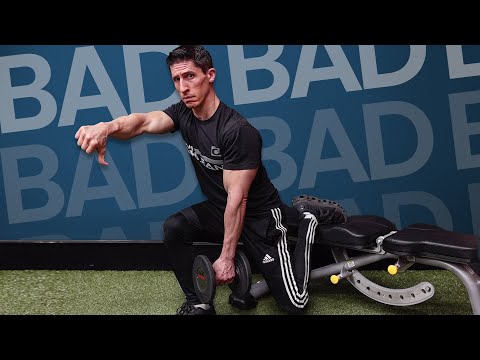
Dumbbell Squat to Bench Overview
The dumbbell squat to bench is a full-body power move. It works your quads, the big muscles on the front of your thighs. It also uses your glutes, hamstrings, and shoulders. You need two dumbbells and a bench. You squat to the bench, then stand and press the weights up. This move builds legs and shoulders at once. The bench gives you a depth to aim for each rep. It gets your heart pumping too. The dumbbell squat to bench suits lifters who know squats and presses. Use it on a leg day or a full-body day. It builds power and burns a lot of energy.
What Is The Point of the Dumbbell Squat to Bench?
The dumbbell squat to bench exercise builds leg strength while adding an overhead press to work your shoulders. It's a compound move that hits multiple muscles.
How To Do The Dumbbell Squat to Bench
- Set a bench behind you and stand in front of it holding a dumbbell in each hand at shoulder height. Set your feet about shoulder-width apart with your toes slightly out.
- Bring the dumbbells up to your shoulders in a front rack position, palms facing in or slightly forward. Keep your elbows up and your chest tall.
- Brace your core and take a breath into your belly. Set your shoulders back and keep your chest proud so your torso stays upright.
- Lower into a squat by pushing your hips back and bending your knees, keeping your chest up and your knees tracking over your toes. Descend under control toward the bench.
- Let your glutes lightly touch the bench without fully sitting down and releasing the tension. The bench is a depth target, not a rest stop.
- Drive through your heels to stand up explosively, using that power to press the dumbbells overhead in one smooth motion. Time the press to the top of your stand.
- Lock out the overhead press with the dumbbells stacked over your shoulders, then bring them back down to your shoulders under control. Keep your core tight through the press.
- Reset the dumbbells at shoulder height as you prepare for the next rep. Keep your torso upright the whole time so you do not fold forward under the load.
- Repeat the movement, touching the bench lightly each time without fully sitting, for around 8 to 12 reps. This is a full-body combo, so keep the flow smooth and controlled.
Dumbbell Squat to Bench Form Tips
- Touch the bench lightly. Do not sit down and rest.
- Push through your heels to stand. Do not roll to your toes.
- Track your knees over your toes. Do not let them cave in.
- Keep your chest up the whole time. Do not fold forward.
- Press the dumbbells straight up. Bring them over your head.
- Time the press with your stand. Make it one smooth move.
- Breathe in as you squat. Breathe out as you stand and press.
- Keep your belly tight and braced. This guards your back.
- Keep your whole foot planted. Do not lift your heels.
Common Mistakes to Avoid for the Dumbbell Squat to Bench
- Fully sitting down and resting on the bench. Plopping onto the bench and relaxing kills the tension in your legs and turns a smooth combo into a stop-start grind. Touch lightly and keep tension so you can drive right back up.
- Letting your knees cave inward as you squat or stand. Knees collapsing in under load stresses the joint and leaks power. Drive your knees out in line with your toes through the whole rep.
- Rounding forward under the load. Folding at the chest turns the squat into a good-morning and strains your lower back. Keep your chest up and your torso upright, especially with the weight racked at your shoulders.
- Pressing before you finish standing. Trying to press overhead while still rising throws off your balance and your bar path. Complete the stand, then press, letting the leg drive flow into the press.
- Going too heavy for the overhead press. Your press is weaker than your squat, so a weight your legs can handle may crush your shoulders. Pick a load your overhead press can manage cleanly for all your reps.
- Cutting the squat depth short. Doing a half squat to the bench height skips the range that builds your quads and glutes. Set the bench so a full touch puts your thighs at least parallel.
- Losing your core brace during the press. A soft core lets your lower back arch as you push overhead, which risks injury. Keep your abs braced so your spine stays neutral through the whole combo.
- Letting the dumbbells drift forward overhead. Pressing the weights out in front of you instead of stacking them over your shoulders strains the shoulders and back. Press straight up so the dumbbells finish over your ears.
- Bouncing off the bench to save momentum. Springing off the bench uses rebound rather than muscle and can jar your spine. Control the descent and drive up under your own power.
- Rushing the reps and losing form. Speeding through a compound combo is how technique falls apart and injuries happen. Keep a controlled, smooth rhythm and reset your position each rep.
- Flaring elbows and losing the rack position. Letting your elbows drop and the dumbbells sag makes the press unstable. Keep your elbows up and the dumbbells set at your shoulders between reps.
Dumbbell Squat to Bench Workout Tips
- Treat this as a full-body combo and pace it accordingly. It trains your legs, shoulders, and core together, so use a weight your overhead press can handle rather than your squat.
- Touch the bench lightly, do not sit and rest. The bench is a depth marker that keeps your reps consistent, so kiss it and drive back up.
- Time the press to the top of your stand. Letting the momentum from your legs flow into the press is what makes this move efficient and powerful.
- Keep your chest up and torso upright throughout. A tall torso keeps the load off your lower back and lets you press cleanly overhead.
- Drive your knees out over your toes. Guarding against the knees caving in protects the joint and keeps your leg drive strong.
- Brace your core hard through the whole rep. A tight trunk protects your spine as you transition from the squat into the overhead press.
- Press the dumbbells straight up over your shoulders. Finishing with the weights stacked over your ears keeps your shoulders safe and your press stable.
- Use it as a conditioning and strength combo. The full-body nature makes it great for a metabolic finisher or a time-efficient workout with a big carryover.
- Work in the 8 to 12 rep range for 3 to 4 sets. That range builds strength and gets your heart rate up without your form falling apart.
- Keep the depth honest with the bench height. Set the bench so a full touch lands your thighs at parallel or just below.
- Keep your elbows up in the rack between reps. A solid front rack sets up a clean, strong press every time.
- Move with a smooth, controlled rhythm. This is a flow movement, so link the squat and press together rather than pausing awkwardly in the middle.
- Progress by adding small load or reps over time. Steady overload drives the gains, but only add weight your press can still handle.
- Regress to a squat and press done as separate movements if the combo feels rushed. Grooving each half first builds the coordination for the full flow.
- Keep breathing through the reps. Brace and breathe out through the hardest parts so you do not gas out or get lightheaded.
- Stay consistent and controlled. A strong, coordinated squat to press builds athletic, full-body strength that carries over to real life and sport.








Questions & Comments
Be the first to ask a question about this exercise.