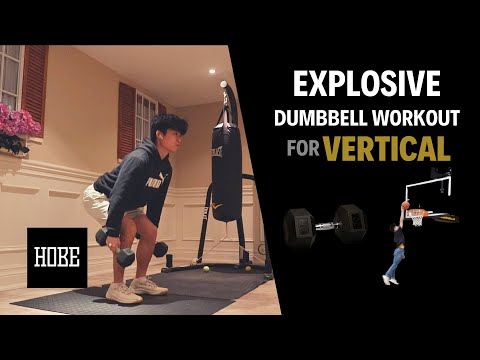
Dumbbell Jumping Squat Overview
The dumbbell jumping squat is a fast, powerful leg move. You hold dumbbells and jump out of a squat. It works your quads and glutes. The quads are the muscles on the front of your thighs. The glutes are your butt muscles. Your calves and hamstrings help too. You need a pair of dumbbells for this move. The dumbbell jumping squat builds power and strong legs. The jump trains your muscles to fire fast. This helps in sports and other big lifts. It also gets your heart pumping. This move is best once your squat form is solid. Add it early in a leg day when you are fresh. Use a light or medium weight to stay safe.
What Is The Point of the Dumbbell Jumping Squat?
The dumbbell jumping squat builds explosive power in your legs while burning serious calories. It combines strength and cardio in one move.
How To Do The Dumbbell Jumping Squat
- Grab a pair of light to moderate dumbbells and hold them either at your shoulders or hanging by your sides. Stand with your feet about shoulder-width apart and your toes pointed slightly out.
- Set your core hard and pull your shoulders back so the dumbbells stay steady. This is an explosive move, so a tight trunk keeps you controlled and protects your spine.
- Take a breath and brace, then lower into a squat by pushing your hips back and bending your knees. Keep your chest up and your weight balanced through your midfoot.
- Descend to about parallel or a touch above, keeping your knees tracking in line with your toes. Do not collapse into a slow deep squat, since you want to load the muscles like a spring.
- Explode upward as fast as you can, driving through your whole foot and extending your hips and knees to jump off the floor. Keep the dumbbells secure and close to your body as you rise.
- Leave the ground with power, staying tall and balanced in the air. Do not let the weights swing wildly or throw you off line.
- Land softly on the balls of your feet first, then let your heels settle, and immediately absorb the impact by bending your knees and hips. Soft landings save your joints from the pounding.
- Flow straight from the landing into the next squat, using that absorbed depth to load the next jump. Keep every rep crisp rather than mushing them together.
- Because this is explosive, keep the reps lower, around 5 to 10 per set, and stop the set the moment your jumps get slow or your landings get sloppy.
Dumbbell Jumping Squat Form Tips
- Keep your chest up the whole time.
- Push your hips back as you lower.
- Track your knees over your toes.
- Land soft with bent knees. Never land stiff.
- Jump with power but stay in control.
- Keep the dumbbells still and close.
- Set your core tight to protect your back.
- Breathe out as you jump up.
- Land on the balls of your feet, then your heels.
- Reset your stance before each jump.
Common Mistakes to Avoid for the Dumbbell Jumping Squat
- Using dumbbells that are too heavy. Loading up kills your jump height and turns a fast, springy move into a grind that pounds your joints. Keep the weight light to moderate so you can still explode and land softly.
- Landing stiff-legged and hard. Crashing down on straight legs sends the impact straight into your knees, hips, and spine. Land on the balls of your feet and immediately bend your knees and hips to absorb the force.
- Squatting too deep before the jump. Sinking into a slow, deep bottom position kills the stretch-reflex that powers the jump. Drop to about parallel and reverse quickly so your muscles fire like a spring.
- Letting your knees cave inward. Knees collapsing in on the landing or the drive stresses the joint and leaks power. Push your knees out in line with your toes on every rep.
- Rounding your back under the load. Losing your neutral spine while holding dumbbells and jumping is a recipe for a back tweak. Brace your core hard and keep your chest up throughout.
- Letting the dumbbells swing around. Weights flying away from your body throw off your balance and can wrench your shoulders. Keep them locked at your shoulders or pinned at your sides.
- Grinding out too many reps. Pushing high reps on an explosive move means your later jumps are slow and your landings sloppy, which raises injury risk. Keep sets short and stop when power drops.
- Looking down at your feet. Dropping your head pulls your chest forward and hurts your balance in the air. Keep your eyes forward and your torso tall.
- Holding your breath the whole set. No air leaves you weak and shaky by the last reps. Breathe with the rhythm so you stay powerful and controlled.
- Doing them when your legs are already fried. Explosive work needs fresh muscles, so tacking these onto the end of a brutal leg day means garbage reps. Program them early when you can actually jump well.
- Ignoring the landing and only chasing height. Obsessing over how high you jump while landing carelessly is how knees and ankles get hurt. Treat a soft, controlled landing as the most important part of the rep.
Dumbbell Jumping Squat Workout Tips
- Keep the load light to moderate. This is a power move, so the goal is fast, high jumps with soft landings, not grinding heavy squats.
- Land soft on the balls of your feet, then absorb through your knees and hips. Good landing mechanics are the single biggest thing protecting your joints on jumps.
- Drive through your whole foot to explode up. Pushing the floor away hard recruits the quads and glutes for maximum power.
- Reverse quickly out of the bottom to use the stretch reflex. Loading and firing like a spring is what makes the jump explosive.
- Keep your knees tracking over your toes on the way down and up. Good knee alignment keeps power flowing and the joints safe.
- Program these early in your session when you are fresh. Explosive training needs a rested nervous system to produce real power and clean landings.
- Keep sets short, around 5 to 10 reps. Stop the moment your jumps slow down, since quality reps build power and sloppy ones build injuries.
- Use these to build athletic power and explosiveness. Jump squats carry over to sprinting, sports, and a stronger regular squat.
- Progress by jumping higher or adding a little weight, not by piling on reps. More height with clean landings is the real measure of getting better.
- Brace your core hard on every rep. A tight trunk protects your spine and gives the legs a stable base to drive from.
- Try pairing light jump squats with heavy squats in a contrast set. Doing the explosive move after a heavy one can wake up your fast-twitch fibers and boost power.
- Keep the dumbbells close and secure. Weights pinned to your body keep you balanced in the air and off your shoulders.
- Film yourself from the side occasionally. Video shows stiff landings and caving knees that you cannot feel mid-jump.
- Give yourself full rest between sets. Power work needs recovery, so resting a couple of minutes keeps each set explosive.
- Skip these if your knees or ankles are hurt. Impact work is unforgiving on cranky joints, so build a base with regular squats first.
- Warm up thoroughly before jumping. A few minutes of movement and some bodyweight squats prime your muscles and joints for explosive work.








Questions & Comments
Be the first to ask a question about this exercise.