Deadlift Overview
The deadlift is a lift where you pull a bar off the floor. You stand up with a heavy bar in your hands. It builds your hamstrings and glutes. Your hamstrings run down the back of your thighs. Your glutes are your butt muscles. It also works your lower back, traps, and forearms. You need a barbell and some weight plates. The deadlift is one of the best full body lifts. It builds a strong back, hips, and grip. It teaches you to lift heavy things safely. This lift is for people past the beginner stage. It fits on pull days or leg days. Learn the form well before you go heavy.
What Is The Point of the Deadlift?
The deadlift builds total-body strength by working your biggest muscle groups at once. It makes you stronger for daily activities and builds serious muscle.
How To Do The Deadlift
- Stand with your mid-foot under the barbell and your feet hip-width apart, with your toes forward or slightly out. The bar should sit about an inch from your shins.
- Hinge at your hips and bend your knees to grip the bar just outside your legs with a double overhand grip. Reach down to the bar rather than pulling it toward you.
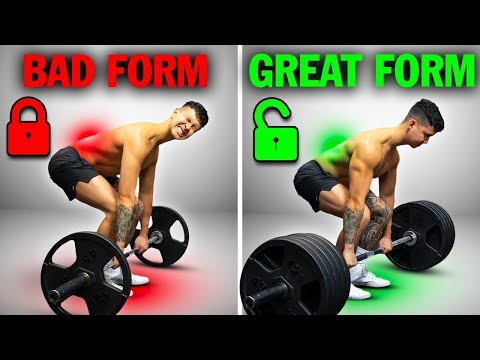
- Drop your hips until your shins touch the bar, with your chest up and your back flat. Your shoulders should sit slightly in front of the bar in the start position.
- Pull the slack out of the bar by squeezing your grip, pulling your shoulder blades down, and taking tension until you hear the bar click against the plates. This tightens everything before you lift.
- Take a deep breath into your belly and brace your core hard, as if bracing for a punch. This pressure protects your spine when the load comes off the floor.
- Drive through your whole foot and push the floor away, keeping the bar dragging up your shins and thighs. Think about pushing the earth down rather than yanking the bar up.
- Keep your hips and shoulders rising together so your back angle stays constant off the floor. Do not let your hips shoot up first and leave your chest behind.
- Stand tall at the top by driving your hips through and squeezing your glutes, without leaning back or overextending your spine. The bar finishes against your upper thighs.
- Lower the bar by pushing your hips back first, then bending your knees once the bar passes them, controlling it back to the floor. Reset your setup each rep and work in the 3 to 6 rep range for strength.
Deadlift Form Tips
- Keep the bar close to your legs. Let it graze them the whole way.
- Keep your back flat the whole time. Never let it round.
- Lift your chest and set your shoulders over the bar. Do not slump.
- Push the floor away with your feet. Do not just yank with your back.
- Brace your core hard before you pull. Hold the air as you lift.
- Squeeze your glutes at the top. Do not lean back past straight.
- Keep your arms straight. They are just hooks, not pullers.
- Keep your neck in line with your spine. Do not crane up.
- Lower the bar with control. Do not drop it or round your back.
- Take tension out of the bar first. Then pull smooth, not jerky.
Common Mistakes to Avoid for the Deadlift
- Rounding your lower back. Letting your spine curve under a heavy bar is the most dangerous mistake on this lift. Brace hard, set your back flat before you pull, and keep it flat throughout, dropping the weight if you cannot hold position.
- Letting your hips shoot up first. When your hips rise faster than your chest, the bar drifts forward and your lower back takes over the lift. Keep your hips and shoulders rising together so your back angle stays constant off the floor.
- Starting with the bar too far from your shins. A bar out in front of you lengthens the lever on your back and makes the lift far harder and riskier. Set your mid-foot under the bar so it sits about an inch from your shins and drags up your legs.
- Jerking the bar off the floor. Yanking the weight with slack still in the bar jolts your spine and blows your position. Pull the slack out and build tension first, then drive smoothly so the bar breaks the floor under control.
- Hyperextending at the top. Leaning back and cranking your lower back into a big arch at lockout stresses your spine for no benefit. Finish by simply standing tall with your glutes squeezed and your ribs stacked over your hips.
- Not bracing hard enough. A soft core lets your spine move under load, which is exactly what you cannot afford here. Take a big breath into your belly and brace as if preparing for a punch before every single rep.
- Letting the bar drift away from your body. When the bar swings out in front, the strain on your lower back skyrockets. Engage your lats to keep the bar pinned to your legs, dragging it up your shins and thighs.
- Squatting the deadlift. Dropping your hips too low and trying to leg-press the bar up puts your hips in a weak position and makes the bar path awkward. Set your hips at a height where your shins touch the bar and your shoulders sit just ahead of it.
- Using straps before building grip. Reaching for straps too early means you never develop the raw grip that carries over to everything. Build your grip with double overhand and mixed grip first, then use straps only for your heaviest work.
- Bouncing reps off the floor. Slamming the bar down and rebounding it up removes the hard start and can wreck your position. Reset your setup on each rep so every pull starts from a controlled, braced position.
- Losing your lat tension. If your shoulders round forward, the bar drifts and your upper back gives out. Pull your shoulder blades down and keep your lats tight to hold the bar close throughout.
- Going too heavy too soon. Ego loading is what turns deadlifts from a great lift into an injury. Pick a weight you can pull with a flat back and good position, then add small increments as your strength climbs.
Deadlift Workout Tips
- Pull the slack out before you lift. Taking tension until the bar clicks against the plates tightens your whole body and removes the jarring start. This one habit makes every pull safer and stronger.
- Brace like you are about to be punched. A hard core brace with a big breath into your belly protects your spine when the load leaves the floor. Take that breath and lock it in before each rep.
- Keep the bar close to your body. Dragging the bar up your shins and thighs keeps it over your mid-foot and spares your lower back. Squeeze your lats to hold that path throughout the pull.
- Push the floor away. Thinking about driving your feet through the floor rather than yanking the bar up keeps your hips and chest rising together. This mental cue smooths out your bar path off the floor.
- Work in a lower rep range for strength. The deadlift is heavy and taxing, so 3 to 6 reps for a few sets suits it well. Very high-rep deadlifts get sloppy fast as fatigue rounds your back.
- Reset each rep for heavy work. Taking a fresh setup and brace on every rep keeps your position honest under big loads. Touch-and-go reps have their place, but a dead stop is safer when it is heavy.
- Build your grip before reaching for straps. A strong double overhand and mixed grip carry over to everything you lift. Save straps for your heaviest sets once your grip is genuinely the limit.
- Program it once or twice a week at most. The deadlift is demanding on your whole body and central nervous system, so it needs real recovery. One or two focused sessions a week is plenty for most lifters.
- Add weight in small honest jumps. Progressive overload here means creeping the bar up in small steps you can pull with a flat back. Big ego leaps are exactly how backs get hurt.
- Try Romanian deadlifts and deficits as accessories. Variations build the hamstrings, glutes, and positions that make your main pull stronger. Rotating them covers weak points and keeps progress coming.
- Film from the side. A quick video shows whether your hips are shooting up, your back is rounding, or the bar is drifting. These faults are hard to feel but obvious on camera.
- Warm up thoroughly with ramping sets. Building up in stages grooves your setup and prepares your posterior chain for heavy loads. Cold, heavy deadlifts are a fast route to a tweak.
- Wear flat, stable shoes. A hard, flat sole keeps you connected to the floor and shortens the range slightly. Squishy running shoes rob you of stability and power.
- Consider a belt for your heaviest sets. A lifting belt gives your core something to brace against and can add to your pull. Learn to brace hard without it first, then add it for your top work.
- Keep your neck neutral. Let your gaze stay a few feet in front of you rather than craning up to watch yourself. A neutral neck keeps your whole spine aligned.
- Respect the lift and be patient. The deadlift builds total-body strength like nothing else, but it demands good technique and steady progression. Show up consistently, lift with clean form, and the numbers climb over time.








Questions & Comments
Be the first to ask a question about this exercise.