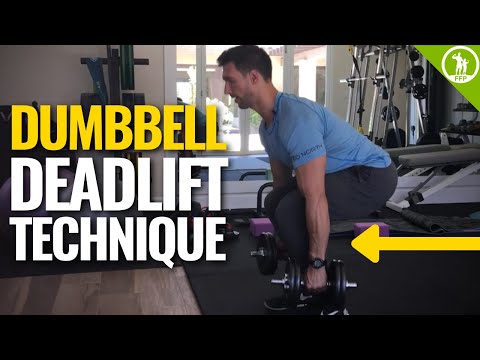
Dumbbell Deadlift Overview
The dumbbell deadlift works your hamstrings and glutes. Your hamstrings are the muscles on the back of your thighs. Your glutes are your butt muscles. You hold two dumbbells and hinge at your hips. It also works your lower back and forearms. You need two dumbbells and some room. The dumbbell deadlift is great for beginners. It teaches the hip hinge, a key move for life. It builds a strong backside and grip. Strong hips help you lift, jump, and stand tall. Use it on leg day or a full body day. Put it early while you are fresh.
What Is The Point of the Dumbbell Deadlift?
The dumbbell deadlift builds strong glutes and hamstrings while teaching you the hip hinge movement. It's perfect for beginners who want to learn proper deadlift form.
How To Do The Dumbbell Deadlift
- Stand with your feet about hip-width apart, holding a dumbbell in each hand at your sides with your palms facing your body. Let the dumbbells hang naturally next to your thighs.
- Set your chest up, pull your shoulders back, and brace your core. Take a breath into your belly to build tension before you move.
- Begin the hinge by pushing your hips back, as if reaching your butt toward a wall behind you. Let your knees bend slightly but keep the movement hip-driven.
- Lower the dumbbells down along the front of your legs, keeping them close the whole way. Feel the stretch build in your hamstrings as your torso folds forward.
- Keep your back flat and neutral the entire descent. Lower until you feel a strong hamstring stretch, usually around mid-shin depending on your flexibility.
- Drive through your heels and push your hips forward to stand back up. Think about pushing the floor away rather than pulling with your back.
- Squeeze your glutes hard at the top to finish the rep in a tall, locked position. Do not lean back or overextend your spine at the top.
- Lower under control for the next rep, taking 2 to 3 seconds down. This hinge builds the posterior chain best in the 8 to 12 rep range for 3 to 4 sets.
Dumbbell Deadlift Form Tips
- Keep your back flat and firm. Never let it round.
- Push your hips back to hinge, not your knees first.
- Keep the dumbbells close to your legs.
- Lower until you feel a hamstring stretch.
- Drive through your heels to stand up.
- Squeeze your glutes hard at the top.
- Keep your chest up and your core tight.
- Breathe in as you lower. Breathe out as you rise.
- Keep your head in line with your spine.
Common Mistakes to Avoid for the Dumbbell Deadlift
- Rounding your lower back. A hunched spine under load is the classic deadlift injury, even with lighter dumbbells. Set a flat, neutral back and brace hard so your spine stays rigid through the whole hinge.
- Squatting the weight instead of hinging. Bending your knees too much and dropping straight down turns the deadlift into a squat and takes the hamstrings out of it. Push your hips back first and let the knees bend only slightly.
- Letting the dumbbells drift away from your legs. When the weights swing forward, the load pulls on your lower back instead of your hamstrings and glutes. Keep the dumbbells close, brushing along your thighs the whole way.
- Not pushing the hips back. Bending at the waist without a real hip hinge stresses the spine and misses the target muscles. Reach your hips back like closing a car door with your butt.
- Overextending at the top. Leaning back and cranking your spine backward at lockout compresses the lower back. Finish standing tall and neutral with a hard glute squeeze, not a backward arch.
- Going too heavy too soon. Ego weight wrecks your hinge and rounds your back. Pick a load you can control through a full range with a flat spine, then build up slowly.
- Dropping the weights fast on the way down. Rushing the eccentric wastes one of the best growth phases and can jar your back at the stretch. Lower over 2 to 3 seconds with control.
- Bending the knees forward instead of sending hips back. Pushing the knees ahead shifts load to the quads and away from the posterior chain. Keep the shins fairly vertical and drive the hips rearward.
- Craning the neck up. Yanking your head to look forward strains the neck and can pull you out of a neutral spine. Keep your head in line with your torso as you hinge.
- Holding your breath the whole set. Bracing is good, but locking air for every rep spikes blood pressure. Take a fresh breath at the top and brace before each descent.
- Not feeling the hamstrings stretch. If you never feel that pull in the back of your legs, you are probably squatting the weight. Slow down, hinge deeper, and chase the stretch before you stand up.
Dumbbell Deadlift Workout Tips
- Master the hip hinge first. Pushing your hips back while keeping a flat back is the whole skill, and it protects your spine while loading the hamstrings and glutes.
- Keep the dumbbells close to your legs. Letting them brush your thighs keeps the load over your midfoot and off your lower back.
- Chase the hamstring stretch on the way down. Feeling that pull in the back of your legs tells you the hinge is working the right muscles.
- Drive through your heels to stand up. Pushing the floor away with your heels engages the posterior chain and keeps you balanced.
- Squeeze your glutes hard at the top. A firm glute contraction finishes the rep and teaches the hips to power the movement.
- Control the lowering for 2 to 3 seconds. A slow eccentric builds the hamstrings and glutes and reinforces good hinge technique.
- Great starting point for learning to deadlift. Dumbbells are less intimidating than a barbell and let beginners groove the pattern safely.
- Aim for 8 to 12 reps for 3 to 4 sets. This range builds the posterior chain while keeping the load manageable for a hinge.
- Add weight in small steps as your form holds. Progressive overload drives growth, but only if your flat back survives the jump.
- Use a neutral grip with palms facing you. This keeps the dumbbells naturally beside your legs and your shoulders in a strong position.
- Try a Romanian style with minimal knee bend for more hamstring focus. Keeping the shins vertical and hips back deepens the stretch on the hamstrings.
- Program it on leg or pull day. The hinge complements squats and pressing by building the whole back of the body.
- Do not overextend at lockout. Standing tall and neutral protects your spine far better than leaning back at the top.
- Keep your core braced through every rep. A tight trunk holds your neutral spine and lets your hips move freely.
- Use it to build a base for heavier barbell pulls later. The pattern you learn here carries straight over to the barbell deadlift.
- Warm up your hips and hamstrings first. A few light hinges prepare the posterior chain and grease the movement before your working sets.








Questions & Comments
Be the first to ask a question about this exercise.