Deadlifts Overview
The deadlift is a full-body pull with a barbell. It works your hamstrings and glutes most. Your hamstrings are the back of your thighs. Your glutes are your butt muscles. It also works your lower back, traps, and forearms. You lift a loaded barbell from the floor to standing. The deadlift builds full-body strength. It makes your back, hips, and legs strong. It also builds a strong grip. It suits lifters with some practice. The setup matters a lot here. Put deadlifts early in your workout. Few moves build as much raw strength as this one.
What Is The Point of the Deadlifts?
The deadlifts exercise builds total body strength and power by working your entire posterior chain. It's one of the best moves for real-world strength and muscle mass.
How To Do The Deadlifts
- Stand with your feet about hip-width apart and the barbell over the middle of your feet, close to your shins. Your stance should be the one you would jump from, not too wide.
- Push your hips back and bend your knees to grip the bar with your hands just outside your legs. Use a double overhand or a mixed grip and squeeze the bar tight.
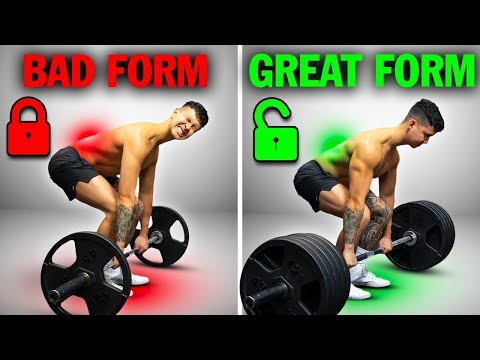
- Set your back flat and your chest up, and pull your shoulders back and down. This setup is half the battle, so take your time to nail it before every rep.
- Take a big breath into your belly and brace your core hard. Pull the slack out of the bar by tensing your whole body against it so the start is smooth, not a jerk.
- Drive through your heels and stand up by extending your hips and knees together. Keep the bar dragging close to your body the entire way up.
- As the bar passes your knees, drive your hips forward to finish the lift. Stand tall with your shoulders back at the top and squeeze your glutes.
- Do not lean back or shrug your shoulders at the top, since the rep is done once you are standing straight. Hold the lockout for a beat.
- Lower the bar by pushing your hips back first, then bending your knees once the bar passes them. Control the weight down and keep it close to your legs.
- Reset your brace and setup fully before the next rep. Most lifters build well in the 3 to 6 rep range for 3 to 5 sets.
Deadlifts Form Tips
- Set the bar over the middle of your feet. Keep it close to your shins.
- Keep your back flat and straight. Do not round or arch hard.
- Lift your chest and set your shoulders back.
- Brace your core hard before you pull.
- Drive through your heels. Push the floor away.
- Open your hips and knees at the same time.
- Keep the bar close to your legs the whole way.
- Squeeze your glutes at the top. Stand tall, do not lean back.
- Lower with control. Hips back first, then bend your knees.
Common Mistakes to Avoid for the Deadlifts
- Rounding your lower back. A rounded spine under a heavy barbell is the fastest way to hurt your back. Set a flat, braced back before you pull and keep your chest up so the spine stays neutral all the way through.
- Yanking the bar off the floor. Jerking into the lift with slack still in the bar spikes force on your spine and can tweak it. Take the slack out first by tensing against the bar, then drive up in one smooth motion.
- Letting the hips shoot up first. When your hips rise before the bar leaves the floor, the lift becomes a stiff-legged pull that overloads your lower back. Drive your hips and chest up together so your legs contribute.
- Starting with the bar too far from your shins. A bar out over your toes pulls you forward and forces your back to save the lift. Set it over your mid-foot, an inch or so from your shins.
- Squatting the deadlift up. Dropping your hips too low and pushing only with your knees wastes your strong hip drive. Set your hips a little higher and hinge, letting the bar leave the floor as your knees and hips extend together.
- Letting the bar drift away from your body. A bar that swings out increases the load on your back and throws off balance. Drag it up your legs and keep it close from floor to lockout.
- Leaning back at the top. Hyperextending your spine to finish a rep stresses the lower back for no benefit. Stand tall, squeeze your glutes, and stop there.
- Not bracing hard enough. A soft trunk lets your spine move under load and leaks power. Take a big breath and brace your whole midsection before you pull.
- Bouncing reps off the floor. Rebounding the bar to save effort means you lose position and control between reps. Reset your brace and setup on the floor before each rep for a clean pull.
- Going too heavy too soon. Ego weight on a deadlift is a classic path to a hurt back and broken form. Build with a load you can pull cleanly, then add small jumps over time.
- Dropping the bar down carelessly. Just letting it crash skips the eccentric and can jar your spine. Control the descent by pushing your hips back and guiding the bar down your legs.
Deadlifts Workout Tips
- Think about pushing the floor away with your legs to start the pull, rather than yanking the bar with your back. That cue keeps your legs in the lift and protects your spine.
- Set up the same way every single time. A consistent stance, grip, and brace makes the deadlift feel automatic and safe under heavy load.
- Brace your core hard before every rep. A big belly breath and a tight trunk build a natural belt that protects your back and lets you lift more.
- Pull the slack out of the bar before you drive. Taking the stretch out of your arms and the bar removes the jerk and gives you a stronger, smoother start.
- Keep the bar close and dragging up your legs. A bar path that hugs your body keeps the load balanced and easier on your back.
- Finish by driving your hips forward and squeezing your glutes, not by leaning back. The rep is done when you stand tall and locked out.
- Program deadlifts early in the session when you are fresh. They are demanding, so give them your best focus and energy.
- For strength, work in the 3 to 5 rep range, and for muscle, go 5 to 8 reps. Both build a powerful posterior chain when loaded progressively.
- Add weight in small, steady jumps over time. Progressive overload with clean form is what safely grows your pull, and Ed Coan built legendary numbers on patient, steady loading.
- Use a mixed grip, hook grip, or straps once your grip becomes the limit. Your legs and back should decide the lift, not your hands.
- Wear flat, stable shoes or lift barefoot. A firm base lets you drive through the floor without energy leaking into a soft heel.
- Film your sets from the side. Video shows a rounding back or rising hips far better than how the lift feels in the moment.
- Do not train deadlifts to failure. Fatigue is high and form slips fast, so leave a rep or two in the tank on your work sets.
- Reset fully between reps rather than bouncing them. A clean reset keeps every rep as safe as your first.
- Warm up thoroughly with lighter sets. Ramping up grooves your bar path and prepares your back and hips for the top weight.
- Consider a hip hinge drill or light Romanian deadlifts to sharpen the pattern. Practicing the hinge makes your heavy pulls cleaner.
- Be patient. A big, safe deadlift is built over months and years of quality pulls, not one bold attempt.








Questions & Comments
Be the first to ask a question about this exercise.