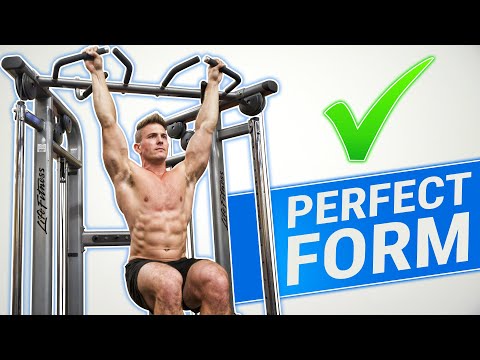
Chair Twisting Knee Raise Overview
The chair twisting knee raise is a seated core move. You only need a sturdy chair. You sit on the edge and hold the sides. You lift your knees toward your chest. Then you twist them side to side. This works your abs. It also works your obliques, the muscles on the sides of your waist. Your hip flexors help lift your legs. This move is great for beginners. It builds a strong, steady core. The twist adds work for your side abs. You can do it almost anywhere with a chair. The chair twisting knee raise fits well in a core routine. Do it at the end of a workout. It is easy on your back and simple to learn.
What Is The Point of the Chair Twisting Knee Raise?
Chair twisting knee raise builds core strength while targeting your abs and obliques in one move. You'll get a strong midsection and better rotational power.
How To Do The Chair Twisting Knee Raise
- Sit on the front edge of a sturdy, stable chair and grip the sides firmly with both hands. A solid chair that will not tip is essential, since you will lean back and lift your feet.
- Lean your torso back slightly to load your abs, keeping your chest tall and your back long rather than slumped. Your hands on the seat help stabilize you.
- Brace your core and lift both feet off the floor, bringing your knees up toward your chest. This is your starting position with the abs already under tension.
- Keep your upper body stable and your shoulders square as you prepare to rotate. The twist should come from your waist and abs, not from throwing your legs.
- Start the chair twisting knee raise by drawing your knees up and across toward your right side, turning through your obliques. Move under control rather than swinging.
- Squeeze your obliques at the top of the twist for a brief count. Feel the muscles on the side of your waist doing the work.
- Return your knees to the center in a controlled motion, keeping your feet off the floor and the tension on your abs.
- Twist your knees up and across to your left side, squeezing the obliques on that side, then return to center again. Keep the tempo smooth and even on both sides.
- Complete the chair twisting knee raise by returning to center before lowering your feet. Aim for 10 to 15 controlled reps per side for 3 sets, focusing on the squeeze rather than speed.
Chair Twisting Knee Raise Form Tips
- Grip the chair sides firmly. This keeps you steady.
- Lean back a little to load your abs. Do not slump.
- Lift your knees with your core, not a swing. Control the lift.
- Twist only your lower body. Keep your chest facing forward.
- Move slowly to each side. Do not fling your legs.
- Squeeze your abs and obliques on each twist. Feel them work.
- Keep your feet off the floor the whole set. Hold the tension.
- Breathe out as you twist in. Breathe in as you return.
- Keep your neck relaxed and long. Do not strain it.
Common Mistakes to Avoid for the Chair Twisting Knee Raise
- Swinging your legs with momentum. Flinging your knees side to side lets your hip flexors and momentum do the work while your abs coast. Move slowly and deliberately so the obliques and abs control every inch of the twist and return.
- Using a wobbly or unstable chair. A chair that slides or tips turns a core drill into a fall risk. Always pick a sturdy, stable chair on a non-slip surface and grip the sides firmly for support.
- Slumping your lower back and rounding forward. Collapsing your spine takes tension off the abs and stresses your lower back. Keep your chest tall and your torso long even as you lean back to load the core.
- Twisting from your shoulders instead of your waist. If you rotate your upper body to meet your knees, you lose the oblique work. Keep your shoulders relatively square and let the rotation happen at your waist and hips.
- Dropping your feet to the floor between reps. Letting your feet rest resets the tension and makes the drill easier than it should be. Keep your feet up and the abs loaded through the whole set.
- Holding your breath through the set. Locking your breath spikes tension and can leave you lightheaded on higher rep core work. Exhale as you crunch and twist, and inhale as you return to center.
- Rushing through the reps. Speeding through the twists trades quality for quantity and lets momentum take over. Slow down, control the tempo, and make each rep a deliberate contraction.
- Not squeezing the obliques at the top. Skipping the peak contraction wastes the most productive part of the rep. Pause and squeeze the side of your waist at the top of each twist.
- Pulling on the chair to yank yourself around. Using your arms to haul your body cheats the abs out of the work. Let your hands only stabilize you while the core does the lifting and twisting.
- Letting your knees drift only halfway. Cutting the range short reduces both the crunch and the rotation. Bring your knees up and across far enough to really feel the obliques shorten.
- Doing uneven work between sides. It is easy to favor your stronger side and build an imbalance. Match the reps and quality on both sides and let the weaker side set the count.
Chair Twisting Knee Raise Workout Tips
- Pick a rock-solid chair and grip it firmly. Stability is everything here, so a sturdy chair on a non-slip floor lets you focus on your abs instead of your balance.
- Move slowly and own every rep. The chair twisting knee raise is about control, not speed, so a deliberate tempo keeps the obliques working and momentum out of it.
- Chase the mind-muscle connection with your obliques. Think about the sides of your waist pulling your knees across rather than just moving your legs, which helps you feel the target muscle.
- Squeeze at the top of each twist for a one second count. That peak contraction on the side of your waist is where the oblique work really pays off.
- Keep your feet off the floor the whole set. Constant tension makes the drill far more effective than resetting your feet between reps.
- Exhale as you crunch and twist. Breathing out on the effort helps you brace harder and squeeze the abs fully.
- Keep reps moderate to high, around 10 to 15 per side. Core muscles respond well to that range, and higher reps let you build a strong mind-muscle link.
- Program this as part of a core circuit or at the end of a session. It pairs well with planks and other ab work for a complete midsection workout.
- Train your weaker side first and match the reps. Most people rotate better one way, so leading with the weaker side keeps your obliques balanced.
- Progress by slowing the tempo or adding a pause. Since you cannot easily add weight, more time under tension is how you keep overloading the abs.
- Keep your torso tall even as you lean back. A long spine protects your lower back and keeps the abs, not your back, doing the work.
- Let your hands stabilize, not pull. Your arms should only steady you while the core does the twisting.
- Try a light ankle weight once bodyweight feels easy. A small added load raises the challenge, but only add it when your form is smooth.
- Keep the rotation coming from your waist. Squaring your shoulders and turning at the middle keeps the obliques as the prime mover.
- Do not rush your breathing or your reps. A calm, controlled pace builds better core control than thrashing through fast reps.
- Be consistent. A stronger, more defined waist comes from regular focused core work over months, not from one brutal session.








Questions & Comments
Be the first to ask a question about this exercise.