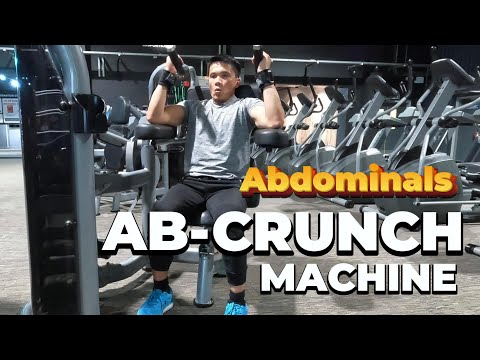
Crunch Machine Overview
The crunch machine is a seated ab move. You sit on the machine and curl your chest toward your knees. It targets your abs, the muscles on the front of your belly. It also uses your hip flexors a little. You need the crunch machine to do it. The machine gives smooth, steady weight for each rep. The crunch machine is great for beginners. It holds you in place so your form stays clean. This lets you focus on your abs and nothing else. It is a safe way to add weight to your ab training. You can find it at most gyms. Use the crunch machine near the end of your workout. It works well after your bigger lifts.
What Is The Point of the Crunch Machine?
The crunch machine exercise targets your abs with controlled resistance to build core strength. It provides better form control than floor crunches.
How To Do The Crunch Machine
- Set the seat height so the pad sits comfortably against your upper back and the machine's pivot lines up roughly with your waist. Good alignment makes the machine bend where your spine naturally curls.
- Sit down and set the weight to a moderate load you can control for 12 to 15 reps. As a beginner, start light and learn the groove before chasing plates.
- Plant your feet flat on the footrests and either grab the handles by your shoulders or cross your arms over your chest. Keep your lower back pressed into the pad.
- Take a breath and brace your core gently, then draw your ribs down toward your hips to begin. The movement is a spinal curl, so think about rounding your upper body over, not folding at the hips.
- Crunch forward smoothly, bringing your chest toward your knees while your lower back stays in contact with the pad. Move the weight with your abs, not by pulling with your arms.
- Squeeze your abs hard at the bottom of the crunch and hold for a full second. That pause at peak contraction is where the machine earns its keep.
- Breathe out through the effort, then reverse slowly and let the weight draw you back up under control. Aim for a two to three second return and never let the stack slam.
- Stop just before the plates touch to keep constant tension on your abs, then start the next rep. Beginners do well with 3 sets of 12 to 15 quality reps.
Crunch Machine Form Tips
- Curl with your abs, not your arms. Your belly does the work.
- Keep your back on the pad the whole time.
- Move slow and smooth. Do not fling the weight.
- Breathe out as you crunch down. Breathe in as you return.
- Squeeze your abs hard at the bottom of each rep.
- Keep your feet flat and planted on the rests.
- Do not pull with the handles. Just hold them lightly.
- Round your spine forward as you crunch. Do not stay stiff.
- Return slowly. Do not let the weight yank you back.
- Keep tension on your abs from start to finish.
Common Mistakes to Avoid for the Crunch Machine
- Pulling with your arms instead of your abs. Yanking the handles down with your hands and shoulders lets strong muscles rob the abs of the work, so the target barely trains. Let your hands rest on the grips and drive the movement by curling your ribcage down.
- Setting the weight too heavy. Overloading forces you to heave with your whole body and cut the range short, which trains momentum instead of the abs. Pick a load you can crunch cleanly for 12 to 15 reps and squeeze at the bottom.
- Hinging at the hips instead of curling the spine. If you fold forward as one stiff block, your hip flexors do the job and your abs coast. Focus on rounding your upper back over so the crunch happens through the trunk.
- Losing contact between your lower back and the pad. Letting the lumbar spine peel off the pad reduces ab tension and stresses the lower back. Keep the pad pressed against you and the movement in your midsection.
- Letting the weight stack slam at the top. Releasing fast and banging the plates uses the machine's momentum and wastes the eccentric. Control the return over two to three seconds and stop before the stack rests.
- Going through a tiny range of motion. Barely nodding forward keeps the abs from fully shortening, so you leave growth on the table. Crunch to a real contraction where your chest closes toward your knees, then stretch back under control.
- Holding your breath through the set. Clamping down without breathing spikes your blood pressure and makes you weaker at the hard part. Exhale as you crunch and inhale as you return.
- Rushing the reps. Fast, bouncy crunches use swing instead of muscle and hide sloppy form. Slow down, feel the abs shorten, and pause at the bottom of each rep.
- Skipping the pause at peak contraction. Flying past the bottom means you never fully squeeze the abs, which is the most valuable moment of the rep. Hold the crunched position for a second before releasing.
- Sitting misaligned with the pivot. If the machine's hinge sits well above or below your waist, the resistance fights your spine in the wrong place and can nag your back. Adjust the seat so the pivot meets your midsection.
- Craning your neck forward. Jutting the head to lead the crunch strains the neck and does nothing for the abs. Keep your neck long and let your torso do the curling.
Crunch Machine Workout Tips
- Drive the movement from your ribcage, not your hands. Imagine pulling your bottom ribs down toward your belt buckle, and the abs take over while your arms just hold on.
- Pause and squeeze for a full second at the bottom. Peak contraction under load is where the machine shines, so own that crunched position before you let it back up.
- Control the return over two to three seconds. The eccentric builds as much muscle as the crunch itself, so resist the stack instead of letting it yank you back.
- Keep constant tension by stopping just short of the top. If the plates rest between reps you get a break your abs did not earn, so keep them loaded the whole set.
- Start lighter than you think and earn the weight. The abs respond to clean, full-range reps, and a load you can actually control teaches the groove faster than ego weight.
- Program this after your heavy compound lifts as a finisher. Squats and deadlifts already tax the core, so save the isolation crunch for the end when you can focus on the squeeze.
- Train it 2 to 3 times a week with rest between sessions. Abs recover like any muscle, and the growth happens on the off days.
- Progress by adding reps, then a small weight jump, then a slower tempo. That steady ladder is progressive overload and it keeps the machine challenging over months.
- Use the machine when you want to load the abs safely without straining your neck. The back support lets beginners chase a hard contraction that a floor crunch cannot match.
- Pair it with rotational and anti-rotation work for a complete midsection. The crunch trains flexion, but your core also needs to twist and resist twisting to be truly strong.
- Keep your feet planted and quiet. Pushing hard through your feet turns the crunch into a leg drive, so let the footrests just stabilize you while the abs work.
- Do not expect crunches alone to reveal your abs. This builds the muscle, but the definition shows up through your overall training and a sensible diet.
- Breathe out forcefully at the bottom of each rep. Blowing the air out helps the deep core engage and lets you crunch a little further into the contraction.
- Keep your reps honest and stop when form breaks. A clean set of twelve beats a sloppy set of twenty, because the ugly reps mostly train momentum.
- Feel the abs, not the hip flexors or shoulders. If you feel it in the front of your hips, you are hinging, so reset and round your spine into the crunch instead.
- Stay consistent week to week. A stronger, thicker set of abs comes from showing up and adding a little each session, not from one brutal workout.








Questions & Comments
Be the first to ask a question about this exercise.