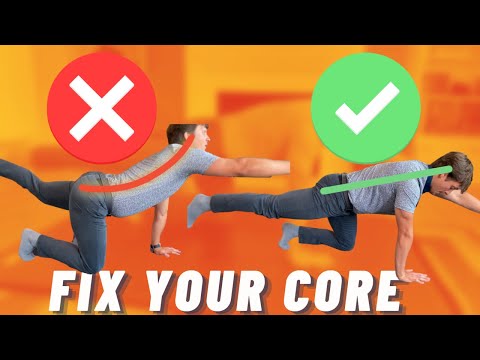
Contralateral Bird Dog Overview
The contralateral bird dog builds your abs and core. The core is the band of muscles around your middle. It also works your glutes, shoulders, and lower back. You do it on your hands and knees. You reach one arm and the opposite leg out at the same time. You need no equipment at all. The contralateral bird dog teaches your core to stay steady. It fights the urge to twist or tip over. This builds real, useful strength. It also helps your balance and posture. This move is great for beginners. It fits well in a warm-up or a core routine. You can do it right at home.
What Is The Point of the Contralateral Bird Dog?
The contralateral bird dog builds core strength while teaching your body to stay stable when moving opposite limbs. It's perfect for better balance and posture.
How To Do The Contralateral Bird Dog
- Start on your hands and knees with your wrists directly under your shoulders and your knees under your hips. Spread your fingers and press the floor away to keep your upper back engaged.
- Set your spine in a neutral, flat position, like a tabletop, and brace your core gently so your midsection is firm. Imagine a glass of water balanced on your lower back that you must not spill.
- Take a breath and slowly extend your right arm straight forward while reaching your left leg straight back. Using opposite arm and leg is what makes this the contralateral version and challenges your anti-rotation core.
- Reach your arm and leg to full length so your body forms a long, straight line from fingertips to heel. Keep your hips and shoulders square to the floor the whole time.
- Resist the urge to twist or tip toward the side of the lifted leg. The whole point is to stay perfectly level, which trains your deep core to fight rotation.
- Hold the extended position for 5 to 10 seconds while breathing normally, keeping your abs and glutes engaged. Do not hold your breath or let your low back sag.
- Slowly bring your arm and leg back down to the starting position with control, keeping your spine flat. Do not rush or let the limbs drop.
- Repeat on the opposite side with your left arm and right leg, alternating evenly. Aim for 8 to 12 controlled reps per side, or timed holds, for 2 to 4 sets.
Contralateral Bird Dog Form Tips
- Keep your back flat the whole time. Do not let it sag.
- Keep your core tight to hold you steady.
- Reach your arm and leg long, not high.
- Keep your hips level. Do not tip to one side.
- Move slowly on the way out and back.
- Keep your neck in line with your back.
- Breathe slow and steady during the hold.
- Keep your wrists under your shoulders for a firm base.
- Raise your arm and leg only to hip height.
- Squeeze your glute as you reach your leg back.
Common Mistakes to Avoid for the Contralateral Bird Dog
- Letting the lower back sag. When your core switches off, your belly drops and your lumbar spine arches into an unsupported position under a load it should not carry. Brace your abs and keep your spine flat like a tabletop the entire time.
- Twisting or tipping toward the lifted leg. The whole reason this is contralateral is to fight rotation, so if your hips rock open you have missed the point. Keep both hip bones pointing at the floor and stay perfectly level.
- Lifting the arm and leg too high. Reaching your limbs above the line of your torso overextends your lower back and shoulders and looks impressive without doing anything useful. Raise them only to the height of your body so you form one straight line.
- Rushing through the reps. Flinging the arm and leg out and yanking them back uses momentum and skips the stability work that makes this exercise valuable. Move slowly and deliberately, controlling both the reach and the return.
- Holding your breath. Bracing so hard that you stop breathing defeats the goal of learning to keep your core stable while you breathe normally. Keep a steady breathing rhythm throughout the hold.
- Setting your hands and knees out of position. Starting with your wrists ahead of your shoulders or knees off from your hips throws off your base and makes balancing harder than it should be. Stack your wrists under your shoulders and knees under your hips.
- Dropping the head or craning the neck up. Letting your chin fall or lifting your gaze to the ceiling breaks a neutral spine at the top. Keep your neck long and your eyes on the floor so your head stays in line with your back.
- Not fully extending the limbs. Half-reaching your arm and leg keeps you in an easy position and skips the long lever that challenges your core. Reach all the way out to full length while staying stable.
- Shifting your weight side to side. Rocking onto the supporting hip and hand to counterbalance is a form of cheating that reduces the core demand. Keep your weight centered and let your trunk, not a lean, hold you steady.
- Going too fast to add reps. Chasing a high rep count usually turns this into a sloppy flail with no control. Slow down, since a handful of stable, quality reps beats twenty rushed ones.
- Forgetting to squeeze the glute of the lifted leg. Just floating the leg back without engaging the glute misses a chance to train hip extension and stability. Squeeze the glute as you reach the leg back to keep the hip strong and level.
Contralateral Bird Dog Workout Tips
- Think about anti-rotation, not just balance. The magic of the contralateral bird dog is teaching your deep core to resist twisting, so staying perfectly level is the whole skill.
- Keep your spine flat like a tabletop. Bracing to hold a neutral back is what protects your lower spine and builds the stability that carries over to bigger lifts.
- Move slowly and with control. A deliberate reach and return trains stability far better than fast, sloppy reps, so take your time on every one.
- Reach your arm and leg to full length. Extending fully creates a long lever that makes your core work harder to keep you from tipping.
- Keep both hips square to the floor. Imagine a level resting across your lower back that must stay flat, which keeps you from rotating toward the lifted leg.
- Breathe normally through the hold. Learning to stay braced while breathing is a big part of why this move builds real-world core stability.
- Use it as a warm-up or a core-focused set. It is a fantastic low-risk drill to fire up your core and glutes before heavier training or as part of a dedicated core day.
- Squeeze the glute of the lifted leg. Engaging the glute as you reach back trains hip extension and helps keep your pelvis level.
- Progress by holding longer or slowing down. Since it is bodyweight, you overload by extending the hold, adding a slow tempo, or pausing at the top rather than adding load.
- Add a light band or ankle weight when ready. Once the basic move is easy, a small resistance ups the challenge without wrecking your form.
- Keep your neck long and neutral. Looking at the floor keeps your head in line with your spine and stops you from cranking your neck.
- Try tapping your elbow to your knee for a harder version. Bringing the opposite elbow and knee together under your body before re-extending adds a dynamic core challenge.
- Do it as part of a rehab or prehab routine. Many physical therapists use the bird dog to build safe, controlled core and back strength, which makes it great injury insurance.
- Match your reps evenly on both sides. Alternating and doing equal work per side keeps your core balanced left to right.
- Set up on a mat for comfort. Padding under your knees lets you focus on stability instead of the discomfort of a hard floor.
- Be patient and value quality over quantity. This is a control exercise, so a few slow, rock-solid reps build more usable strength than a rushed high count.








Questions & Comments
Be the first to ask a question about this exercise.