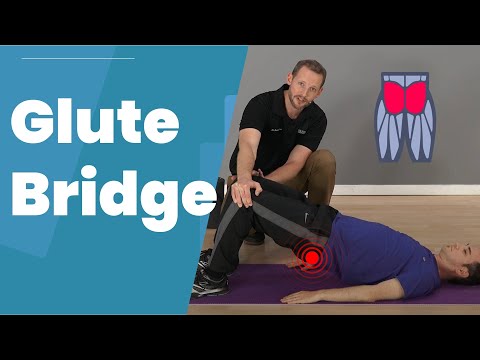
Bodyweight Glute Bridge Overview
The bodyweight glute bridge is a floor move for your hips. It builds your glutes. The glutes are your butt muscles. It also works your hamstrings and your core. The hamstrings are the muscles on the back of your thighs. You need no equipment. You just use your body and some floor space. This move builds strong hips and a firm butt. It is great for beginners. Strong glutes help you stand, walk, and lift better. They also protect your lower back. The bodyweight glute bridge fits well in a warm-up. It also works at the end of a leg day. You can do it at home with no gear.
What Is The Point of the Bodyweight Glute Bridge?
The bodyweight glute bridge builds stronger glutes and improves hip stability. It helps fix posture and reduces lower back pain from sitting too much.
How To Do The Bodyweight Glute Bridge
- Lie on your back with your knees bent and your feet flat on the floor, about hip-width apart. Position your heels close enough that your fingertips can almost brush them.
- Rest your arms by your sides with your palms down for stability. Set your head and shoulders comfortably on the floor and look up toward the ceiling.
- Brace your core lightly and tuck your pelvis slightly so your lower back is not arched. This sets you up to drive with your glutes rather than your lower back.
- Take a breath and squeeze your glutes hard before you move. Starting the lift by contracting the glutes, not by pushing your hips up, is the key to feeling this in the right place.
- Push through your heels and drive your hips up toward the ceiling. Keep pressing until your body forms a straight line from your knees to your shoulders.
- Squeeze your glutes as hard as you can at the top and hold for two to three seconds. Think about pushing your hips to the ceiling using only your glutes.
- Keep your ribs down and avoid arching your lower back at the top. The height should come from your hips extending, not from your spine bending backward.
- Lower your hips back down slowly and under control. Do not just drop, since the lowering keeps tension on the glutes and adds to the work.
- Lightly touch your hips down and immediately begin the next rep without fully relaxing. Aim for higher reps around 12 to 20 and focus on the squeeze rather than speed.
Bodyweight Glute Bridge Form Tips
- Push through your heels, not your toes. This works your glutes.
- Squeeze your glutes hard at the top. This lifts your hips higher.
- Keep your core tight. Do not let your lower back arch too much.
- Make a straight line from knees to shoulders. Do not lift past that.
- Move slowly both ways. Fast reps use bounce, not muscle.
- Keep your feet flat and steady. Do not let them slide.
- Keep your knees in line with your feet. Do not let them cave in.
- Breathe out as you lift. Breathe in as you lower.
- Rest your head and shoulders on the floor. Let your hips do the work.
Common Mistakes to Avoid for the Bodyweight Glute Bridge
- Arching your lower back to gain height at the top. Overextending your spine to push higher takes the work off your glutes and strains your lower back. Keep your ribs down and a slight pelvic tuck so the height comes from your hips.
- Pushing through your toes instead of your heels. Driving off the balls of your feet shifts the load to your quads and takes it off your glutes. Keep your heels planted and push through them to fire the glutes properly.
- Not squeezing the glutes at the top. Just lifting your hips without a hard contraction misses the whole point of the exercise. Consciously squeeze your glutes at the top and hold it for a couple of seconds.
- Placing your feet too far away. Setting your heels out in front of you turns the bridge into more of a hamstring exercise. Bring your feet close enough that your fingertips nearly touch your heels to load the glutes.
- Rushing through the reps. Fast, bouncy bridges rely on momentum and skip the tension that builds the glutes. Slow down, control both directions, and pause to squeeze at the top.
- Letting your knees cave inward. Knees that collapse together shift the tension and can irritate the joint. Keep your knees pushed out in line with your feet throughout the movement.
- Not lifting high enough. Stopping short of full hip extension leaves the glutes only partly worked. Drive up until your body forms a straight line from knees to shoulders on every rep.
- Using your lower back to initiate the lift. Starting the movement by cranking your spine rather than squeezing your glutes puts strain in the wrong place. Fire the glutes first, then let the hips rise.
- Holding your breath the whole set. Bracing your air down makes you rigid and can spike your blood pressure. Breathe out as you drive up and in as you lower.
- Dropping your hips to the floor and fully relaxing between reps. Resting completely at the bottom kills the tension and turns each rep into a fresh start. Keep the glutes loaded by only lightly touching down.
- Ignoring the mind-muscle connection. Just going through the motions without thinking about the glutes leaves results on the table. Focus on feeling your glutes do the work on every single rep.
Bodyweight Glute Bridge Workout Tips
- Squeeze your glutes to start every rep. Initiating the lift with a hard glute contraction rather than pushing your hips is the single biggest thing that makes this exercise work.
- Push through your heels, not your toes. Driving off your heels keeps the tension on your glutes and stops your quads from taking over.
- Pause and squeeze hard at the top. Holding the peak contraction for two to three seconds builds a stronger mind-muscle connection and gets far more out of each rep.
- Keep your ribs down and avoid arching your back. The lift should come from your hips extending, not your spine bending, which keeps your lower back safe and your glutes loaded.
- Use higher reps since this is bodyweight. Somewhere around 12 to 20 reps for a few sets gives the glutes enough time under tension to grow and strengthen.
- Great for waking up the glutes before you squat or deadlift. A few sets as part of your warm-up switches on the glutes so they contribute more to your heavy lifts.
- Progress to a single-leg bridge when it gets easy. Lifting one leg roughly doubles the load on the working glute and is a natural next step without any equipment.
- Add a resistance band around your knees for more challenge. Pushing your knees out against a band brings in the glute medius and makes the exercise harder.
- Place your feet close to your body. The closer your heels are, the more the glutes work and the less the hamstrings take over.
- Move to a hip thrust with your back on a bench for a bigger range. Elevating your shoulders lets your hips travel further and loads the glutes even harder.
- Keep your knees tracking over your feet. Preventing your knees from caving in keeps the tension where you want it and protects the joint.
- Focus on the muscle, not just the movement. Consciously thinking about your glutes working turns a simple bridge into a genuinely effective glute builder.
- Perfect for building glutes at home. It needs no equipment, so it is an easy exercise to do consistently, and consistency is what actually grows the glutes.
- Control the lowering phase. Resisting on the way down keeps constant tension on the glutes and adds valuable work to each rep.
- Match the effort on both sides if you go single-leg. Most people have a stronger glute, so keep the reps even to avoid building an imbalance over time.
- Be consistent week to week. Glute development comes from steady, focused work over months, so keep showing up and progressing gradually.








Questions & Comments
Be the first to ask a question about this exercise.