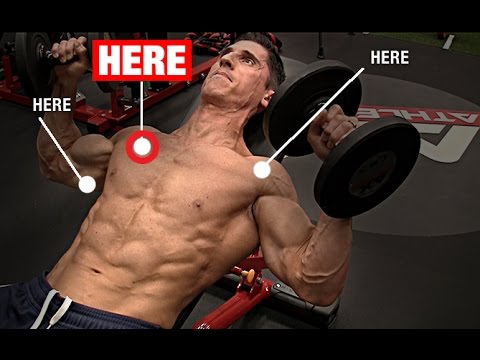
Twisting Dumbbell Bench Press Overview
The twisting dumbbell bench press is a chest push with a turn. You press two dumbbells up and twist your wrists as you go. Your palms start facing your feet and end facing away. It works your chest, the big muscles on the front of your torso. It also works your shoulders, triceps, and obliques. You need two dumbbells and a flat bench. The wrist twist adds an extra chest squeeze at the top. It also makes your core work to stay steady. The twisting dumbbell bench press is good for most lifters. It fits well on chest days or push days. Use it to build and shape your chest. Start light and learn the twist first.
What Is The Point of the Twisting Dumbbell Bench Press?
The twisting dumbbell bench press builds chest strength while adding rotation to fire up your core. It hits your pecs from new angles and improves stability.
How To Do The Twisting Dumbbell Bench Press
- Lie flat on a bench with a dumbbell in each hand held at chest level, palms facing your feet in a pronated grip. Set your shoulder blades down and back into the bench to build a stable base before you begin.
- Plant your feet flat and hard on the floor and squeeze your glutes to stay tight. The twist adds a demand on your core and control, so a solid base matters here.
- Start with the dumbbells at your chest, elbows moderately tucked. Take a big breath and brace your core, since your obliques will help control the rotation.
- Press the dumbbells up while smoothly rotating your wrists so your palms turn to face away from you at the top. The twist should happen gradually through the press, not as a jerk at the end.
- As you press and rotate, squeeze your chest hard and let the rotation bring the dumbbells slightly together at the top. This wrist twist adds a strong peak contraction across the chest.
- Feel your chest and the twist working together at the top. Do not lock your elbows harshly, and keep your wrists firm so the dumbbells do not wobble as they rotate.
- Twist your core slightly and stay controlled as you reach full extension. The obliques come in to stabilize the movement, which is part of why this variation is a little different from a standard press.
- Slowly lower the dumbbells back down while rotating your palms back toward your feet, taking about 2 to 3 seconds. Reverse the twist smoothly so the weights end back at your chest in the pronated grip.
- Keep your core tight and the motion controlled throughout, and repeat for 8 to 12 reps. Use a manageable weight given the rotation, and set the dumbbells down safely when you finish.
Twisting Dumbbell Bench Press Form Tips
- Start with your palms facing your feet.
- Twist your wrists slowly as you press up.
- Finish with your palms facing away at the top.
- Squeeze your chest hard at the top.
- Lower the weights slow with a smooth twist back.
- Keep your feet flat and your hips on the bench.
- Keep your shoulder blades pulled back and down.
- Breathe out as you press. Breathe in as you lower.
- Move both dumbbells at the same speed.
Common Mistakes to Avoid for the Twisting Dumbbell Bench Press
- Jerking the twist at the last second. Snapping your wrists around at the top instead of rotating smoothly through the press can strain your wrists and shoulders. Turn your palms gradually as you drive the dumbbells up so the twist flows with the press rather than being forced.
- Using too much weight for the rotation. The twisting motion is less stable than a straight press, so heavy dumbbells make the weights wobble and your wrists strain. Go lighter than your normal press and prioritize smooth, controlled rotation over load.
- Losing your shoulder blade set. If your shoulders round forward as you press and twist, you lose your stable base and put the joint at risk. Set your blades down and back into the bench and hold that tightness through every rep.
- Letting your elbows flare straight out. Flaring the elbows wide during the press stresses your shoulders and takes tension off the chest. Keep your elbows moderately tucked and let the rotation, not elbow flare, create the different feel.
- Rushing the lowering phase. Dropping the dumbbells fast while trying to reverse the twist wastes the eccentric and can send the weights off line. Lower under control for 2 to 3 seconds, reversing the rotation smoothly the whole way down.
- Letting the dumbbells wobble and drift. Because each arm rotates independently, the weights can wander and destabilize the rep. Keep the dumbbells tracking evenly and controlled so the twist stays smooth and safe.
- Twisting so hard you lose chest tension. Over-focusing on the rotation can turn it into a wrist trick and pull your attention off the chest. Keep the chest driving the press and let the twist add to the squeeze, not replace it.
- Not bracing your core. The rotation brings your obliques into play, and a loose trunk leaves you unstable and leaking power. Take a big breath and brace hard so you press and twist from a solid base.
- Cutting the range of motion short. Stopping the dumbbells high above your chest skips part of the movement and the stretch. Lower to a full but comfortable depth at your chest on every rep.
- Bending your wrists back under the load. The rotation can tempt your wrists into weak positions, which strains the joint. Keep your wrists firm and stacked through the twist so your forearms stay solid.
- Trying it heavy before grooving the pattern light. Jumping into working weight with an unfamiliar twisting motion is how wrists and shoulders get tweaked. Practice the rotation with light dumbbells until it feels natural.
- Bouncing the weights off your chest. Using a bounce to rebound skips the hardest part and, with the twist, risks losing control. Touch under control, pause if needed, and press up with a smooth twist.
Twisting Dumbbell Bench Press Workout Tips
- Start light and groove the twist. The rotating motion feels unusual, so practice it with light dumbbells until it is smooth before adding weight, which protects your wrists and shoulders.
- Rotate smoothly through the whole press. Turn your palms gradually from facing your feet to facing away as you drive up, so the twist flows rather than snapping at the top.
- Use the twist to add a strong peak contraction. Rotating your palms out lets the dumbbells come together at the top and squeezes the chest harder than a straight press.
- Keep the chest in charge. Focus on your chest driving the press and let the twist enhance the squeeze, rather than turning the movement into a wrist trick.
- Control the eccentric while reversing the twist. A 2 to 3 second lowering that unwinds the rotation keeps tension on the chest and builds more muscle than dropping fast.
- Live in the 8 to 12 rep range. Moderate reps suit this controlled variation, so aim for 3 to 4 sets with a weight you can rotate cleanly.
- Chase the mind-muscle connection. Think about squeezing your chest as you press and twist, since feeling the target muscle work is what builds it.
- Program it as a chest accessory. Use it after your main pressing for variety and a strong contraction, not as your heaviest lift of the day.
- Keep your core braced throughout. The rotation brings your obliques in, so a tight trunk keeps you stable and lets you press with control.
- Progress with small jumps. Because the twist reduces stability, add weight in small increments you can fully control rather than big leaps.
- Keep your elbows moderately tucked. Letting the rotation create the different feel, rather than flaring your elbows, keeps your shoulders safe and the chest loaded.
- Use dumbbells for independent arm work and range. The twisting dumbbell press lets each arm rotate on its own and gives a bigger stretch than a barbell.
- Film a set from the side. Video shows whether your rotation is smooth and your wrists are firm far better than it feels while you press.
- Keep your wrists firm and stacked. A solid wrist through the twist keeps the dumbbells stable and the load safe.
- Do not train to failure with this variation. The added rotation makes grinding risky, so leave a rep or two in the tank and keep the twist controlled.
- Try it to break up training monotony. The novel motion keeps chest day interesting and challenges your control in a way a straight press does not.
- Warm up your wrists and shoulders. The rotation loads your wrists differently, so a few light sets and some mobility prepare the joints before you load up.








Questions & Comments
Be the first to ask a question about this exercise.