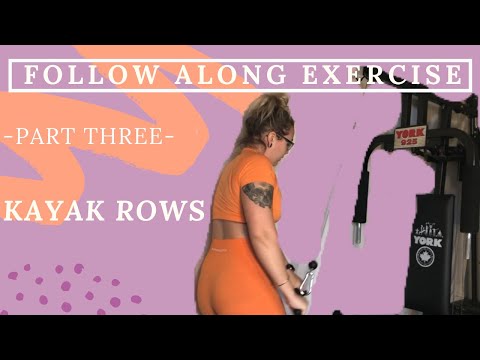
Thibaudeau Kayak Row Overview
The kayak row is a cable back move with a twist. You hold one handle with both hands. Then you pull it to your chest and turn your torso a little, like paddling a kayak. It works your middle back, the muscles between your shoulder blades. It also uses your lats, biceps, and abs. The lats are the big wing muscles on the sides of your back. This row builds a thick, strong upper back. The small twist works your core too. It helps your posture and pulls your shoulders back. It is good for most lifters. Do it on back day. Place it after your big pulls or near the middle of your workout.
What Is The Point of the Thibaudeau Kayak Row?
The thibaudeau kayak row builds a thick, strong middle back while hitting your lats and core. It mimics kayak paddling motion for better pulling power.
How To Do The Thibaudeau Kayak Row
- Set a cable pulley to about chest height and attach a single handle, then grab the handle with both hands. Step back to create tension and set your feet about shoulder width apart.
- Stand tall with a slight bend in your knees, brace your core, and hold the handle out in front of you with your arms extended. Let the weight gently pull your torso into a small stretch to start.
- Set your shoulders down and back so your traps are not shrugged up. Take a breath and prepare to row and rotate at the same time.
- Pull the handle toward one side of your chest while rotating your torso slightly in that direction, like you are paddling a kayak. Lead the motion with your elbow driving back, not just your hands.
- Squeeze your shoulder blades together at the end of the pull and feel the mid-back muscles on the working side contract hard. Keep your hips fairly square while your upper body rotates.
- Hold the peak contraction for a beat, keeping your core tight and your posture tall. Do not let your lower back arch or your shoulder hike up.
- Control the handle back to the starting position, letting your torso rotate back to center and your arms extend fully. Resist the weight the whole way rather than letting it snap you forward.
- Alternate the rotation to the other side on the next rep, or complete your reps on one side before switching, depending on your plan. Keep the rhythm smooth and the tension constant.
- Repeat for 10 to 15 controlled reps per side, keeping the paddling motion clean and the mid-back doing the work throughout.
Thibaudeau Kayak Row Form Tips
- Stand tall with a tight core.
- Keep a small bend in your knees.
- Pull the handle in toward your chest.
- Add a small torso twist as you pull.
- Squeeze your shoulder blades together at the end.
- Keep your shoulders down, not up by your ears.
- Lower the handle slow and stay in control.
- Keep your arms close to your body as you pull.
- Breathe out as you pull. Breathe in as you return.
Common Mistakes to Avoid for the Thibaudeau Kayak Row
- Rowing with only your arms and skipping the rotation. Turning it into a straight one-arm cable row removes the paddling twist that makes this move unique and cuts the oblique and mid-back involvement. Rotate your torso with the pull so you get the full kayak action.
- Yanking the handle with momentum. Jerking the weight back with a body heave takes tension off your mid-back and puts it on your lower back. Pull smoothly and control the return so your target muscles do the work.
- Rounding your upper back as you extend. Letting your shoulders slump forward at the start puts your spine in a weak position and stresses the shoulder. Keep a proud chest and let the stretch come from your shoulder blade, not a rounded spine.
- Over-rotating your hips instead of your torso. Spinning your whole lower body around makes the movement sloppy and takes the work off your mid-back. Keep your hips fairly square and let the rotation happen through your upper trunk.
- Shrugging your shoulders up toward your ears. Letting the traps take over robs the mid-back and can strain your neck. Keep your shoulders pulled down and drive your elbow back to load the right muscles.
- Using too much weight for a rotational move. Overloading forces you to cheat with your whole body and lose the clean paddling pattern. Choose a moderate weight you can row and rotate under full control.
- Failing to squeeze the shoulder blades at the finish. Rowing without a real peak contraction leaves size and strength on the table. Pinch your blades together and pause for a beat at the end of each pull.
- Letting your lower back arch under load. Overextending your spine to help the pull is a fast track to a strain. Brace your abs and keep your ribs down so your core stays stable through the rotation.
- Standing too close to the stack with no tension. If you are too close, the weight goes slack at the start and you lose the important stretch. Step back far enough that there is constant tension from full stretch to full contraction.
- Rushing the return and losing the eccentric. Letting the handle snap you forward wastes the lowering phase, which builds a lot of back strength. Control the weight back over about two seconds on every rep.
- Doing lopsided reps between sides. Favoring your stronger side quietly builds an imbalance in a movement that is all about rotation and balance. Match your reps and effort left and right, letting the weaker side set the pace.
Thibaudeau Kayak Row Workout Tips
- Think of the move exactly like paddling a kayak, blending a row with a torso rotation. That combination trains your mid-back, lats, and obliques together in a pattern that carries over to real rotational strength.
- Lead every pull with your elbow driving back and around. Focusing on the elbow instead of the hands keeps the work on your back rather than your arms.
- Squeeze your shoulder blades hard at the end of each rep. A strong peak contraction is where the mid-back thickness is built, so pause and feel it.
- Keep constant tension by standing back from the stack. Setting up with a full stretch at the start and no slack means your back works through the entire range.
- Control the return over about two seconds. Owning the eccentric builds strength and keeps you from being yanked out of position.
- Keep your hips fairly square and rotate through your upper trunk. Letting the torso do the twisting keeps the movement clean and loads your obliques and mid-back properly.
- Use moderate weight and higher reps in the 10 to 15 range. This is a control and quality move, so chasing huge loads only makes you cheat.
- Program it as an accessory on pull or upper body days. It complements heavy rows by adding a rotational element most back work misses.
- Match your reps and strength on both sides. Because it is a single-side rotational drill, balancing left and right keeps your trunk even and healthy.
- Keep your shoulders pulled down away from your ears. This protects your neck and keeps the mid-back muscles in charge of the pull.
- Brace your core to protect your lower back. A tight trunk lets you rotate safely and transfers force cleanly from your legs to your back.
- Coaches like Christian Thibaudeau popularized rotational rowing to build a more athletic, resilient back. Adding movements like this rounds out a back program built only on straight pulls.
- Film a set from the side or front to check your rotation. A quick video shows whether you are truly paddling or just arm rowing.
- Try alternating sides each rep to keep a steady rhythm, or grind one side at a time for more focus. Both work, so pick the style that fits your session.
- Do not train to failure on a rotational move. Keeping a rep in the tank protects your lower back and keeps your paddling clean.
- Be consistent, and the rotational strength will carry into sports and daily life. A back trained to twist under load is more athletic and less injury-prone over time.








Questions & Comments
Be the first to ask a question about this exercise.