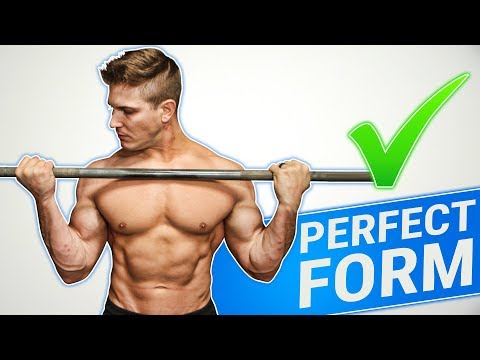
Standing Barbell Curl Overview
The standing barbell curl is a barbell move for your arms. It mostly works your biceps. Your biceps are the muscles on the front of your upper arms. It also uses your forearms and your belly to stay steady. You hold a barbell with your palms up and curl it toward your chest. You only need a barbell and open space. The standing barbell curl is great for beginners. It is a simple way to build bigger, stronger arms. You can move real weight with both arms at once. That helps you get strong over time. This move fits well on an arm day or a pull day. Do it after your big back pulls. It also works near the start of an arm workout.
What Is The Point of the Standing Barbell Curl?
The standing barbell curl builds bigger, stronger biceps. It's the classic move for arm size and strength that everyone recognizes.
How To Do The Standing Barbell Curl
- Stand tall with your feet about hip-width apart, knees soft. Hold a barbell with an underhand grip roughly shoulder-width apart, arms hanging straight down.
- Set your shoulders back and down, and brace your core so your torso stays still. Pin your elbows to your sides, just in front of your hips.
- Take a breath and begin the curl by flexing your biceps, keeping your upper arms locked in place. Only your forearms should move.
- Curl the bar up in a smooth arc toward your chest. Keep your wrists straight and neutral rather than letting them bend back.
- Bring the bar up until your biceps are fully contracted, without swinging your elbows forward. Stop before your elbows drift out in front of your body.
- Squeeze your biceps hard at the top for a second. This peak contraction is where a lot of the growth signal comes from.
- Lower the bar under control over 2 to 3 seconds back to the start. Resist the weight the whole way down instead of dropping it.
- Let your arms extend nearly straight at the bottom to get a full stretch, but keep a hint of tension on the biceps. Do not swing into the next rep.
- Keep your body still and your core braced between reps. Since this is a beginner biceps builder, aim for 8 to 12 clean reps per set.
Standing Barbell Curl Form Tips
- Keep your elbows pinned close to your sides.
- Move only your forearms. Your upper arms stay still.
- Keep your wrists straight and firm.
- Lift your chest and keep your shoulders back.
- Curl the bar up with control. No swinging.
- Squeeze your biceps hard at the top.
- Lower the bar slowly on every rep.
- Breathe out as you curl. Breathe in as you lower.
- Keep your belly a little tight to stay steady.
- Stand tall and do not lean back to lift.
Common Mistakes to Avoid for the Standing Barbell Curl
- Swinging the torso to heave the bar up. Rocking back and using your hips turns the curl into a whole-body cheat and takes the load off the biceps. Stand tall, brace your core, and let only your forearms move.
- Letting the elbows drift forward. When your elbows travel out in front, the front delts take over and the biceps get an easier ride. Pin your elbows to your sides and keep them there the whole set.
- Bending the wrists back under load. A cocked-back wrist leaks force and strains the joint. Keep your wrists straight and stacked so the pull goes straight into the biceps.
- Dropping the bar on the way down. Letting the weight fall wastes the eccentric, which is one of the best muscle-building parts of the rep. Control a slow 2 to 3 second lowering on every rep.
- Using too much weight. Overloading forces you to swing, half-rep, and cheat the movement. Pick a weight you can curl cleanly with your elbows locked and a real squeeze at the top.
- Cutting the range of motion short. Half-curling in the middle skips both the stretch at the bottom and the full contraction at the top. Extend nearly straight at the bottom and curl all the way up.
- Shrugging the shoulders up as you curl. If your traps get involved, the biceps do less work and your neck tightens. Keep your shoulders down and back and isolate the arms.
- Failing to brace the core. A loose trunk lets your body sway and feeds momentum into the lift. Tighten your abs and keep your torso like a post through the whole set.
- Flaring the elbows out to the sides. Letting the elbows wander wide changes the line of pull and reduces biceps tension. Keep them tucked close to your ribs and just in front of your hips.
- Rushing the reps. Fast, bouncy curls rely on momentum and barely load the muscle. Slow down, feel the biceps work, and make each rep deliberate.
- Not squeezing at the top. Blasting up and immediately dropping skips the peak contraction where the biceps work hardest. Pause and flex hard at the top before you lower.
Standing Barbell Curl Workout Tips
- Keep your elbows pinned to your sides the entire set. This locks the upper arm in place so the biceps do the lifting instead of the shoulders, and it is the single biggest fix for a sloppy curl.
- Use a strict, controlled tempo. A smooth lift and a 2 to 3 second lowering keeps constant tension on the biceps and builds far more than a bouncy swing.
- Squeeze hard at the top of every rep. Pausing and flexing in the fully contracted position strengthens the mind-muscle connection and hits the biceps where they work hardest.
- Get a full stretch at the bottom. Letting the arms extend nearly straight loads the biceps in a lengthened position, which pays off for growth, just keep a hint of tension.
- Brace your core and stand tall to kill momentum. A stiff torso stops the body swing that beginners lean on and forces the arms to do honest work.
- Keep your wrists straight and neutral. A stacked wrist channels force straight into the biceps and protects the joint from strain.
- Program curls after your bigger pulling lifts. The biceps get worked on rows and pulldowns, so curling later lets you finish them off when the big movements are done.
- Aim for 8 to 12 reps for 3 to 4 sets. That range builds biceps size well and lets a beginner keep strict form throughout.
- Progress with small weight jumps or an extra rep once form is clean. Slow, steady overload you can control beats ego loading, which is progressive overload done right.
- Try a slower eccentric or a pause at the top to add challenge without more weight. Manipulating tempo is a great way to overload the biceps when the bar feels light.
- Do not let the bar drift with your elbows forward. If your elbows creep ahead, reset lighter and relearn the strict path so the biceps stay in charge.
- Film a set from the side. Video quickly shows swinging, elbow drift, and short reps that you cannot feel while lifting.
- Mix in an EZ bar if your wrists get cranky. The angled grip is easier on the wrists while still hammering the biceps, so swap it in when the straight bar bothers you.
- Keep the reps quality over quantity. A few strict, full-range curls beat a dozen sloppy swings for building real arm size.
- Do not chase failure on every set. Leaving a rep in the tank keeps your form tight and lets your elbows and wrists recover between sessions.
- Be patient with arm growth. Biceps are a small muscle, so consistent, strict curls over months are what finally add size.








Questions & Comments
Be the first to ask a question about this exercise.