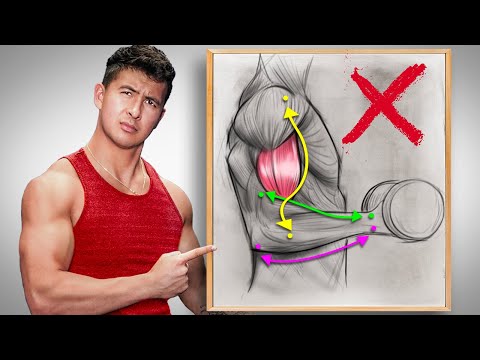
Standing Dumbbell Curl Overview
The standing dumbbell curl is a classic arm move. You hold a dumbbell in each hand and curl them up. It works your biceps, the front muscles of your upper arms. It also works your forearms and abs. Abs are your belly muscles. You need a pair of dumbbells. It is a great move for beginners. Dumbbells let each arm work on its own. That fixes strength gaps side to side. This move builds bigger, stronger arms. It also trains your grip. The standing dumbbell curl fits on an arm day or pull day. Use a weight you can lift with clean form. Add load slowly over time.
What Is The Point of the Standing Dumbbell Curl?
Standing dumbbell curls build bigger, stronger biceps while improving grip strength. This classic move targets your arms directly and helps create that peak everyone wants.
How To Do The Standing Dumbbell Curl
- Stand tall with a dumbbell in each hand, arms hanging at your sides and palms facing forward. Set your feet about hip width apart for a stable base.
- Roll your shoulders back, lift your chest, and brace your core. A tight torso keeps you from swinging the weights up.
- Pin your elbows to your sides and keep them fixed there for the whole set. Your upper arms should not travel forward as you curl.
- Curl both dumbbells up by squeezing your biceps, keeping your palms facing up throughout. Only your forearms should move as the weights rise.
- Keep your wrists straight and firm so the load stays on the biceps rather than the forearms. Drive the movement with the muscle, not momentum.
- Continue until your forearms nearly touch your biceps and the muscle is fully contracted. Do not let your elbows drift forward to gain extra range.
- Squeeze your biceps hard at the top and hold for a full second. This peak contraction is where a lot of the growth happens.
- Lower the dumbbells slowly and under control over 2 to 3 seconds back to your sides. Resist the weight the whole way down instead of letting it drop.
- Stop just short of your arms fully hanging to keep tension, then curl again. As a beginner biceps builder, aim for 10 to 15 reps for 3 to 4 sets.
Standing Dumbbell Curl Form Tips
- Keep your elbows close to your sides.
- Stand tall. Do not lean back to lift.
- Curl with your biceps, not your shoulders.
- Keep your wrists straight and strong.
- Squeeze your biceps at the top.
- Lower the weights slow and controlled.
- Keep tension in your biceps the whole time.
- Keep your core a little tight for balance.
- Breathe out as you curl. Breathe in as you lower.
Common Mistakes to Avoid for the Standing Dumbbell Curl
- Swinging the torso to heave the weights up. Rocking your body to fling the dumbbells uses momentum instead of your biceps and can strain your lower back. Stand tall, brace your core, and let only your forearms move.
- Letting the elbows drift forward. When your elbows travel out in front, the front delts take over and the biceps get an easier ride. Keep your upper arms pinned to your sides the whole set.
- Using too much weight. Going too heavy forces you to cheat with momentum and lose the squeeze. Pick dumbbells you can curl strictly, then add small jumps over time.
- Cutting the range of motion short. Half reps that never fully lower or fully squeeze build strength in only a slice of the movement. Come near full extension at the bottom and full contraction at the top.
- Dropping the weights fast on the way down. Rushing the negative wastes the eccentric, one of the best muscle-building parts of the rep. Lower for 2 to 3 seconds every time.
- Bending the wrists back under load. A cocked-back wrist leaks tension off the biceps and can strain the joint. Keep your wrists straight and firm throughout.
- Curling both arms unevenly. Letting your stronger arm lead can quietly build an imbalance over time. Match the effort and range on both arms every rep.
- Rolling the shoulders forward. Rounding your shoulders shifts the load and puts the joint in a weak position. Keep your chest up and shoulders back.
- Bouncing at the bottom to start each rep. Using a rebound out of the bottom robs the biceps of tension. Come to a controlled stretch and curl from a dead stop.
- Rushing through reps with no focus. Blasting through curls without feeling the biceps wastes the whole set. Slow down, squeeze, and connect with the muscle.
- Losing the top squeeze. Skipping the peak contraction leaves growth on the table. Pause and clench the biceps hard at the top of every rep.
Standing Dumbbell Curl Workout Tips
- Keep your elbows pinned to your sides. Fixing the upper arms forces the biceps to do the work and stops the front delts from helping.
- Chase the mind-muscle connection. Think about squeezing your biceps to lift the weight rather than just moving your arm, which is one of the oldest ways to build arms.
- Control the eccentric for 2 to 3 seconds. A slow lower keeps tension on the biceps and drives more growth than dropping the dumbbells.
- Squeeze hard at the top of every rep. A one second peak contraction fully shortens the muscle and cleans up any swing.
- Keep your wrists straight and strong. A neutral wrist keeps the load on the biceps and protects the joint.
- Dumbbells let each arm work on its own. Because each side moves independently, you can find and fix any strength gap between arms.
- Try alternating arms to focus on each side. Curling one arm at a time lets you pour full attention into the working biceps.
- Program curls at the end of a pull or arm day. Your biceps are small, so hit the big pulls first and finish with direct arm work.
- For size, use 10 to 15 reps for 3 to 4 sets. This range balances tension and volume for a beginner building arm size.
- Add small, steady weight over time. Little jumps you can control beat ego loading, and progressive overload is what grows arms long term.
- Rotate in a supinating curl. Twisting your pinky up as you lift squeezes the biceps a little harder at the top.
- Do not swing to grind out extra reps. If you have to cheat, the set is done, so stop or drop the weight.
- Try a pause at the top on some sets. A held squeeze at peak contraction makes lighter weight feel much harder.
- Superset with a triceps move for a fast arm pump. Alternating biceps and triceps keeps you efficient and fills the arms with blood.
- Keep a light core brace throughout. A stable torso stops momentum and keeps all the tension on your biceps.
- Be patient and consistent. Biceps respond to steady, focused work over months, so keep showing up and progressing.








Questions & Comments
Be the first to ask a question about this exercise.