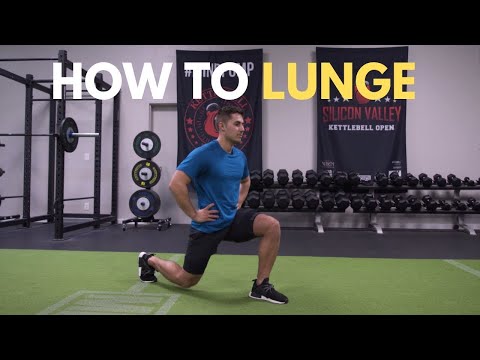
Rear Bodyweight Lunge Overview
The rear bodyweight lunge is a leg move. You step one foot back and lower down. It works your quads, the muscles on the front of your thighs. It also works your glutes, your butt muscles. You need no equipment. You just use your own body weight. You can do it almost anywhere. This lunge builds strong, balanced legs. Stepping back is easier on the knees than stepping forward. That makes it great for beginners. It also builds balance one leg at a time. Do it early in a leg workout. You can do it at home in a small space. Keep your body tall and move slow.
What Is The Point of the Rear Bodyweight Lunge?
The rear bodyweight lunge builds strong quads and glutes while improving balance and stability. It's perfect for developing single-leg strength and fixing muscle imbalances.
How To Do The Rear Bodyweight Lunge
- Stand tall with your feet hip width apart and your hands on your hips or by your sides. Brace your core and pull your shoulders back.
- Take a controlled step back with your right foot, landing on the ball of that foot. Keep your torso upright as you step.
- Lower straight down by bending both knees until they form roughly 90 degree angles. Your back knee should hover just above the floor.
- Keep most of your weight on your front heel and keep your front shin fairly upright. Do not let the front knee cave inward.
- Feel your front glute and quad load up at the bottom. Keep your chest tall and your core braced.
- Pause briefly at the bottom without resting your back knee on the ground. Stay fully in control.
- Push through your front heel to drive back up to standing, squeezing your glute as you rise. Bring your back foot forward to the start.
- Finish all your reps on one leg, then switch, or alternate sides. Drive up through your front heel on every rep and keep your torso tall, letting your front glute and quad do the work. Keep the front knee tracking over the foot, never caving inward. Breathe in as you lower and out as you drive up. Aim for 10 to 15 controlled reps per leg.
Rear Bodyweight Lunge Form Tips
- Keep your body upright and tall.
- Step back far enough for a 90 degree bend.
- Keep your front knee over your front foot.
- Let your back knee hover just off the floor.
- Push through your front heel to stand.
- Keep your core tight the whole time.
- Squeeze your glute at the top of each rep.
- Breathe in down, breathe out up.
- Keep your steps slow and controlled.
Common Mistakes to Avoid for the Rear Bodyweight Lunge
- Letting your front knee cave inward. When the knee collapses toward the midline, it stresses the joint and cuts the glute out of the work. Drive the knee out in line with your foot and squeeze the glute to hold it.
- Leaning your torso too far forward. Pitching forward shifts the load off your legs and onto your lower back. Keep your chest tall and your torso upright through the whole rep.
- Taking too short a step back. A cramped step jams the front knee way past your toes and hammers the joint. Step back far enough that both knees can bend cleanly to about 90 degrees.
- Slamming the back knee into the floor. Dropping hard onto the back knee hurts and shows a total loss of control. Lower until the knee hovers just above the ground, then stop and reverse.
- Rushing the reps. Bouncing up and down uses momentum instead of muscle and wobbles your balance. Control the descent and drive up with real intent on each rep.
- Pushing off your back foot to stand. Using the back leg to shove you up takes the work off the front leg you are training. Drive through your front heel instead to keep the load where it belongs.
- Letting the front heel lift. Rising onto the front toes throws you forward and stresses the knee. Keep the front heel planted and push firmly through it as you stand.
- Losing your balance and staggering. A wobbly lunge means your core is not braced or your step is off line. Brace your abs and fix your gaze on a steady point ahead of you.
- Training one leg far harder than the other. Everyone has a stronger side that quietly hides an imbalance. Match your reps per leg and let the weaker side set the count.
- Holding your breath. Breath-holding through a set makes you dizzy and unsteady. Inhale as you lower and exhale as you drive back up.
- Not going deep enough. Shallow lunges skip the range where the glutes and quads work hardest. Sink until both knees reach about 90 degrees on every rep.
Rear Bodyweight Lunge Workout Tips
- The reverse lunge is easier on the knees than a forward lunge because you step back into it rather than braking forward. That makes it a great starting point for single-leg strength.
- Push through your front heel to drive up. That keeps the work on your glute and quad and protects the knee.
- Keep your torso tall and your core braced. Good posture keeps the load on your legs and off your lower back.
- Train your weaker leg first and let it set the rep count. Single-leg work is one of the best ways to fix an imbalance.
- Step back far enough for a true 90 degree bend in both knees. A good step length protects the front knee.
- Program lunges as a main lower-body move or an accessory. They build balance, strength, and muscle all at once.
- Progress by adding reps, slowing the tempo, or holding dumbbells once bodyweight is easy. Small steps keep you improving.
- Keep the front knee tracking over the foot, never caving in. That alignment is what keeps the knee healthy.
- Use a slow lowering phase. Owning the eccentric builds control and more muscle than simply dropping down.
- Fix your eyes on a point ahead to steady your balance. A still gaze helps a wobbly lunge feel much more solid.
- Squeeze your front glute at the top of each rep. That extra contraction builds the glute and reinforces the pattern.
- The reverse lunge carries over to sports and daily life, where you rarely stand on two even feet. It is athletic strength.
- Do not chase high reps at the cost of form. Clean, controlled reps beat a fast, sloppy set.
- Warm up your hips and knees first with some easy reps. A little movement prep makes the lunge feel much smoother and safer.
- Try a deficit by standing on a low step to increase the range once you are strong. It ramps up the stretch and challenge with no extra weight at all.
- Stay consistent and your legs, balance, and coordination all improve together. Single-leg training pays off fast and carries over to almost every sport.








Questions & Comments
Be the first to ask a question about this exercise.