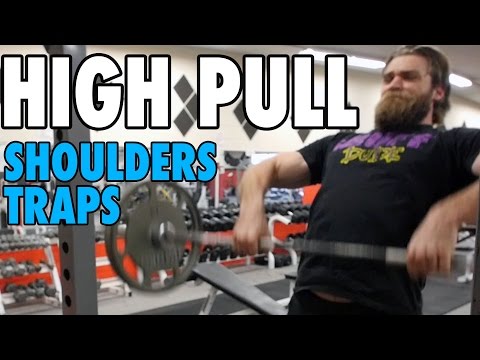
High Pull Overview
The high pull is a fast barbell move. You pull a barbell up to chest level with power. It builds your shoulders and your traps. The traps sit at the top of your back. It also works your biceps and forearms. You use a barbell with an overhand grip. You drive with your hips and legs. This move is good once you have some training. It builds power and speed. It teaches your whole body to work as one. The high pull makes your shoulders and traps strong. Do it early in your workout when you are fresh. Do it before you get tired. Your form must stay sharp.
What Is The Point of the High Pull?
The high pull exercise builds explosive power in your shoulders and upper back. It trains your body to move weight fast and strong, making you more athletic.
How To Do The High Pull
- Stand with your feet about hip-width apart and hold a barbell with an overhand grip slightly wider than shoulder-width. Let the bar rest against your thighs with your arms straight and your shoulders set.
- Brace your core, set a flat back, and hinge slightly at the hips so the bar lowers toward the top of your knees. This is a mini dip that loads your hips to explode.
- Take a breath and explosively extend your hips and knees, driving the floor away and shrugging your shoulders up hard. This triple extension launches the bar upward with power.
- As the bar rises from that leg and hip drive, pull your elbows high and wide, keeping them above your wrists the whole way. The elbows lead and the bar follows close to your body.
- Pull the bar up to about chest or upper chest level, leading with the elbows and keeping the bar close. The power comes from your hips, and your arms just guide the bar up.
- Reach a brief top position with your elbows high and the bar near your chest, then control the bar back down. Do not let it crash back to your thighs.
- Lower the bar under control to the starting position at your thighs, resetting your hips and back. Keep your core braced throughout.
- Reset your breath and brace before the next rep rather than bouncing. Because this is an explosive, power-focused move, keep the reps crisp and stop when the speed drops.
- Aim for 3 to 6 reps for three to five sets, treating it as a power exercise where bar speed matters more than grinding out extra reps.
High Pull Form Tips
- Keep the bar close to your body the whole way.
- Drive up with your hips and legs first.
- Shrug your shoulders as the bar rises.
- Pull your elbows high and wide.
- Keep your elbows above your wrists.
- Keep your back flat and your core tight.
- Bring the bar up to about chest level.
- Lower the bar slow and controlled.
- Keep your arms relaxed until the pull.
Common Mistakes to Avoid for the High Pull
- Pulling with your arms instead of your hips. Trying to muscle the bar up with your biceps and shoulders misses the explosive hip drive that makes the high pull work. Drive hard with your legs and hips first and let your arms just guide the bar up.
- Letting the elbows drop below the wrists. If your wrists rise above your elbows, you turn it into an upright curl and lose the power position. Keep your elbows high and above your wrists so they lead the pull.
- Letting the bar drift away from your body. Any gap between the bar and your torso lengthens the lever and pulls you forward, which strains your back. Keep the bar close and skimming up your body as you pull.
- Rounding the back on the dip. Losing your flat back in the starting hinge loads your spine in a weak position under an explosive move. Set a flat, braced back before every rep and keep your chest up.
- Turning the hip drive into a big squat. Dropping into a deep squat rather than a shallow dip slows the movement and kills the explosiveness. Use a short, sharp hip hinge and dip to load the hips, then explode.
- Grinding slow reps when the power is gone. The high pull is about bar speed, so slow, grindy reps mean fatigue has set in and quality is dropping. Stop the set when the bar slows down rather than pushing junk reps.
- Going too heavy and losing the explosiveness. Overloading the bar turns a fast, powerful pull into a slow strained deadlift-and-heave. Use a weight light enough to move fast with sharp technique.
- Not using triple extension of the hips, knees, and ankles. Skipping the full explosive extension leaves power on the table and puts the work on your arms. Drive through your legs and finish tall on the balls of your feet.
- Holding your breath through the whole set. Locking your air on an explosive lift spikes pressure and leaves you dizzy. Reset your breath and brace before each rep rather than grinding on empty.
- Letting the bar crash back down carelessly. Dropping the bar without control on the way down risks your back and wastes the rep. Guide the bar back to your thighs under control and reset.
- Shrugging late or not at all. Failing to shrug hard at the top of the drive cuts the height and power of the pull. Shrug your shoulders up aggressively as your hips finish extending.
High Pull Workout Tips
- Treat the high pull as a power and explosiveness builder. Its value is teaching your hips to fire hard and fast, which carries over to athletic performance and the Olympic lifts.
- Drive the movement with your hips, not your arms. The explosive triple extension of your hips, knees, and ankles launches the bar, and your arms only guide it, so think legs first.
- Keep your elbows high and above your wrists. Leading with high elbows keeps you in the power position and hits the traps and rear delts as intended.
- Keep the bar close to your body the whole pull. A close bar path protects your back and keeps the power flowing straight up rather than swinging out.
- Prioritize bar speed over grinding reps. This is an explosive lift, so stop the set when the bar slows rather than pushing slow junk reps that build bad habits.
- Program the high pull early in your session when fresh. Power work needs a rested nervous system, so do it before your heavy strength and accessory work.
- Stay in the 3 to 6 rep range for three to five sets. Low, crisp reps with full resets keep every pull explosive and technically sharp.
- Use a weight you can move fast with clean form. Going too heavy kills the speed that makes the movement worthwhile, so keep the load honest.
- Warm up your hips and practice the hinge first. A good warm-up grooves the explosive pattern and protects your back on this fast, demanding lift.
- Film your pull from the side. Video shows whether your elbows stay high and your hips drive first, which is hard to feel at speed.
- Pair it with heavy pulls and squats in your program. The high pull complements strength work by building the fast, explosive side of your training.
- Finish tall on the balls of your feet. Full triple extension makes the pull more powerful and teaches your body to transfer force from the ground up.
- Reset your breath and brace before each rep. A fresh brace keeps your spine supported and every explosive pull safe.
- Progress with small load bumps while keeping speed. Add weight only when you can still move the bar fast, since power quality comes before load here.
- Consider the dumbbell or kettlebell version to learn the pattern. A single implement can make the explosive pull easier to feel before you load a barbell.
- Be patient and let power develop over time. Explosiveness is a skill that improves with consistent, quality practice rather than one heavy session.








Questions & Comments
Be the first to ask a question about this exercise.