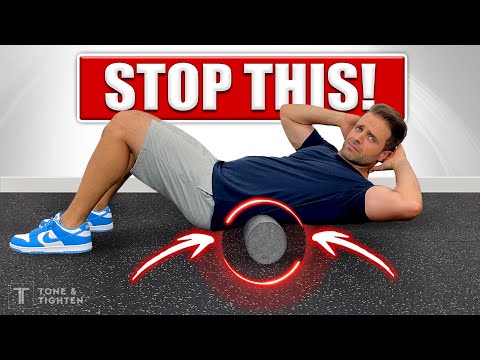
Foam Rolling Lats Overview
Foam rolling lats is a way to loosen your side back. You lie on a foam roller under your armpit and roll. This works your lats. The lats are the big wing muscles on the sides of your back. Rolling helps release tight, sore spots. It is a recovery move, not a strength move. You need a foam roller for this. Foam rolling lats helps your back feel loose and free. Loose lats help you reach overhead better. This can help your pull ups and presses. It is easy and great for beginners. Use it before a workout to warm up. You can also use it after to help you recover. It feels good on a tight, stiff back.
What Is The Point of the Foam Rolling Lats?
The foam rolling lats exercise releases muscle tension and improves flexibility in your back. It helps reduce tightness and prevents injury after workouts.
How To Do The Foam Rolling Lats
- Place a foam roller on the floor and lie down on your side so the roller sits under your armpit area, along the side of your ribcage. Extend your top arm overhead so the lat is exposed and lengthened.
- Stack your body so the roller runs across the meaty lat muscle just below the armpit. Rest your weight onto it gradually rather than dropping on hard.
- Support yourself with your other arm and your legs so you can control how much pressure goes into the muscle. This lets you dial the intensity up or down.
- Keep your core lightly braced and your body stable. You want to stay in control so you can find and work the tight spots.
- Slowly roll from your armpit down toward your lower ribs, letting the roller travel along the length of the lat. Move an inch at a time rather than racing back and forth.
- When you hit a tender or tight spot, pause and hold there for 20 to 30 seconds. Breathe slowly and let the pressure ease the knot rather than forcing through it.
- Roll back up toward the armpit under control, keeping the movement slow and deliberate. Adjust how much body weight you load to keep the pressure firm but tolerable.
- Rotate your body slightly forward and back to catch different parts of the lat as you roll. This helps you cover the whole muscle rather than one narrow strip.
- Complete 8 to 10 slow passes on that side, spending extra time on the tender areas, then switch to the other side and repeat the same way.
Foam Rolling Lats Form Tips
- Move slowly the whole time.
- Keep your core tight for control.
- Reach your top arm straight overhead.
- Roll from your armpit down to your lower ribs.
- Pause and breathe on tight spots.
- Support your weight with your other arm and legs.
- Keep your breaths slow and deep.
- Stay off your spine. Roll the side muscle only.
- Keep the pressure firm but not too much.
- Control the roll back up each pass.
Common Mistakes to Avoid for the Foam Rolling Lats
- Rolling too fast. Racing the roller back and forth barely lets the tissue respond and does little to release tightness. Move slowly, an inch at a time, so the muscle has time to relax under the pressure.
- Dropping your full weight on hard from the start. Slamming all your body weight onto a tight lat can be sharply painful and counterproductive. Ease onto the roller and use your supporting arm and legs to control the pressure.
- Rolling on bones or the spine instead of muscle. Grinding the roller over your ribs or shoulder blade hurts and does nothing for the lat. Keep the roller on the meaty muscle along the side of your ribcage below the armpit.
- Holding your breath and tensing up. Bracing against the discomfort makes the muscle guard and resist the release. Breathe slowly and try to relax into the pressure so the tissue can let go.
- Blasting through the most tender spots. Racing past the knots misses the whole point, since those tight areas are what need attention. Pause and hold on tender spots for 20 to 30 seconds.
- Using too much pressure and chasing pain. Believing more agony means more benefit leads to bruising and a guarding response. Aim for a strong but tolerable discomfort, never a sharp stabbing pain.
- Not extending the top arm overhead. Leaving the arm down keeps the lat bunched and hard to reach. Reach the arm overhead to lengthen and expose the muscle for better contact.
- Only rolling one narrow strip. Staying on a single line misses much of the lat. Rotate slightly forward and back to cover the whole muscle.
- Rushing the whole thing in a few seconds. Treating it as a quick box to tick gives little benefit, since release takes time under pressure. Give each side a real 8 to 10 slow passes.
- Neglecting one side. Rolling only your tighter side leaves the other neglected and can feed an imbalance. Give both lats similar attention.
- Rolling an injured or acutely painful area hard. Grinding on a genuinely injured spot can make things worse. Ease off and see a professional if something feels like a real injury rather than normal tightness.
Foam Rolling Lats Workout Tips
- Roll slowly and let the tissue respond. Moving an inch at a time gives the muscle time to relax and actually release under the pressure.
- Extend your top arm overhead. Lengthening the lat exposes the muscle so the roller makes clean contact along its length.
- Pause and hold on tender spots for 20 to 30 seconds. Giving the tight areas sustained pressure is what coaxes them to let go.
- Breathe slowly and relax into the pressure. A calm breath tells your nervous system to ease off so the muscle can release.
- Control the pressure with your supporting arm and legs. Using your limbs to load or unload lets you keep the intensity firm but tolerable.
- Rotate slightly to cover the whole lat. Angling forward and back catches different parts of the muscle for a more complete job.
- Use this before training to improve overhead mobility. Loosening the lats can help your shoulders reach overhead more freely for pressing and pulling.
- It also works well as a recovery tool between sessions. Rolling tight lats on off days can ease stiffness and help you move better.
- Keep the pressure strong but not brutal. Aim for a good-hurt tolerable discomfort, since chasing sharp pain just makes the muscle guard.
- Give both sides similar attention. Balanced work keeps your shoulders and back moving evenly.
- Spend 8 to 10 slow passes per side. Enough time under pressure is what makes foam rolling actually effective.
- Pair it with lat stretching for better results. Rolling then stretching the loosened tissue can improve your range more than either alone.
- Keep the roller on muscle, not bone. Staying on the meaty lat keeps it productive and off the ribs and spine.
- Do it consistently, not just once. Tissue quality and mobility respond to regular attention over time.
- Ease off anything that feels like a real injury. Normal tightness is fair game, but sharp pain in one spot is a signal to back off.
- Stay relaxed and unhurried. The goal is to down-regulate and release, so give it calm, patient attention.








Questions & Comments
Be the first to ask a question about this exercise.