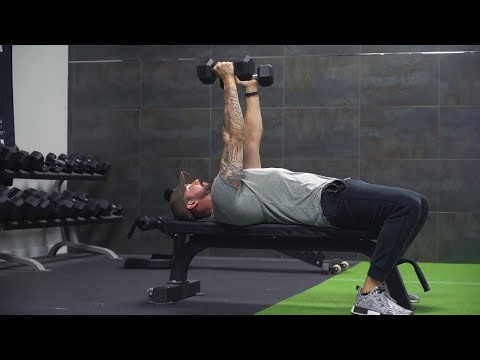
Dumbbell Fly Overview
The dumbbell fly is a chest move you do lying down. It works your chest, the big muscles on the front of your ribs. It also works your shoulders a little. You need two dumbbells and a flat bench. You open your arms wide, then bring them back together. The dumbbell fly gives your chest a deep stretch. It helps you feel your chest work. It builds a wide, full chest over time. It suits beginners well. Put it after your main chest press. Use light weight and slow reps here. This move is about the squeeze, not heavy loads.
What Is The Point of the Dumbbell Fly?
The dumbbell fly exercise builds chest width and creates that rounded, full chest look. It stretches your chest muscles through a full range of motion for better growth.
How To Do The Dumbbell Fly
- Lie flat on a bench with a dumbbell in each hand and your feet planted on the floor. Press the dumbbells up over your chest with your palms facing each other.
- Set your shoulder blades down and back and press them into the bench. This stable base protects your shoulders and keeps the work on your chest.
- Put a soft, fixed bend in your elbows and hold it for the whole set. This slight bend is what keeps the fly safe, since straight arms would strain your elbows and joints.
- Take a breath and brace, then lower the dumbbells out to the sides in a wide arc. Keep that elbow bend fixed and think of hugging a big barrel as your arms open.
- Lower until you feel a strong stretch across your chest, with your upper arms roughly level with the bench. Do not drop so low that your shoulders feel strained.
- Feel the stretch at the bottom for a beat without bouncing. Your chest, not your shoulders or elbows, should be doing the stretching.
- Squeeze your chest to bring the dumbbells back up along the same wide arc. Think about hugging the barrel closed and bring the weights together above your chest.
- Stop just short of clanking the dumbbells together to keep tension on the chest, then start the next rep. Move slowly and work in the 10 to 15 rep range for 3 to 4 sets.
Dumbbell Fly Form Tips
- Keep a slight bend in your elbows the whole time. Hold that bend.
- Move your arms in a wide arc. Think of hugging a big tree.
- Lower until you feel a chest stretch. Do not go past comfort.
- Keep your shoulder blades pulled down and back.
- Move slowly, mostly on the way down.
- Squeeze your chest to bring the weights together.
- Keep your wrists straight and firm.
- Keep your feet flat and your hips on the bench.
- Breathe in as you open. Breathe out as you close.
Common Mistakes to Avoid for the Dumbbell Fly
- Straightening your arms into a locked position. Locking your elbows turns the fly into a pressing motion and puts the load onto your elbow joints. Keep a soft, fixed bend in your elbows for the whole set so the chest stays in charge.
- Going too heavy. A fly puts your chest in a stretched, vulnerable spot, and a heavy dumbbell there can strain the shoulder. Use a lighter weight than you press and control it, since this is a stretch and squeeze move, not a max lift.
- Dropping the dumbbells too low. Sinking your arms far below the bench overstretches the shoulder joint and risks injury. Lower only until you feel a strong chest stretch with your upper arms about level with the bench.
- Bending and straightening the elbows through the rep. Changing your elbow angle turns the fly into a sloppy press and cheats the chest. Set the bend at the start and keep it locked the entire time.
- Bouncing out of the bottom stretch. Using a bounce to reverse the weight strains the shoulder and skips the muscle work. Pause briefly and squeeze your chest to bring the dumbbells back up under control.
- Losing your shoulder blade set. If your shoulders round forward off the bench you lose your base and load the joint. Keep your blades pinned down and back into the bench the whole set.
- Rushing the reps. Speeding up lets momentum swing the weights and takes tension off the chest. Move slowly, especially through the stretch, so the chest does the work.
- Bringing the dumbbells up too far and resting them together. Clanking them together at the top lets your chest relax between reps. Stop just short so the tension stays on the muscle.
- Flaring the arms straight out level with your shoulders. Opening the arms into a T can pinch the shoulder. Keep the arc slightly toward your lower chest to keep the joint happy.
- Arching your lower back to help. Lifting your hips and arching to swing the weights takes the chest out and strains your back. Keep your glutes and upper back down and let your chest do the job.
- Holding your breath the whole set. Locking your breath spikes tension and tires you out. Breathe in as you lower and out as you squeeze the dumbbells up.
Dumbbell Fly Workout Tips
- Think of the fly as a stretch and a squeeze, not a lift. Picture hugging a big barrel, opening your arms wide and then closing them, and let your chest do all the work.
- Keep a soft, fixed bend in your elbows the entire set. That fixed angle is what makes the fly safe and keeps the load on your chest instead of your joints.
- Use a slow, controlled eccentric. Lowering under control into a big stretch is where the chest gains the most, so never drop the weights.
- Feel for a strong stretch at the bottom and pause there briefly. The stretched position is the money spot of this exercise.
- Go lighter than your ego wants. The fly is about a clean stretch and squeeze, and too much weight only shifts strain to your shoulders.
- Squeeze your chest hard at the top and stop just short of touching the dumbbells. Keeping tension on the muscle beats banging the weights together.
- Program flies after your pressing work as a chest finisher. They add stretch and a strong contraction that presses alone do not.
- For size, work in the 10 to 15 rep range for 3 to 4 sets. Higher reps with a strong stretch suit this movement well.
- Try it on a slight incline to hit more of the upper chest. Changing the bench angle shifts where you feel the stretch.
- Keep your shoulder blades pinned down and back into the bench. A stable base protects the joint and keeps the chest loaded.
- Add weight slowly and only when your form stays clean. Progressive overload matters, but never at the cost of controlling the stretch.
- Chase the mind-muscle connection here more than heavy weight. Feeling the chest stretch and contract is exactly what a fly is for.
- Film a set from the side. Video shows whether your elbow angle stays fixed and how deep your stretch really is.
- Do not go so deep that your shoulder feels pinched or strained. A strong chest stretch is the goal, not shoulder pain.
- Try a one and a half rep style for extra burn. Lower fully, come halfway up, lower again, then finish the rep.
- Breathe in on the way down and out as you squeeze. A steady breathing rhythm keeps you braced and in control.
- Be patient. A full, detailed chest is built over months of quality stretch and squeeze work, not heavy ego lifting.








Questions & Comments
Be the first to ask a question about this exercise.