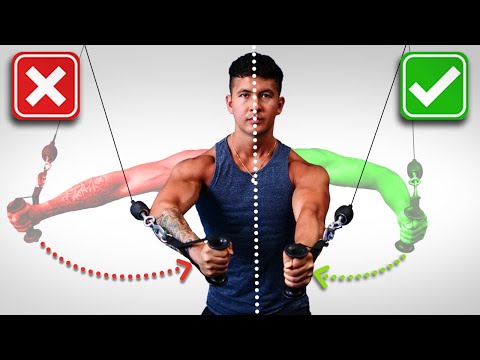
Flat Bench Cable Flys Overview
Flat bench cable flys build a full, strong chest. You lie on a flat bench between two cables. You open your arms wide, then bring them together over your chest. This works your chest muscles. It also works the front of your shoulders. You need a cable machine with the pulleys set at chest height. The cables keep tension the whole time. This move is for intermediate lifters. Cables pull hard even at the top. This gives your chest a great squeeze. Flys stretch and shape your chest well. They fit nicely after your pressing moves. You can do flat bench cable flys on chest day. Use them to finish off your chest with a big pump.
What Is The Point of the Flat Bench Cable Flys?
The flat bench cable flys exercise builds chest width and definition by isolating your pecs. It creates constant tension throughout the movement for better muscle growth.
How To Do The Flat Bench Cable Flys
- Set the cable pulleys to about chest height on both sides and attach a single handle to each. Position a flat bench directly between the two cables so you will lie centered in the line of pull.
- Grab a handle in each hand, then sit and lie back on the bench with the cables running out to your sides. Plant your feet flat on the floor and set your shoulder blades down and back into the bench.
- Press the handles up so your arms are extended over your chest with your palms facing each other and a soft, fixed bend in your elbows. This slight elbow bend stays locked the whole set to protect the joint.
- Brace your core and set your shoulders. A stable shoulder position is what keeps the work on your chest and off the front of your shoulders.
- Open your arms out wide in a smooth arc, lowering the handles out to the sides until you feel a strong stretch across your chest. Keep that elbow angle fixed, since bending more would turn it into a press.
- Take about two to three seconds on the way out and control the stretch. Do not let the cables pull your arms back so far that your shoulders feel strained.
- Reverse the motion by squeezing your chest to bring the handles back together in the same wide arc. Think about hugging a big tree and driving with the pecs, not the arms.
- Bring your hands together above your chest and squeeze the pecs hard for a full second at the top. The constant cable tension makes this peak contraction especially strong.
- Lower under control and repeat without losing your shoulder set. Flat bench cable flys work best in the 10 to 15 rep range for 3 to 4 sets.
Flat Bench Cable Flys Form Tips
- Keep a slight bend in your elbows the whole time.
- Move your arms in a wide arc, not a straight press.
- Keep your back and hips flat on the bench.
- Bring your hands together right above your chest.
- Squeeze your chest hard at the top of each rep.
- Return slowly and feel the stretch across your chest.
- Breathe out as you close. Breathe in as you open.
- Keep your shoulders down and back, not shrugged.
- Move with control. No jerking the handles.
Common Mistakes to Avoid for the Flat Bench Cable Flys
- Bending your elbows to turn the fly into a press. When the elbows collapse and straighten through the rep, you shift the work to your triceps and front delts and lose the chest isolation. Keep a soft, fixed elbow bend and open and close from the shoulders.
- Losing your shoulder blade set. If your shoulders round forward off the bench as you open up, you put the joint at risk and take tension off the chest. Pin your shoulder blades down and back into the bench and hold that position every rep.
- Going too heavy. Overloading a fly forces your elbows to bend and your shoulders to strain, which defeats the isolation and beats up the joint. Pick a weight you can control through a full, clean arc and build up slowly.
- Overstretching at the bottom. Letting the cables pull your arms too far back puts your shoulder in a vulnerable position under load. Lower only to where you feel a strong stretch, not to where the joint feels pinched or unstable.
- Rushing through the reps. Swinging the handles together fast uses momentum and robs the chest of tension. Control both directions and take a slow two to three second stretch on the way out.
- Not squeezing at the top. Blowing past the peak contraction wastes the best part of a cable fly, since the tension stays high where a dumbbell fly goes slack. Bring your hands together and crush the pecs for a full second.
- Flaring the arms with straight elbows. Locking your elbows out turns the fly into a strange, risky lever that stresses the elbow joint. Keep that gentle bend so the load stays on the chest.
- Letting your hips and back arch off the bench. Bridging up to muscle the weight cheats the movement and can strain your lower back. Keep your glutes and upper back down and let the chest do the work.
- Pressing the handles up and inward instead of arcing. If you push rather than hug, you drift back into a press pattern. Keep the motion a wide arc where the hands travel out and back, not up and down.
- Setting the pulleys at the wrong height. Cables set too high or too low change the fly into an incline or low fly and shift the emphasis. Set them near chest height for a true flat-bench chest fly.
- Uneven arms during the rep. Letting one arm lead or lag builds an imbalance and shifts load unevenly. Move both handles together and mirror the arc on each side.
- Holding your breath through the set. Failing to breathe steadily weakens your brace and can spike blood pressure. Exhale as you squeeze the pecs together and inhale on the stretch.
Flat Bench Cable Flys Workout Tips
- Warm up with a light set to find your groove. Grooving the arc first means your working sets feel smooth and your chest is ready to work.
- Love the constant tension of cables. Unlike dumbbells, cables keep the chest loaded at the top of the rep, so squeeze hard where the tension is highest.
- Keep a soft, fixed elbow bend the whole set. That locked angle is what separates a chest fly from a press and keeps the pecs doing the work.
- Chase the mind-muscle connection. Picture hugging a big tree and driving the movement with your chest, since feeling the pecs work builds them faster.
- Control the stretch for two to three seconds. A slow, deep eccentric under cable tension is a powerful growth stimulus for the chest.
- Program flys after your heavy presses on push day. Use the big presses to build strength first, then flys to isolate and finish the chest.
- Aim for 10 to 15 reps across 3 to 4 sets. Flys reward moderate to higher reps with a strong squeeze rather than heavy grinding.
- Squeeze your pecs together at the top for a full second. That peak contraction is exactly where cables shine over free weights.
- Add weight in small steps over time. Steady progressive overload with clean arcs beats loading up and turning it into a press.
- Try a slight pause in the stretched position on some sets. Pausing where the chest is lengthened teaches it to produce force at its most vulnerable point.
- Keep your shoulders down and back throughout. A set shoulder blade protects the joint and keeps the tension on the chest.
- Experiment with pulley height for different emphasis. Slightly higher cables hit the lower chest and lower cables hit the upper chest, so vary it over time.
- Do not overstretch to chase range. A little less depth with a healthy shoulder beats a huge stretch that leaves your joint aching.
- Film from the side or above to check your arc and symmetry. A quick video reveals if you are pressing instead of flying or favoring one arm.
- Do not train to failure every set. Leaving a rep in reserve protects your shoulders and keeps your form clean.
- Be consistent and patient. A full, detailed chest is built over months of controlled, well-squeezed reps, not a few heavy sessions.








Questions & Comments
Be the first to ask a question about this exercise.