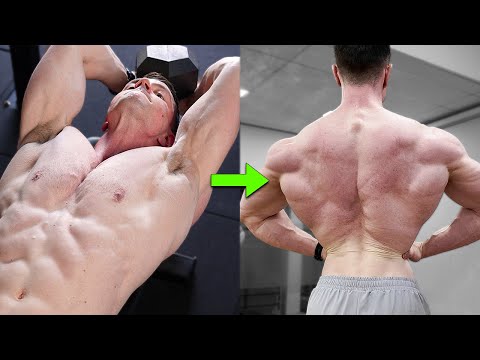
Decline Barbell Pullover Overview
The decline barbell pullover works your upper body on a decline bench. You lower a barbell back over your head in a wide arc. It builds your lats, the big wing muscles on the sides of your back. It also works your chest and triceps. Your triceps are on the back of your arms. The decline angle gives your lats a deep stretch. You need a barbell and a decline bench. This move builds a wide, strong back and a full chest. The long arc stretches your lats more than most moves. That deep stretch helps them grow. It suits lifters who know basic bench moves. Use it on back day or chest day. Go light, move slow, and do 10 to 12 reps.
What Is The Point of the Decline Barbell Pullover?
The decline barbell pullover builds a massive back and chest while improving your ribcage flexibility. It hits your lats hard while giving your chest a deep stretch.
How To Do The Decline Barbell Pullover
- Set a decline bench at about 30 to 45 degrees and hook your legs in securely. Lie back and grab a barbell with both hands, a bit inside shoulder width, and press it up over your chest with your arms extended.
- Keep a slight, fixed bend in your elbows and hold it there for the whole set. Locking a soft elbow angle protects the joint and keeps the work on your lats and chest.
- Brace your core and pull your shoulders down and back into the bench. A stable base lets you move the bar in a big arc without straining your back.
- Take a breath and slowly lower the barbell behind your head in a wide arc, keeping that fixed elbow bend. Move under control and do not let the weight drop.
- Lower until you feel a strong stretch across your lats and chest, with your upper arms roughly in line with your torso. Do not force it past a comfortable, controlled stretch.
- Pause briefly in the stretched position, feeling the tension in your lats. The decline angle deepens this stretch, which is a big part of why the pullover builds the lats and rib cage.
- Pull the barbell back over your chest along the same wide arc, driving with your lats. Think about pulling your upper arms down toward your ribs rather than just bending your elbows.
- Squeeze your lats at the top over your chest without fully losing tension. Keep your core braced so you do not arch off the bench.
- Continue for 8 to 12 controlled reps, keeping tension throughout. Use a weight you can move in a smooth arc, since control matters far more than load here.
Decline Barbell Pullover Form Tips
- Keep a soft bend in your elbows the whole time.
- Keep that same elbow bend all the way through.
- Lower the bar in a slow, wide arc.
- Feel a deep stretch in your lats at the bottom.
- Pull back on the same path you lowered on.
- Squeeze your lats as the bar comes up.
- Keep your hips and back on the bench.
- Breathe in as you lower. Breathe out as you pull.
- Keep tension the whole set. Do not rest at the top.
Common Mistakes to Avoid for the Decline Barbell Pullover
- Bending and straightening the elbows through the rep. Turning the pullover into a triceps extension by flexing your elbows takes the work off your lats and chest. Set a slight, fixed elbow bend and keep it locked the entire time.
- Using too heavy a barbell. A load you cannot control in a long arc wrecks your form and puts your shoulders in a vulnerable stretched position under stress. Choose a lighter weight you can move smoothly and feel your lats working.
- Dropping the bar fast behind your head. Letting the weight fall into the stretch skips the eccentric and jerks your shoulder joint at its most exposed point. Lower slowly under full control and own the stretch.
- Forcing the stretch too deep. Cranking the bar down past a comfortable range hunts for extra stretch at the cost of your shoulders. Lower to a strong but controlled stretch and stop there.
- Arching the lower back off the bench. Overarching to gain range strains your spine and takes tension off your target muscles. Keep your core braced and your back in contact with the bench.
- Losing the shoulder blade set. If your shoulders round forward as you pull, you lose your stable base and stress the joint. Keep your shoulder blades pulled down and back into the bench throughout.
- Pulling with the arms instead of the lats. Yanking the bar up by bending your elbows shorts the lats. Think about driving your upper arms down toward your ribs so your lats do the pulling.
- Setting the decline too steep for comfort. An aggressive decline can leave you feeling head-heavy and struggling to control the bar. Start at a moderate angle and steepen it only if it feels safe.
- Holding your breath through the whole rep. No breathing on a decline spikes pressure to your head and leaves you weak. Inhale as you lower into the stretch and exhale as you pull the bar back.
- Rushing reps and losing the mind-muscle connection. Speeding through hides whether your lats are actually working. Slow down and feel the stretch and squeeze on every rep.
- Not securing your legs on the decline. If your lower body is not locked in, you slide and lose your base under the moving weight. Hook your legs in tight and test the hold before you start.
Decline Barbell Pullover Workout Tips
- Keep a slight, fixed bend in your elbows the whole set. Locking the elbow angle turns the pullover into a lat and chest movement instead of a triceps one and protects the joint.
- Use a lighter weight than your ego wants. The pullover puts your shoulder in a deep stretch, so control and feel beat heavy plates every time.
- Lower slowly into the stretch. A controlled eccentric loads your lats and chest in their lengthened position, which is where a lot of the growth comes from.
- Pause in the stretched position for a beat. The decline deepens the stretch, so holding it briefly makes the exercise more effective for building the lats and rib cage.
- Drive your upper arms toward your ribs to pull the bar back. Cueing the arms down rather than the elbows in keeps the work squarely on your lats.
- Program the decline pullover as accessory back or chest work. It builds the lats and stretches the rib cage in a way most rows and presses do not.
- Aim for 3 to 4 sets of 8 to 12 controlled reps. This movement rewards a moderate rep range done with a big, smooth arc and constant tension.
- Keep your shoulder blades set down and back. A packed shoulder position gives you a stable base and keeps the joint safe through the stretch.
- Brace your core to protect your lower back. A tight trunk stops you from arching off the bench to chase extra range.
- Progress with small weight jumps or a longer pause. Because the stretched position is vulnerable, add load slowly and lean on control to overload safely.
- Chase the mind-muscle connection in your lats. Actively feeling your lats stretch and contract makes the pullover far more productive than just moving the bar.
- Secure your legs firmly on the decline. A locked lower body gives you the stable base you need to control the weight overhead.
- Try a dumbbell version now and then for variety. A single dumbbell pullover lets you find a comfortable path and gives a slightly different stretch, but keep the barbell as your main tool here.
- Warm up your shoulders before loading up. A few light sets prime the joint for the deep stretch so your working sets feel smooth and safe.
- Do not train to failure on every set. Leaving a rep in the tank in a stretched, vulnerable position keeps your shoulders healthy for the long run.
- Be patient and prioritize feel over load. The pullover is about a quality stretch and squeeze, so let the muscle, not the weight, drive your progress.








Questions & Comments
Be the first to ask a question about this exercise.