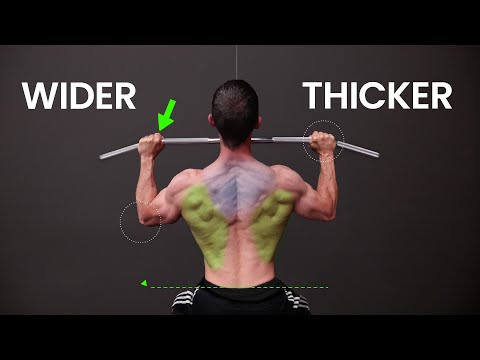
Cable Underhand Pull Down Overview
The cable underhand pull down builds a wide back. You sit at a cable machine and grab a wide bar palms up. You pull the bar down to your upper chest. This works your lats, the big wing muscles on the sides of your back. It also works your biceps and your middle back. You need a cable machine with a wide bar. The underhand grip lets your biceps help you pull. That makes it a good move for beginners. The cable keeps steady pull the whole rep. This move builds the wide look of your back. It also helps your posture. The cable underhand pull down fits on any pull or back day. It builds a strong, wide back and sets you up for pull-ups later.
What Is The Point of the Cable Underhand Pull Down?
Cable underhand pull down builds a strong, wide back while working your biceps. Perfect for beginners to learn proper pulling form and build upper body strength.
How To Do The Cable Underhand Pull Down
- Set up at a lat pulldown station and attach a wide bar to the high cable. Adjust the thigh pad so it holds your legs down snugly and keeps you anchored.
- Grab the bar with an underhand grip, palms facing you and hands about shoulder-width apart. The underhand grip brings your biceps and lower lats into the pull.
- Sit down and secure your thighs under the pad, then let the bar pull your arms up so your lats are stretched at the top. Keep your chest up and lean back just slightly.
- Before you pull, set your shoulders down and back and brace your core. Pulling your shoulder blades down first is what puts the lats in charge.
- Take a breath and pull the bar down to your upper chest in a smooth, controlled motion. Drive your elbows down and back rather than yanking with your hands.
- Squeeze your shoulder blades together as the bar reaches your chest and hold for one second. Feel the stretch and contraction across your lats and middle back.
- Keep your torso mostly upright with only a slight lean, and do not heave backward to move the weight. The movement comes from your arms and back, not your whole body.
- Return the bar slowly to the top under control, letting your arms fully extend and your lats stretch again. Take about two to three seconds on the way up.
- Breathe out as you pull down and in as you let the bar rise. As a beginner-friendly move, aim for 10 to 15 reps for 3 sets with a weight you can control.
Cable Underhand Pull Down Form Tips
- Sit tall with your chest up the whole time.
- Pull the bar to your upper chest, not your belly.
- Lead the pull with your shoulder blades.
- Keep your elbows close to your body.
- Squeeze your back at the bottom.
- Move slow, both down and up.
- Breathe out as you pull. Breathe in as you rise.
- Let your arms fully straighten at the top.
- Do not lean way back to pull.
- Keep your wrists straight on the bar.
Common Mistakes to Avoid for the Cable Underhand Pull Down
- Leaning way back and heaving the weight down. Swinging your torso to yank the bar turns a controlled lat exercise into a full-body cheat that strains the lower back. Keep only a slight lean and pull with your back and arms, not your bodyweight.
- Pulling with your hands instead of your elbows. If you focus on gripping and yanking, your biceps take over and the lats barely work. Think about driving your elbows down and back so the lats lead the movement.
- Not setting your shoulders down before you pull. Starting with shrugged shoulders lets the traps dominate and keeps the lats from engaging. Depress your shoulder blades first, then pull.
- Cutting the range of motion short at the top. Failing to let your arms fully extend robs the lats of their stretch, which is a key part of the movement. Let the bar rise until your lats lengthen before each rep.
- Not bringing the bar all the way to your chest. Stopping the bar short of your upper chest means you never reach full contraction in the back. Pull it down to touch your upper chest and squeeze.
- Using too much weight. Loading up so heavy that you have to swing and jerk defeats the point of a controlled pulldown. Pick a weight you can pull cleanly to your chest with your back doing the work.
- Letting the bar fly back up on the way up. Releasing the weight quickly wastes the eccentric, which builds real back strength and muscle. Control the bar back to the top over two to three seconds.
- Flaring your elbows out wide. Rowing the elbows out to the sides shifts stress to the shoulders and reduces lat engagement. Keep your elbows tracking down toward your ribs.
- Shrugging your shoulders up at the top of the movement. Letting the shoulders rise as the arms extend brings the traps in and takes the lats out of position. Keep the shoulders set down even as you stretch.
- Holding your breath through the set. Grinding reps without breathing spikes your blood pressure and tires you out. Exhale as you pull down and inhale as you let the bar rise.
- Craning your neck forward to meet the bar. Jutting your head toward the bar strains the neck and does nothing for your back. Keep your neck neutral and let the bar come to your chest.
Cable Underhand Pull Down Workout Tips
- The underhand grip shifts the work toward your lower lats and brings your biceps into the pull. It is a great beginner-friendly variation for building width and a strong back.
- Set your shoulders down and back before every rep. Depressing the shoulder blades first is what puts the lats in charge instead of the traps.
- Chase the mind-muscle connection by thinking about pulling with your elbows. Driving the elbows down toward your ribs helps you feel the lats do the work.
- Let your arms fully extend at the top for a real stretch. Training the lats through a full range from stretch to squeeze builds more muscle than short, choppy reps.
- Use a slow lowering phase as the bar rises. Controlling the eccentric keeps tension on the lats and is where a lot of the growth happens.
- Pull the bar all the way to your upper chest and squeeze your shoulder blades. That full contraction is what builds thickness in the middle back.
- Program pulldowns on your back or pull days. They are an easy, scalable way to build the vertical pulling strength that leads to pull-ups.
- Aim for 10 to 15 controlled reps for 3 sets. The back responds well to moderate reps done with a real squeeze at the bottom.
- Keep only a slight lean back and resist the urge to swing. A stable torso keeps the work on your lats instead of your momentum.
- Add weight in small jumps only when your form stays strict. Progressive overload works when you keep the movement clean.
- Pause for a second with the bar at your chest. The pause kills momentum and forces the lats to hold the contraction.
- Use straps if your grip fails before your back does. On a back exercise you want your lats, not your hands, to be the limiting factor.
- The underhand pulldown is a good stepping stone toward chin-ups. Building strength here makes bodyweight pulls feel more achievable.
- Film your set from the side to check your lean and bar path. Excess swinging is easy to see and fix on video.
- Do not train to failure every set. Leaving a rep in reserve keeps your form crisp and your shoulders healthy.
- Be patient and consistent. A wide, strong back builds gradually, so steady work over months is what shows results.








Questions & Comments
Be the first to ask a question about this exercise.