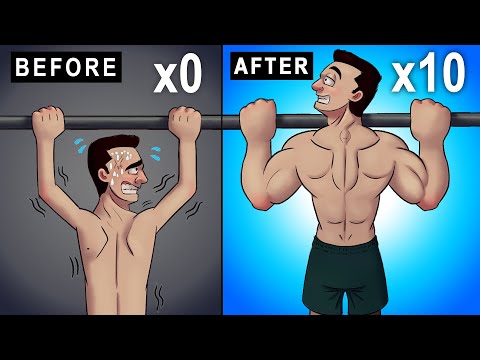
Chin Up Overview
The chin up is a pulling move on a bar. You grip the bar with your palms toward you and pull up. It builds your lats, the big wing muscles on the sides of your back. It also works your middle back and biceps. The biceps are the front of your arms. You need a pull-up bar. Your body is the weight. The chin up builds a strong back and strong arms. The underhand grip lets your biceps help a lot. That makes it a bit easier than a wide pull-up. It is an intermediate move. Use it on a pull day or a back workout. Do it early when your arms are fresh. The chin up is a great test of upper-body strength.
What Is The Point of the Chin Up?
The chin up exercise builds massive upper body pulling strength and creates a wide, strong back. It targets your lats, biceps, and middle back for real muscle growth.
How To Do The Chin Up
- Grab the pull-up bar with an underhand grip, palms facing you, hands about shoulder-width apart. Hang with your arms fully extended so you feel a stretch through your lats and biceps. This dead hang is your starting position.
- Set your shoulders by pulling them down and back, away from your ears. Engage your core and squeeze your glutes so your body stays tight rather than swinging. A stable body is a strong body here.
- Take a breath and brace, then begin the pull by driving your elbows down and back toward your ribs. Think about pulling your chest up to the bar rather than just bending your arms.
- Pull yourself up smoothly, keeping your core tight so your legs do not kick or swing. Your biceps and lats work together in this underhand position to lift you.
- Continue pulling until your chin clears the bar. Keep your elbows close to your body and avoid shrugging your shoulders up toward your ears as you rise.
- At the top, squeeze your back and biceps hard for a beat, feeling the full contraction. This pause at the top is where you build both strength and the mind-muscle connection.
- Lower yourself slowly and under control back to a full dead hang. Aim for a 2 to 3 second descent so your muscles work on the way down too.
- Fully extend your arms at the bottom before starting the next rep, keeping tension in your shoulders. Repeat for reps. Most people build well here in the 5 to 10 rep range for 3 to 4 sets.
Chin Up Form Tips
- Start from a full hang with straight arms. Use the full range.
- Squeeze your shoulder blades down before you pull. This wakes up your back.
- Drive your elbows down and back. Think elbows, not hands.
- Keep your chest up as you rise. Do not round forward.
- Pull until your chin clears the bar. Do not stop short.
- Lower yourself slowly and all the way down. Do not just drop.
- Keep your belly tight. This stops you from swinging.
- Keep your neck long and easy. Do not crane it up.
- Breathe out as you pull. Breathe in as you lower.
Common Mistakes to Avoid for the Chin Up
- Kipping or swinging to gain momentum. Using a leg kick or body swing to fling yourself up takes the work off your muscles and stresses your shoulders. Keep your core tight and your body still so your back and biceps do the work.
- Not going through a full range of motion. Stopping short of a full hang or barely clearing the bar cheats you of strength and growth. Lower to a full dead hang and pull until your chin clears the bar every rep.
- Shrugging your shoulders up to your ears. Letting your shoulders creep up jams the joint and takes the lats out of it. Keep your shoulders pulled down and back throughout the pull.
- Pulling with only your arms. Relying purely on the biceps and forgetting the back limits how strong you get. Drive your elbows down and back and think about pulling your chest to the bar.
- Rushing the lowering phase. Dropping fast wastes the eccentric, one of the best muscle-building parts of the rep. Control a 2 to 3 second descent so your muscles work on the way down.
- Craning your neck to get your chin over the bar. Straining your neck to clear the bar puts your cervical spine in a bad spot. Keep your neck neutral and let your back and arms do the lifting.
- Letting the shoulders round forward at the bottom. Collapsing into the dead hang with rounded shoulders stresses the joint. Keep your shoulders set and engaged even at full extension.
- Holding your breath the entire set. A loose core makes you swing and leaves your trunk unstable. Brace before each rep and breathe in a controlled rhythm.
- Adding weight before you own bodyweight reps. Loading up too soon wrecks your form and beats up your elbows. Master clean bodyweight chin ups first, then add weight in small steps.
- Failing to squeeze at the top. Skipping the peak contraction leaves growth on the table. Squeeze your back and biceps hard for a beat once your chin clears the bar.
- Using a grip that is too wide or too narrow. An awkward grip width strains your wrists and shoulders. Keep your hands about shoulder-width with palms facing you for the strongest, safest chin up.
Chin Up Workout Tips
- Focus on driving your elbows down and back. Thinking about the elbows rather than just bending your arms recruits your lats and makes the chin up a true back and biceps builder.
- Chase the mind-muscle connection with your back and biceps. Feeling both muscles work together helps you pull more efficiently and build them faster.
- Control the lowering phase over 2 to 3 seconds. A slow eccentric keeps your muscles under tension longer and is a great way to build strength toward more reps.
- Use negatives if you cannot do a full chin up yet. Jump to the top and lower yourself slowly, since the eccentric builds the strength you need for full reps.
- Keep your core tight and your body still. A rigid body stops the swinging that steals reps and keeps the work on your back and arms.
- Get a full stretch at the bottom of every rep. Lowering to a complete dead hang loads your lats and biceps through their full range for more growth.
- Squeeze hard at the top for a beat. That peak contraction fully works your back and biceps and reinforces the mind-muscle connection.
- Add weight with a belt once bodyweight is easy. Progressive overload with a dip belt keeps chin ups challenging and drives continued strength gains.
- Do 5 to 10 reps for 3 to 4 sets for most goals. If you can do many clean reps, add load rather than just chasing endless bodyweight reps.
- Use bands or an assisted machine to build up if needed. Assistance lets you practice the full movement with good form while you get stronger.
- Program chin ups early in your pull day when fresh. They are demanding, so tackle them before rows and isolation work when your strength is highest.
- Keep your shoulders pulled down and back throughout. This protects the joint and keeps your lats engaged for a stronger, safer pull.
- Try a one second pause at the top on some sets. Holding at full contraction kills momentum and forces your muscles to work harder.
- Film yourself from the side to check for swinging. Video reveals whether your body is staying still far better than how the set feels.
- Do not train to failure on every set. Leaving a rep or two in reserve protects your form and helps you recover to train again soon.
- Be patient and consistent. Chin ups reward steady practice, so keep adding reps or load a little at a time over the weeks.








Questions & Comments
Be the first to ask a question about this exercise.