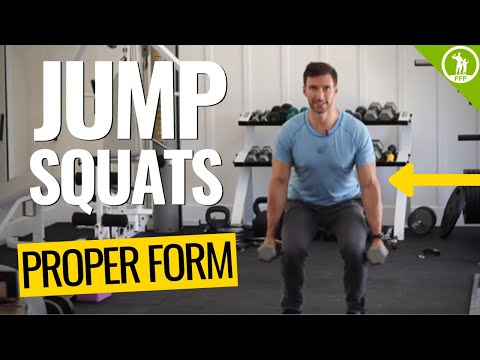
Bodyweight Jump Squat Overview
The bodyweight jump squat is a squat with a jump. You drop into a squat, then explode up off the floor. It works your quads, the big muscles on the front of your thighs. It also works your glutes, calves, and hamstrings. You need no equipment. You just need floor space and room above you. This move builds power and springy legs. It also gets your heart pumping fast. The bodyweight jump squat is great for beginners. It fits well in warm-ups or fast circuits. Use it to build explosive strength. Land soft and quiet to keep your knees safe.
What Is The Point of the Bodyweight Jump Squat?
The bodyweight jump squat builds explosive power in your legs while torching calories. It combines strength and cardio in one killer move that makes you jump higher and run faster.
How To Do The Bodyweight Jump Squat
- Stand with your feet about shoulder-width apart and your toes turned slightly out. This is an explosive plyometric movement, so set up ready to move with intent and power.
- Set your chest up, brace your core, and keep your weight balanced over your mid-foot. Look straight ahead and get your mind ready to explode upward.
- Lower into a squat by pushing your hips back and bending your knees until your thighs are about parallel to the floor. Keep your chest up and your knees tracking over your toes as you descend.
- Load your legs at the bottom like a spring, feeling tension build in your quads and glutes. This brief loaded position stores the energy you are about to release.
- Drive through your heels and explode upward into a jump, extending your hips, knees, and ankles powerfully. Reach your arms overhead or swing them up to add momentum to the jump.
- Jump as high as you can with full extension of your body at the peak. Every rep should be an all-out effort to leave the ground with force, since power is the goal.
- Land softly on the balls of your feet, then let your heels settle, with your knees slightly bent to absorb the impact. Soft, controlled landings protect your knees and ankles from the shock.
- Immediately sink into the next squat and flow into the following rep without pausing at the bottom. This continuous, springy rhythm keeps the movement explosive and reactive.
- Repeat for 5 to 10 crisp reps per set, stopping before your jumps lose height or your landings get sloppy. Since this is a power movement, quality and explosiveness matter far more than high rep counts.
Bodyweight Jump Squat Form Tips
- Push your hips back as you squat down.
- Lower until your thighs reach about level.
- Drive through your heels to jump up.
- Reach your arms up to help you rise.
- Land soft on the balls of your feet.
- Bend your knees to soak up each landing.
- Keep your chest up the whole time.
- Keep your knees in line with your feet.
- Breathe in down. Breathe out as you jump.
Common Mistakes to Avoid for the Bodyweight Jump Squat
- Landing hard and stiff. Crashing down on straight legs sends the impact straight into your knees and ankles instead of your muscles. Land softly on the balls of your feet with your knees bent to absorb the shock and protect your joints.
- Letting your knees cave inward. When your knees collapse toward each other on the jump or the landing, it stresses the joint and leaks power. Push your knees out in line with your toes on both the drive and the landing.
- Not squatting deep enough to load the jump. Doing shallow dips instead of loading to about parallel robs you of the stretch and power that make the jump explosive. Sink to roughly parallel to load your legs like a spring before you explode up.
- Doing high, tired rep sets. Grinding out long sets makes your jumps lose height and your landings turn sloppy and risky. Keep the reps low, around 5 to 10, so every jump is powerful and every landing is controlled.
- Rounding your back at the bottom. Letting your spine round under the loading position stresses your back, especially with the reactive nature of the movement. Keep your chest up and a neutral spine as you load and drive.
- Pausing and grinding instead of staying springy. Stopping fully at the bottom kills the stretch reflex that makes plyometrics work. Flow from the landing into the next jump with a quick, reactive bounce to use the stored energy.
- Not using your arms. Leaving your arms limp wastes the momentum they can add to your jump height. Swing or reach your arms up hard as you explode to help drive yourself off the ground.
- Looking down or dropping your chest. Letting your head and chest fall forward throws off your balance and shifts you onto your toes. Keep your eyes forward and your chest tall so you jump and land in a strong position.
- Landing with locked knees. Coming down with straight legs removes your ability to absorb the impact and jars your joints. Always land with a soft bend in your knees so your muscles soak up the force.
- Doing them when your legs are already fried. Plyometric jumps on exhausted legs mean weak jumps and dangerous landings. Program them when you are relatively fresh so you can move with power and control.
- Rushing without control. Flinging yourself up and down carelessly leads to poor landings and injury risk. Stay explosive but controlled, owning each landing before the next jump.
- Ignoring proper footwear and surface. Jumping on a hard, slick, or unstable surface makes landings risky. Use supportive shoes and a stable, forgiving surface so your landings are safe.
Bodyweight Jump Squat Workout Tips
- Focus on explosive power. The jump squat is about producing force fast, so treat every rep as an all-out effort to leave the ground rather than a grind.
- Keep the reps low and crisp. Around 5 to 10 quality jumps per set keeps every rep powerful, since fatigue quickly ruins jump height and landing safety.
- Land softly every time. Coming down on the balls of your feet with bent knees protects your joints and is the single most important habit for safe jump training.
- Use your arms for momentum. Swinging your arms up hard as you explode adds real height to your jump, so use them on every rep.
- Program it early in your session. Explosive work needs fresh legs and a fresh nervous system, so do jump squats near the start of your workout while you can move with power.
- Use it to build athletic power and speed. The jump squat trains the fast, forceful leg drive that carries over to sprinting, jumping, and most sports.
- Stay springy between reps. Flowing from the landing into the next jump uses the stretch reflex, which is what makes plyometrics so effective for power.
- Progress by jumping higher, not by adding endless reps. Chase more height and more explosive intent rather than grinding out longer, more fatiguing sets.
- Push your knees out. Actively driving your knees over your toes on the drive and landing protects the joint and keeps your power flowing.
- Use it as a finisher or in a warm up. A few explosive sets can prime your nervous system before heavy lifting or add a metabolic kick at the end of a session.
- Land quietly on purpose. Aiming for silent landings forces you to absorb the impact with your muscles, which builds control and protects your joints.
- Add load only once bodyweight is easy and safe. As you advance, holding light dumbbells or a light vest can increase the challenge, but master the bodyweight version first.
- Film your jumps from the side. Video shows whether your knees are caving or your landings are stiff far better than it feels mid-jump.
- Rest fully between sets. Because these are explosive, low-rep sets, take enough rest to attack each set with full power and clean landings.
- Warm up your legs and ankles first. A few bodyweight squats and some light hops prime your joints and muscles for the impact of jumping.
- Keep your core braced. A tight trunk keeps you stable through the jump and landing and protects your back.
- Be careful if you have knee or ankle issues. Plyometrics are high impact, so scale the height or volume and prioritize soft landings if your joints are sensitive.








Questions & Comments
Be the first to ask a question about this exercise.