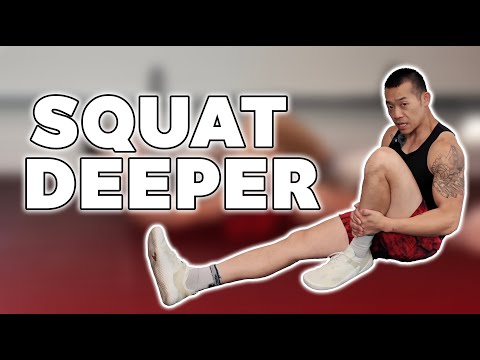
Counterbalanced Squat Overview
The counterbalanced squat is a leg move for beginners. It works your quads and glutes. Your quads are the front thigh muscles. Your glutes are your butt muscles. It also hits your hamstrings and calves. You hold a dumbbell or kettlebell close to your chest. The weight in front acts like a counterweight. It helps you sit back and stay balanced. That makes it easier to squat deep with good form. The counterbalanced squat is a great way to learn the squat. It teaches you to keep your chest up. It fits early on a leg day or in a warm-up. It works well for beginners and for anyone learning to squat deeper.
What Is The Point of the Counterbalanced Squat?
The counterbalanced squat helps beginners learn proper squat form while building leg strength. The weight counterbalances your body, making it easier to squat deep.
How To Do The Counterbalanced Squat
- Grab a dumbbell or kettlebell and hold it close to your chest with both hands, like you are cradling it. The weight out in front acts as a counterbalance that helps you sit back and down.
- Stand with your feet about shoulder width apart and your toes turned slightly out. Set your weight over the middle of your feet.
- Take a breath into your belly and brace your core. Keep your chest up and your eyes forward.
- Begin the squat by pushing your hips back and bending your knees at the same time, letting the weight in front help you counterbalance as you descend.
- Sink down under control, keeping your knees tracking out over your toes and your torso as upright as your mobility allows. The front-loaded weight makes it easier to stay tall and hit depth.
- Lower until your thighs are at least parallel to the floor, or deeper if you can keep your heels down and your back neutral. Feel the stretch in your quads and glutes.
- Keep your heels planted and your weight through your midfoot the whole way down. Do not let your heels lift or your knees cave in.
- Drive through your heels to stand back up, pushing the floor away and squeezing your glutes at the top. Keep the weight close to your chest throughout.
- Stand tall, reset your brace, and repeat for 10 to 15 reps for 3 to 4 sets. This is a great squat for learning depth and building the pattern.
Counterbalanced Squat Form Tips
- Hold the weight close to your chest the whole time.
- Keep your chest up as you lower. Do not round forward.
- Push your hips back first, then bend your knees.
- Keep your knees pointed out over your toes. Do not let them cave in.
- Keep your heels flat on the floor. Push through them to stand.
- Lower slowly for two to three seconds. Stay in control.
- Keep your belly braced. This protects your back.
- Breathe in on the way down. Breathe out on the way up.
- Squeeze your glutes at the top of each rep.
Common Mistakes to Avoid for the Counterbalanced Squat
- Holding the weight too far from your chest. If the dumbbell or kettlebell drifts away from your body, you lose the counterbalance effect and it pulls you forward. Keep the weight hugged close to your chest so it helps you sit back and down.
- Letting your heels lift off the floor. When your heels come up, your weight shifts to your toes and you lose your stable base and strain your knees. Keep your whole foot planted and drive through your heels and midfoot.
- Letting your knees cave inward. Knees collapsing toward each other stresses the joint and cuts the glute involvement. Push your knees out in line with your toes, especially as you stand up out of the bottom.
- Cutting the depth short. Stopping high, well above parallel, only trains a slice of the range and wastes the counterbalance advantage. Since the front load helps you sit deep, use it and hit at least parallel with control.
- Rounding your lower back at the bottom. If you sink past your mobility, your pelvis tucks under and your spine rounds, which loads your lower back. Only go as deep as you can keep a neutral spine, and work on mobility over time.
- Leaning your torso too far forward. Pitching forward turns this into a good morning and takes the load off your quads. Use the counterbalance to stay upright and keep your chest proud.
- Rushing the descent. Dropping fast into the bottom skips the eccentric and can jar your knees. Control the way down for two to three seconds and stay tight.
- Bouncing out of the bottom. Slamming into the bottom and rebounding uses momentum instead of your muscles. Descend under control and drive up smoothly from a solid bottom.
- Losing your core brace. If you let your midsection go soft, your torso collapses and your back takes over. Brace your core before each rep and hold it through the bottom.
- Going too heavy too soon. The counterbalanced squat is a great teaching and control tool, and overloading it defeats that purpose. Keep the load moderate and focus on depth and clean tracking.
- Standing with feet too narrow or too wide for you. An awkward stance makes it hard to hit depth and keep your knees tracking. Find the shoulder-width stance and toe angle that lets you squat deep and comfortable.
Counterbalanced Squat Workout Tips
- Use the front-loaded weight to help you sit back and hit depth. The counterbalance is exactly why this squat is so good for learning to squat deep with a tall torso.
- Keep the weight hugged close to your chest. The nearer the load sits to your body, the more it helps you balance and stay upright.
- Drive through your heels and midfoot on the way up. A solid base keeps the load on your quads and glutes and protects your knees.
- Control the descent for two to three seconds. A slower eccentric loads the legs under a stretch and builds better control and size.
- Push your knees out in line with your toes. When knees and toes track together, the joint stays healthy and the glutes get to work.
- Aim for at least parallel every rep. The counterbalance makes depth easier, so take advantage and train the full range.
- Use this to teach the squat pattern to beginners or to warm up. It grooves good mechanics and is gentle on the lower back.
- Keep the load moderate and the reps in the 10 to 15 range. This squat rewards control and depth more than heavy loading.
- Brace your core hard before each rep. A tight midsection protects your spine and lets you drive more force into the floor.
- Progress by adding small amounts of weight once your depth and tracking are clean. Steady overload builds the legs without wrecking your form.
- Use this as a stepping stone toward goblet or barbell squats. The counterbalance builds the confidence and mobility those need.
- Try a pause at the bottom on a few sets. Pausing at depth removes the bounce and forces your legs to drive from a dead stop.
- Work on your ankle and hip mobility alongside this. Better mobility lets you squat deeper and keep your heels down.
- Film a set from the side to check your depth and torso angle. It is easy to think you are deeper or more upright than you really are.
- Do not grind every set to failure. Leaving a rep in reserve keeps your form clean and lets you recover to train legs again soon.
- Be patient and let the pattern become second nature. A clean, deep squat built here carries straight over to every heavier squat variation.








Questions & Comments
Be the first to ask a question about this exercise.