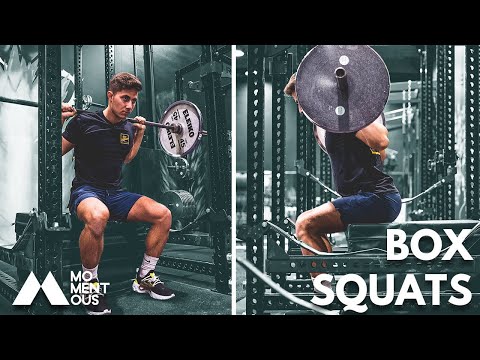
Back Squat to Box Against Chains Overview
The back squat to box against chains is a heavy leg move. You wear a barbell on your back. Chains hang from each end. A box sits behind you. You squat back until you touch the box. Then you pause and stand up. The chains pile on the floor at the bottom. They lift and add weight as you rise. It works your glutes and quads. It also works your hamstrings and abs. You need a barbell, a box, and chains. This move builds strong legs and a powerful stand up. The box teaches you to sit back and hit the same depth each time. The chains make you push hard to the top. It is an advanced move. Use the back squat to box against chains early on a leg day. It is best for lifters who already squat well.
What Is The Point of the Back Squat to Box Against Chains?
The back squat to box against chains exercise builds explosive power and strength while teaching proper squat depth. Chains add variable resistance for maximum muscle growth.
How To Do The Back Squat to Box Against Chains
- Set a barbell in the rack and drape a chain over each end so a portion of the chain rests on the floor at the bottom of your squat. Position a sturdy box behind you at about knee height.
- Step under the bar and set it across your upper back, pulling it in tight and locking your shoulder blades down. Take a big breath, brace hard, and stand the bar up out of the rack.
- Step back and position yourself so the box sits directly behind your glutes. Set your feet about shoulder width with your toes turned slightly out.
- Feel the chains hanging at their heaviest at the top and reset your brace. This is your loaded starting position.
- Begin the descent by sitting your hips back toward the box, letting your knees bend as the chains start to pile on the floor. Keep your chest up and your shins more vertical than in a free squat.
- Lower until your glutes touch the box lightly. Do not crash down onto it, since a hard drop compresses your spine and kills your control.
- Pause briefly on the box while staying tight, keeping your core braced and your back set. This pause removes the stretch reflex so you must produce force from a dead stop.
- Drive off the box explosively, pushing your feet into the floor and standing up fast. As you rise, the chains lift off the ground and the load increases, so keep accelerating.
- Lock out your hips fully at the top and control the heavier chains before you begin the next rep. Take a fresh breath and re brace as needed.
- Work in low rep sets of 3 to 5 for explosive strength, for 3 to 5 sets. The box sets your depth honestly, so keep every rep to the same height.
Back Squat to Box Against Chains Form Tips
- Sit your hips back to reach the box.
- Touch the box light. Do not crash onto it.
- Stay tight during the pause on the box.
- Keep your chest up the whole time.
- Push your knees out over your toes.
- Drive through your heels to stand.
- Push hard all the way up as the chains get heavy.
- Keep your back flat, not rounded.
- Brace your belly before every rep.
Common Mistakes to Avoid for the Back Squat to Box Against Chains
- Crashing down onto the box. Dropping hard onto the box compresses your spine and jars your whole body, turning a controlled tool into an injury risk. Sit back under control and touch the box lightly, keeping tension the entire way down.
- Rocking backward on the box to rebound. Bouncing your weight back and using the momentum to stand cheats the drill and puts your lower back in a rounded, loaded position. Pause tight on the box and drive up from a true dead stop.
- Losing tension during the pause. If you relax on the box your brace collapses and you lose your safe, strong position before the hardest part of the rep. Stay locked and braced on the box so you can explode up with your spine protected.
- Decelerating as you rise. The chains grow heavier the higher you go, so slowing down means stalling right where the load peaks. Drive hard off the box and keep accelerating through the full ascent.
- Setting the box at the wrong height. A box too high robs you of range, and one too low can put you in a weak, rounded bottom. Set it so your glutes touch at about parallel or your target depth.
- Letting your knees collapse inward. Coming off a dead stop against heavy chains tempts the knees to cave, which stresses the joint and saps your drive. Push your knees out over your toes as you leave the box.
- Mismatching the chain setup. If little chain deloads at the bottom, the box position gets brutally heavy, and too much makes the top trivial. Adjust the chains so a meaningful amount lifts and settles across the range.
- Letting the bar drift forward off the box. If your chest caves as you stand, the bar shifts toward your toes and loads your lower back. Keep your chest up and push the bar straight up over your midfoot.
- Using it without a solid squat base. Box squats against chains combine two advanced tools, and stacking them on a shaky squat magnifies every fault. Own a strong standard back squat before you layer these methods.
- Holding your breath across multiple reps. Never taking a fresh breath leaves you lightheaded under a load that peaks at the top. Re brace and breathe at the top before each rep so you stay tight and clear headed.
- Skipping safeties and a spotter. A dead stop squat with a load that spikes at lockout is a classic place to get stuck. Set your pins and use a competent spotter for your heavy sets.
Back Squat to Box Against Chains Workout Tips
- Use the box to teach a true sit back and an honest depth. Touching the same box every rep removes guesswork and grooves a consistent, powerful squat pattern.
- Pause tight on the box and drive from a dead stop. Killing the stretch reflex forces you to build starting strength, which carries over to breaking heavy weights off the floor and out of the hole.
- Explode off the box as if trying to beat the chains. The load climbs as you rise, so the whole benefit comes from accelerating into that increasing resistance.
- Touch the box lightly, never crash onto it. A soft touch protects your spine and keeps you tight, while a hard drop jars your body and ruins the rep.
- Match the chain setup to your goal and strength. More chain on the floor at the bottom means a bigger resistance swing, so dial it in deliberately.
- Keep the base bar weight controllable. Let the chains provide the top end overload rather than loading the bar so heavy your form breaks on the box.
- Set the box at your target depth, usually around parallel. That way the box enforces good depth without dumping you into a weak, rounded bottom.
- Program this on dynamic or strength days. The combination of a dead stop and accommodating resistance is a staple of explosive, conjugate style training.
- Keep reps low at 3 to 5 for 3 to 5 sets. This is about force production from a stop, not high rep fatigue work.
- Push your knees out as you leave the box. Good knee tracking keeps the joint safe and lets you channel full power into standing up.
- Brace hard and re breathe at the top. The load peaks at lockout, so your tightest position needs to be there to keep your spine safe.
- Keep your chest up so the bar stays over your midfoot. Letting the chest drop shifts the load to your lower back and stalls your drive off the box.
- Film your sets from the side. A video confirms you are touching the box at the right depth and truly pausing rather than rocking and rebounding.
- Build this on a strong standard back squat. It stacks two advanced tools, so earn a clean, powerful squat before you combine them.
- Always use safeties and a spotter for heavy work. A dead stop lift with a load that spikes at the top is exactly where lifters get pinned.
- Progress with small, controllable jumps in chain or bar weight. Steady overload you can handle beats big leaps that wreck your form on the box.








Questions & Comments
Be the first to ask a question about this exercise.