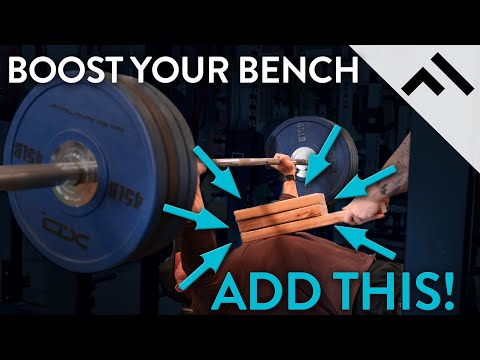
2 Board Bench Press Overview
The 2 board bench press builds your chest, the big muscles on the front of your body. It also works your shoulders and triceps. The triceps are the back of your arms. You lie on a bench with two boards resting on your chest. You lower the barbell until it touches the boards. Then you press back up. The boards stop the bar before your chest. This makes the push shorter. That lets you handle more weight and build your lockout strength. This move is good for people who already lift weights. It helps you get past sticking points. Use the 2 board bench press on chest day or push day. Always use a spotter with heavy weight.
What Is The Point of the 2 Board Bench Press?
The 2 board bench press builds explosive chest power and breaks through sticking points. It lets you handle heavier weight to build raw strength.
How To Do The 2 Board Bench Press
- Have a partner or setup hold two stacked 2x4 boards flat against the middle of your chest. The boards cut the range short and let you overload the top half of the bench press.
- Set up on a flat bench like a normal press, with your eyes under the bar and feet planted hard on the floor. Pull your shoulder blades down and back and press them into the bench.
- Grip the bar slightly wider than shoulder width and squeeze it hard. Take a big breath into your belly and brace your core so your whole torso is tight.
- Unrack the bar with a spotter's help and hold it straight over your chest with your arms extended. This is your starting position.
- Lower the bar slowly and under control until it touches down on the boards. Keep your elbows tucked to around 45 degrees and do not let your shoulders round forward.
- Let the bar settle on the boards for a brief, controlled touch. Do not bounce off the boards or let them cave your chest, since the point is a stable stop, not a rebound.
- Drive the bar up explosively while keeping your shoulder blades pinned and your upper back tight. Think about pushing yourself into the bench as you press.
- Lock out over your chest, breathing out through the sticking point, then reset your breath and tightness for the next rep.
- Rack the bar carefully when done. Because this builds lockout and triceps strength, most people train it heavy in the 3 to 6 rep range for their working sets.
2 Board Bench Press Form Tips
- Keep your shoulder blades pinched together the whole set.
- Plant your feet flat and drive them into the floor.
- Grip the bar a bit wider than your shoulders.
- Lower the bar under control to the boards.
- Touch the boards lightly. Do not bounce off them.
- Breathe in going down. Breathe out coming up.
- Keep your elbows tucked at about 45 degrees.
- Keep your wrists straight over your elbows.
- Drive the bar up strong and straight.
- Keep your butt on the bench the whole time.
Common Mistakes to Avoid for the 2 Board Bench Press
- Bouncing the bar off the boards. Using the boards as a springboard turns the lift into a rebound and defeats the point of a controlled partial. Touch the boards under control and press from a dead stop so the triceps and lockout actually get trained.
- Losing your shoulder blade set as you press. If your shoulders round forward off the boards, you lose your base and risk the joint under a heavy load. Keep the blades pinned down and back for every rep.
- Loading far beyond what your form allows. The shorter range tempts people to pile on weight they cannot control, which is dangerous with a heavy bar over your chest. Add load gradually and keep the bar path honest.
- Letting the boards shift or sit crooked. Boards that move or tilt make the touch point inconsistent and unsafe. Have your spotter hold them flat and steady in the middle of your chest.
- Flaring the elbows straight out. A full 90 degree flare stresses the shoulders and weakens your press, board or not. Keep the elbows tucked to around 45 degrees so the load stays on the chest and triceps.
- Lifting your hips off the bench. Driving the hips up to grind a heavy board press turns it into a cheat and strains your lower back. Keep your glutes down and drive through your legs into the floor.
- Rushing the descent to the boards. Dropping the bar fast onto the boards wastes the eccentric and can slam your chest. Lower under control so the muscles catch the load.
- Treating it as a max-out ego lift every session. The board press is a tool to overload the top range, not a weekly one-rep-max contest. Program it with a purpose and reasonable loads for your goal.
- Skipping the pause on the boards. Letting the bar barely graze the boards without settling removes the dead-stop benefit. Let it come to a real, brief stop before you press.
- Forgetting leg drive. Lazy legs leave power and stability on the table under a heavy bar. Screw your feet into the floor and stay tight from head to heel.
- Using it without a clear weak point in mind. The board press mainly helps lockout and triceps, so using it when your weakness is off the chest wastes the tool. Match your board height to the sticking point you are trying to fix.
- Training it without a spotter. Handling supramaximal loads over your chest with no spotter is genuinely dangerous. Always have a competent spotter and use safety pins when you can.
2 Board Bench Press Workout Tips
- Understand why the board press exists. It overloads the top portion of the bench press so you can handle heavier weight and build lockout and triceps strength, which is why powerlifters use it to break through sticking points.
- Match the board height to your weakness. Two boards cut the range at a spot that targets the mid-to-top of the press, so use it when your bar stalls a few inches off the chest.
- Press from a dead stop on the boards. Pausing kills any bounce and forces your triceps and chest to produce all the force from that position, which builds real strength.
- Keep your elbows around 45 degrees. This protects the shoulders and keeps the chest and triceps loaded through the partial range.
- Train it heavy in low reps. Because the range is short, most people use it in the 3 to 6 rep range with heavier loads than their full bench to drive strength.
- Program it as a bench accessory or a heavy variation on your press day. It works well after or in place of your competition bench when peaking or grinding through a plateau.
- Add weight in small, controlled jumps. Progressive overload still rules, and the short range makes it easy to add plates faster than your form can handle, so stay disciplined.
- Always use a spotter and safety pins. You will be moving heavy loads over your chest, so lift with a plan and never be brave without a backup.
- Keep your leg drive and full-body tension. Driving your feet into the floor and staying tight lets you handle the heavier board weights safely.
- Pair it with pause bench or spoto presses. Balancing top-range overload with bottom-range work keeps your whole bench strong, not just your lockout.
- Have a reliable partner hold the boards. A steady, consistent touch point is what makes the board press safe and repeatable rep to rep.
- Do not let the boards replace full-range benching. Partials are a supplement, so keep pressing through a full range too or your bottom-end strength will lag.
- Squeeze the bar hard on every rep. A tight grip stabilizes the shoulder and helps you drive heavy loads off the boards.
- Film your board sets. Video shows whether you are bouncing off the boards or pressing from a true stop far better than it feels.
- Use it in a focused block, not forever. A few weeks of board work to bust a plateau is smart, then return to full range to test your new strength.
- Respect the heavy loads and progress patiently. The board press builds serious top-end power over time, but only if you treat the weight with respect and add it gradually.








Questions & Comments
Be the first to ask a question about this exercise.