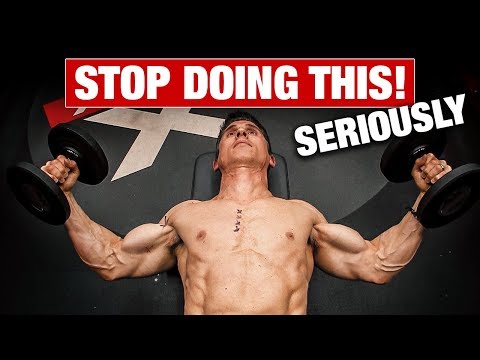
Alternate Dumbbell Flys Overview
The alternate dumbbell flys move works your chest with a wide arc. You lie on a flat bench and hold both dumbbells up. You lower one dumbbell out to the side and bring it back. Then you switch arms. It works your chest, with help from your shoulders. You need two dumbbells and a flat bench. The wide arc gives your chest a deep stretch. This helps build width across your chest. Working one arm at a time lets you feel each side. It is a good beginner move to learn chest control. It fits well later in a chest workout. Use light weight and a soft bend in your elbows.
What Is The Point of the Alternate Dumbbell Flys?
The alternate dumbbell flys exercise builds a wider, more defined chest while creating better muscle balance. It targets each side separately to fix strength gaps.
How To Do The Alternate Dumbbell Flys
- Lie flat on a bench holding a dumbbell in each hand directly above your chest, palms facing each other. Keep a soft, fixed bend in your elbows.
- Set your shoulder blades down and back into the bench and plant your feet flat on the floor. Brace your core so your torso is stable.
- Take a breath and keep that soft elbow bend locked in place. The fly is a hugging motion at the shoulder, not a press, so your elbows stay only slightly bent.
- Lower one dumbbell out to the side in a wide arc while the other stays up over your chest. Move slowly and feel the stretch build across your chest.
- Keep your working elbow slightly bent and pointed out to the side, not straight, as you open your arm. Lower until you feel a deep but comfortable stretch in your chest.
- Stop before your shoulder feels strained, keeping tension on the chest at the bottom. The resting dumbbell stays braced over your chest.
- Bring that dumbbell back up along the same wide arc by squeezing your chest, as if hugging a big tree. Do not press it up like a bench press.
- Squeeze your chest at the top over your body, then lower the opposite dumbbell out to the side while the first stays up. Alternate sides each rep.
- Keep your shoulder blades set and move one dumbbell at a time with smooth control. Aim for 10 to 15 reps per arm for 3 sets.
Alternate Dumbbell Flys Form Tips
- Keep a soft, steady bend in your working elbow.
- Move in a wide arc, not a press.
- Lower until you feel a good chest stretch.
- Bring the dumbbell back on the same path.
- Keep the resting arm up and still.
- Keep your shoulder blades back and down.
- Keep your feet flat and hips on the bench.
- Breathe in as you lower. Breathe out as you lift.
- Move slow and controlled on every rep.
Common Mistakes to Avoid for the Alternate Dumbbell Flys
- Turning the fly into a press. Bending and straightening your elbows to push the weight up shifts the work to your triceps and shoulders and away from the chest. Keep a fixed soft elbow bend and move only at the shoulder in a hugging arc.
- Lowering the dumbbell too far and overstretching. Dropping your arm well below the bench with a heavy weight strains the shoulder joint and can cause injury. Stop at a strong but comfortable stretch, not the deepest point you can reach.
- Using too much weight. Flyes place a long lever on the shoulder, so heavy dumbbells force you to bend your elbows and cheat. Choose a light to moderate weight you can control through a full arc.
- Straightening your elbows at the bottom. Letting your arms go straight under the stretch puts dangerous leverage on the shoulder. Keep that soft bend locked in throughout the movement.
- Losing your shoulder blade set. If your blades roll forward, you lose your stable base and stress the joint. Pin them down and back into the bench and hold that position.
- Rushing the reps. Fast, swinging flyes use momentum and rob the chest of tension, especially through the stretch. Move slowly and control both the lowering and the return.
- Letting the resting arm drift. The dumbbell held over your chest keeps you balanced and adds tension, so if it wanders you lose stability. Keep the non-working arm braced over your chest.
- Bringing the dumbbells too far in at the top and losing tension. Clashing them together or resting them takes the load off the chest. Stop just short at the top with the chest still squeezing.
- Twisting your torso toward the working arm. Because only one side moves at a time, a loose core lets your body rotate. Brace and keep your shoulders square to the ceiling.
- Flaring your elbows behind the line of your shoulders. Letting your arms travel too far back deepens the stretch into a risky range. Keep the arc in line with your chest, not behind your shoulders.
- Cutting the stretch short at the bottom. Not lowering far enough removes the fly's biggest benefit, the loaded stretch on the chest. Lower to a full, safe stretch each rep.
Alternate Dumbbell Flys Workout Tips
- Treat the fly as a chest isolation and stretch movement. Its value is the loaded stretch at the bottom and the squeeze at the top, which presses cannot match.
- Keep a fixed soft bend in your elbows throughout. That locked angle is what keeps the work on your chest and off your triceps.
- Think about hugging a big tree. The wide arc cue keeps the motion at the shoulder rather than turning it into a press.
- Use a light to moderate weight and higher reps. Around 10 to 15 controlled reps per arm suits this leverage-heavy movement far better than heavy loads.
- Chase the stretch on the way down and the squeeze on the way up. Feeling your chest lengthen and then contract is the mind-muscle connection that makes flyes work.
- Keep your shoulder blades pinned back throughout. A stable base protects the joint and keeps the tension on your chest.
- Alternating one arm at a time lets you focus on each side. Use that focus to feel the target chest work and keep both sides even.
- Program flyes after your pressing on chest day. Your chest is warm, and the fly finishes it off with a stretch that presses miss.
- Move slowly and control every rep. Flyes reward smooth tension and punish momentum, so never swing the weight.
- Stop the stretch at a strong but pain-free depth. The bottom is where the shoulder is most vulnerable, so respect your comfortable range.
- Progress with small weight jumps or slightly more range once your form is solid. Even isolation moves respond to gradual overload.
- Try an incline bench version for the upper chest. Adjusting the angle shifts the stretch to different parts of the pecs.
- Keep the resting dumbbell braced over your chest. That hold keeps you stable and adds tension while the other side works.
- Do not clash the dumbbells at the top. Stopping just short keeps constant tension on the chest through the whole set.
- Warm up your shoulders before flyes. The stretched position asks a lot of the joint, so prepare it with lighter movement first.
- Be patient and consistent. Flyes build the stretch and squeeze that add width and detail to your chest over months of steady work.








Questions & Comments
Be the first to ask a question about this exercise.