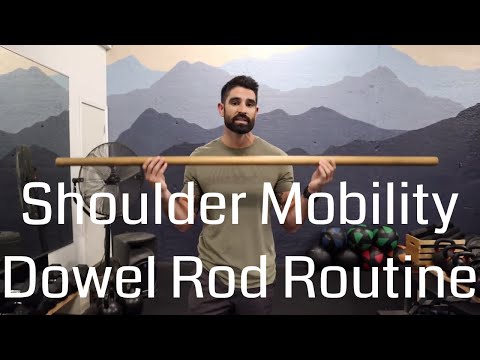
Standing Pvc Pec Mobilization Overview
The standing pvc pec mobilization is a gentle stretch. You hold a light pipe with both hands. You raise it overhead and lower it behind your head. This opens up your chest, the muscles across the front. It also loosens your shoulders. You only need a light pipe. It is a mobility move, not a lift. This is a beginner move. It helps tight chests and stiff shoulders. It feels great before pressing or after sitting all day. Better mobility helps you press and reach with ease. It also helps your posture. Use it in a warm-up or a cool-down. Move slow and never force it.
What Is The Point of the Standing Pvc Pec Mobilization?
Standing pvc pec mobilization stretches tight chest muscles. It opens up your chest and improves shoulder movement after sitting hunched over all day.
How To Do The Standing Pvc Pec Mobilization
- Stand tall with your feet about shoulder-width apart and a light brace through your core. Hold a PVC pipe in front of you with both hands, palms facing down, in an overhand grip.
- Set your hand spacing a bit wider than shoulder-width to start. A wider grip makes the movement easier, so use that if your shoulders are tight and narrow the grip over time as you loosen up.
- Keep your arms straight and your shoulders relaxed away from your ears. This is a mobility drill, not a strength move, so there is no need to grip hard or muscle the pipe around.
- Slowly raise the pipe up and overhead in a smooth arc, keeping your elbows locked and your ribs down. Do not let your lower back arch to cheat the range.
- Continue the arc by lowering the pipe behind your head and down toward your back as far as your shoulders comfortably allow. Move slowly and feel the stretch open across your chest and the front of your shoulders.
- Go only as low as you can without pain or a sharp pinch. A gentle stretch is the goal, so stop short of any joint discomfort and never force the range.
- If you are holding for a stretch, pause in the deepest comfortable position behind you for 15 to 30 seconds and breathe slowly and deeply. Let each exhale help you sink a touch deeper.
- Reverse the motion smoothly and bring the pipe back overhead and down to the front to return to the start. Stay controlled the whole way.
- Repeat for 3 to 5 slow passes or holds. Over several sessions, gradually bring your hands closer together as your mobility improves, which increases the stretch.
Standing Pvc Pec Mobilization Form Tips
- Keep your arms straight the whole time. Do not bend your elbows.
- Move slow and smooth. Never yank the pipe.
- Only go as low as feels good. Stop before any pain.
- Breathe deep and slow. Let each breath help you relax.
- Keep your ribs down. Do not arch your lower back.
- Use a wide grip if it feels tight. A narrow grip is harder.
- Keep your shoulders down and calm. Do not shrug them up.
- Stand tall and still. Only your arms should move.
- Keep your neck long. Do not push your head forward.
Common Mistakes to Avoid for the Standing Pvc Pec Mobilization
- Gripping the pipe too narrow too soon. A narrow grip demands more shoulder mobility than most people have at first, forcing you to bend the elbows or arch the back to get around. Start wide, keep the arms straight, and only close the grip as your shoulders genuinely loosen over time.
- Arching the lower back to fake the range. When the shoulders run out of room, people tip their ribs up and arch the spine to make it look like the pipe traveled farther. Keep your ribs pulled down and core lightly braced so the movement comes from the shoulders, not the low back.
- Bending the elbows to cheat around. Letting the elbows flex shortens the lever and hides your true range, so you never actually stretch the tissue you are targeting. Keep the arms locked straight the whole arc so the mobility work is honest.
- Rushing the movement. Whipping the pipe over quickly bounces through the range instead of gently coaxing tissue to lengthen. Move slow and controlled, since mobility work rewards patience, not speed.
- Forcing through pain. Pushing into a sharp pinch or joint pain can aggravate the shoulder rather than improve it. Respect a gentle stretch as the ceiling and back off the moment you feel anything sharp.
- Holding your breath during the stretch. Tensing up and holding your breath keeps the muscles guarded and limits how much they release. Breathe slow and deep, and use each exhale to relax a little deeper into the position.
- Shrugging the shoulders up to the ears. Letting the traps take over adds tension and pulls you out of a clean shoulder rotation. Keep the shoulders relaxed and down so the chest and front delts get the stretch.
- Treating it like a strength exercise. Trying to muscle the pipe or add weight misses the point, since this is about opening the joint, not loading it. Keep it light and easy, and save the tension for your actual lifts.
- Doing it cold with no intent. Blasting through a few careless reps without focusing on the stretch gives little benefit. Ease in, feel each rep, and let the range gradually improve within the session.
- Skipping it on your tightest days. People often avoid mobility work exactly when they need it most. Use it as a warm-up before pressing or a reset after a desk-bound day to open the chest and shoulders.
- Progressing the grip width too fast. Yanking your hands together before you are ready just brings back the arching and elbow bending. Narrow the grip in small increments across sessions as your true range improves.
Standing Pvc Pec Mobilization Workout Tips
- Use this to open up a tight chest and shoulders. It is a simple, low-cost drill that restores overhead rotation, which pays off in better pressing and healthier shoulders.
- Start with a wide grip and narrow it slowly. Wider is easier, so begin where you can keep the arms straight, then bring the hands in over weeks as your mobility improves.
- Keep the arms locked straight the whole way. Straight arms make the movement honest and ensure you actually stretch the tissue instead of cheating around with bent elbows.
- Keep your ribs down and core lightly braced. This stops your lower back from arching to fake the range, so the motion comes cleanly from your shoulders.
- Move slowly and with control. Mobility work rewards patience, so ease through the arc rather than whipping the pipe over your head.
- Respect the difference between a stretch and pain. A gentle pull is good, but a sharp pinch means back off, since forcing the joint sets you back rather than forward.
- Breathe slow and deep during holds. Relaxing on each exhale lets the muscles release and helps you sink a little deeper into the stretch.
- Use it as a warm-up before pressing days. Opening the chest and shoulders first grooves a better overhead position and can make your presses feel smoother.
- Try it as a desk-break reset. A few slow passes counteract hours of hunching forward and leave your upper body feeling less locked up.
- Hold the deepest comfortable spot for 15 to 30 seconds. A sustained hold gives the tissue time to relax and adapt, which builds lasting range over sessions.
- Do 3 to 5 quality passes or holds. A handful of focused reps beats rushing through a dozen careless ones, since attention is what makes mobility work stick.
- Keep the shoulders relaxed and down. Letting the traps shrug up adds tension and pulls you out of a clean rotation, so stay loose through the neck.
- Track your grip width as a progress marker. Being able to bring your hands closer over time is a clear, satisfying sign your shoulder mobility is improving.
- Combine it with band pull-aparts and thoracic work. Pairing chest opening with upper-back activation builds balanced, resilient shoulders.
- Be consistent rather than aggressive. Short, regular sessions build mobility far better than occasional hard yanks that leave you sore.
- Never load it up. This is a joint-opening drill, so keep it light and easy and let your real lifts handle the heavy work.








Questions & Comments
Be the first to ask a question about this exercise.