Snatch Grip Romanian Deadlift Overview
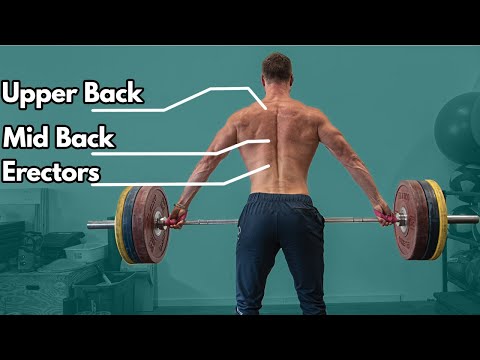
The snatch grip romanian deadlift builds strong hamstrings and glutes. You hinge at your hips while holding a barbell. You use a wide grip, with your hands near the plates. It works your hamstrings the most. Your hamstrings are the back of your thighs. It also works your glutes, lower back, and traps. Your traps are the muscles on top of your shoulders. The wide grip makes you bend over more. That gives your hamstrings a bigger stretch. It also makes your upper back work hard to stay flat. The snatch grip romanian deadlift fits on back or leg day. Learn the basic hinge first. Then add this wide-grip version to grow your hamstrings.
What Is The Point of the Snatch Grip Romanian Deadlift?
The snatch grip romanian deadlift targets your hamstrings and glutes with a wider grip. This grip hits your upper back harder and gives your hamstrings a deeper stretch.
How To Do The Snatch Grip Romanian Deadlift
- Stand with your feet about hip-width apart and grip the barbell with a very wide, snatch-width overhand grip, hands out near the plates. This wide grip lowers your torso and increases the demand on your hamstrings and upper back.
- Set your shoulder blades down and back, lift your chest, and brace your core hard. Take a big breath into your belly and tighten your abs to protect your spine through the hinge.
- Keep a slight, fixed bend in your knees, softer than a squat but not locked. The movement is a hip hinge, so the knees stay mostly still while the hips travel.
- Begin the snatch grip Romanian deadlift by pushing your hips straight back, letting your torso tip forward as your hips move behind you. Do not just bend at the waist.
- Lower the bar by hinging at the hips, keeping it close to your legs and skimming down your thighs. The wide grip means you will feel this in your hamstrings and across your upper back and traps.
- Continue until you feel a strong stretch in your hamstrings, usually around mid-shin depending on your flexibility. Keep your back flat and stop the instant your lower back wants to round.
- Keep your chest proud and your upper back tight throughout. The snatch grip loads your upper back hard, so resist the urge to let your shoulders round forward.
- Drive your hips forward and squeeze your glutes to stand back up, keeping the bar close the whole way. Think about pushing the floor away and punching your hips through.
- Stand tall at the top without leaning back, then reset and repeat. Keep the reps controlled, usually in the 6 to 10 range, since the wide grip is demanding.
Snatch Grip Romanian Deadlift Form Tips
- Grip the bar wide, near the plates. This is what makes the move special.
- Keep your back flat and chest up. The wide grip makes this harder, so stay tight.
- Push your hips back to start. Lead with your hips, not your knees.
- Keep the bar close to your legs. Let it slide down your thighs.
- Keep a small bend in your knees. Do not lock them or squat down.
- Feel the stretch in your hamstrings. Stop when your back wants to round.
- Squeeze your glutes at the top. Finish tall and strong.
- Breathe in as you lower. Breathe out as you stand.
- Pull your shoulders back and down. Do not let them roll forward.
Common Mistakes to Avoid for the Snatch Grip Romanian Deadlift
- Rounding your lower back under the wide grip. The snatch grip puts you in a lower, more demanding position, and rounding shifts stress from the hamstrings to your spine. Keep your chest up and your back flat, and stop lowering the instant your back starts to round.
- Turning it into a squat. Bending your knees too much takes the load off the hamstrings and changes the movement entirely. Keep your knees only slightly bent and drive the motion by pushing your hips back.
- Letting the bar drift away from your legs. When the bar swings out in front, it multiplies the stress on your lower back. Keep the bar skimming close to your thighs and shins the whole way down and up.
- Letting your upper back round forward. The wide grip loads the upper back and traps hard, and giving in to that pull collapses your position. Keep your shoulders set and your upper back tight throughout the lift.
- Chasing depth beyond your hamstring flexibility. Forcing the bar lower than your hamstrings allow just makes your back round. Only lower as far as you can with a flat back and let your mobility improve over time.
- Using momentum to bounce out of the bottom. Springing up wastes tension and jars your spine. Reach a controlled bottom, then drive up smoothly with your hips and hamstrings.
- Not bracing your core hard enough. The wide grip and long lever demand serious bracing, and a loose trunk lets your spine sag. Take a big breath and lock your abs before every rep.
- Hyperextending at the top. Leaning back and cranking your hips past straight stresses your lower back. Finish standing tall and neutral with your glutes squeezed and spine stacked.
- Standing up with your back instead of your hips. Yanking your torso upright with your lower back strains the spine. Drive your hips forward and let the glutes and hamstrings do the lifting.
- Gripping too narrow and losing the point. Using a normal grip turns this back into a standard Romanian deadlift and drops the upper-back demand. Take a genuinely wide, snatch-width grip to get the intended effect.
- Going too heavy for the wider grip. The snatch grip is weaker and more demanding than a normal grip, so loading like a standard deadlift wrecks your form. Use less weight than your regular Romanian deadlift and build up.
Snatch Grip Romanian Deadlift Workout Tips
- Use the wide grip to hammer your hamstrings and upper back at once. Snatch-width forces a lower torso angle and a longer range, which loads the hamstrings deep and lights up the traps and upper back holding your posture.
- Push your hips straight back like you are closing a door with your butt. That cue keeps the movement in your hips and off your spine, which is the heart of a safe, strong hinge.
- Expect to use less weight than your standard Romanian deadlift. The wider, weaker grip and longer range mean the same load feels much harder, so drop the weight and focus on position.
- Keep the bar close to your legs. A close bar path keeps the load over your hips where you are strong and protects your lower back.
- Use a controlled two to three second descent. Owning the lowering phase keeps tension on the hamstrings and reinforces good technique.
- Squeeze your glutes hard at the top. Finishing each rep with a strong glute contraction trains the hips to drive and protects your lower back.
- Program it on posterior-chain or pull days. Sets of 6 to 10 build hamstrings, glutes, and upper-back strength that carry over to your bigger pulls.
- Use straps if your grip gives out first. The wide grip is tough on the hands, and straps let you train the hamstrings and back without your grip being the limit.
- Keep your upper back tight the whole set. Resisting the pull to round builds a strong, resilient upper back that helps every other lift.
- Feel the stretch in your hamstrings, not your lower back. A strong pull down the back of your thighs means you are hinging right, while back strain means you have rounded.
- Progress with small weight jumps as your position holds. The wide grip punishes sloppy form, so earn heavier loads with clean technique.
- Pair it with squats for balanced legs. The hinge builds the back of your legs while squats cover the front for complete development.
- Use it to build a bigger, stronger back for the Olympic lifts. This variation directly strengthens the snatch pull position, so it is a favorite for lifters chasing that carryover.
- Brace hard before every rep. A tight trunk protects your spine and lets you hinge with confidence under the demanding grip.
- Film yourself from the side. Video shows whether you are hinging from the hips or rounding through the back under the load.
- Be patient and consistent. Hamstring and upper-back strength build steadily over months, so keep the reps clean and the progress will come.








Questions & Comments
Be the first to ask a question about this exercise.