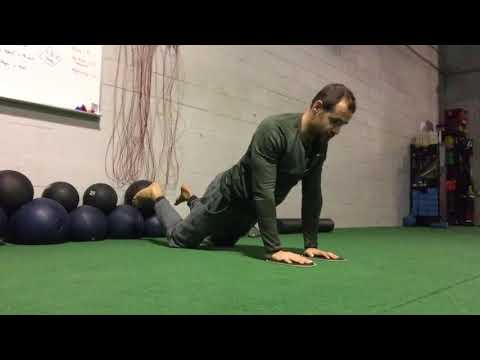
Valslide Leg Curl Overview
The valslide leg curl is a floor move for your hamstrings. Your hamstrings are the muscles on the back of your thighs. It also works your glutes and your abs. Your glutes are your butt muscles. You need two valslides. These are small discs that slide on the floor. You rest your heels on them. The valslide leg curl is a smart move for stronger hamstrings. It uses your own body for weight. It builds strength and control at the same time. It also helps guard your knees. This move fits well on a leg day. It works great for people who want strong, healthy hamstrings.
What Is The Point of the Valslide Leg Curl?
The valslide leg curl builds strong hamstrings and glutes while testing your core stability. It's a killer move for stronger legs and better balance.
How To Do The Valslide Leg Curl
- Lie flat on your back on a smooth floor with your heels resting on a valslide under each foot. Set your arms flat at your sides with palms down for stability and balance.
- Brace your core and squeeze your glutes, then lift your hips into a bridge so your body forms a straight line from your knees to your shoulders. This bridge is your working position and you will hold it the whole rep.
- Keep your hips high and your ribs down. Do not let your lower back sag or your hips dip as you get ready to move the sliders.
- Slowly slide both heels away from your body, extending your legs while keeping your hips lifted. Control this out-slide, because the hamstrings are working hard eccentrically as your legs straighten.
- Slide out only as far as you can while still keeping your hips up. The moment your hips start to drop is your end range for now, so stop there.
- Reverse the movement by digging your heels in and pulling them back toward your glutes. Contract your hamstrings to curl the sliders in, thinking about bending your knees against the friction.
- Keep your hips high throughout the pull, driving through your heels so the hamstrings and glutes do the work. Do not let your hips collapse just to finish the rep.
- Squeeze your hamstrings at the top with your heels close to your glutes and your hips fully extended. Pause for a beat to feel the contraction.
- Control the movement in both directions and keep every rep smooth. Aim for 8 to 12 slow, strict reps, and only lower your hips to rest once the set is done.
Valslide Leg Curl Form Tips
- Keep your hips up the whole time. Do not let them drop.
- Squeeze your glutes to hold the bridge.
- Slide your heels out slow and controlled.
- Pull your heels in by bending your knees.
- Keep your core tight to stay steady.
- Move both legs at the same speed.
- Keep your shoulders and arms resting down.
- Breathe out as you curl in. Breathe in as you slide out.
- Keep your neck relaxed on the floor.
Common Mistakes to Avoid for the Valslide Leg Curl
- Letting your hips drop as you slide out. When your hips sag, tension leaks off the hamstrings and your lower back takes over the job. Keep your hips pushed high the entire rep and shorten your slide if you cannot hold the bridge.
- Sliding out too far too soon. Extending past the range where you can keep your hips up puts your hamstrings in an overstretched, weak spot and invites a cramp or strain. Only slide as far as your bridge holds firm.
- Rushing the out-slide. The extension phase is a powerful eccentric for the hamstrings, and racing through it throws that stimulus away. Slide out slowly and fight the sliders every inch.
- Using your lower back instead of your hamstrings. If you feel your spine arching to move the sliders, your hips are dropping and the wrong muscles are working. Keep your ribs down, glutes squeezed, and drive the motion from your hamstrings.
- Bending at the waist instead of the knees. Hinging your hips to drag the sliders in turns it into a partial bridge rather than a leg curl. Focus on bending your knees and curling your heels toward your glutes.
- Not squeezing the glutes to hold the bridge. Loose glutes let your hips sag and the pelvis tilt, which robs the hamstrings of tension. Keep your glutes braced hard so the bridge stays locked.
- Losing tension at the top. Relaxing once your heels reach your glutes drops you out of the working range. Squeeze the hamstrings at the top and keep light tension before sliding back out.
- Placing the sliders under the wrong part of your foot. Putting the slider under your toes or mid-foot changes the leverage and makes it harder to drive. Set your heels on the sliders so you can push through them cleanly.
- Holding your breath the whole set. Locking your breath while bridging spikes your blood pressure and tires you out early. Brace your core and keep breathing steadily through the reps.
- Going for high reps with sloppy form. Chasing a big number usually means your hips start dipping and momentum creeps in. Keep the reps strict and stop the set when your bridge starts to break.
- Doing these on a surface that grabs the sliders. Carpet or a sticky floor makes the sliders catch and jerk, ruining the smooth resistance. Use a slick surface like hardwood or tile so the movement flows.
- Not controlling the slide back in. Yanking the heels in fast uses momentum and skips the concentric work. Pull them in deliberately by contracting the hamstrings, not by jerking your body.
Valslide Leg Curl Workout Tips
- Keep your hips high from the first rep to the last. The bridge is the whole exercise, and the moment your hips drop the hamstrings lose their tension and your back takes over.
- Slide out slowly to load the eccentric. The lengthening phase is where the hamstrings do their most protective, muscle-building work, so resist the sliders on the way out.
- Only extend as far as your bridge holds. Your true range ends where your hips start to sag, and forcing past it just overstretches the hamstring in a weak position.
- Squeeze your glutes hard to lock the bridge. Strong glute tension stabilizes your pelvis so the hamstrings can do their job without your lower back butting in.
- Think about curling your heels toward your glutes, not dragging your hips. Cueing the knee bend keeps the focus on the hamstrings where it belongs.
- Pause and squeeze at the top for a second. That peak contraction with your heels close and hips high reinforces the mind-muscle connection with the hamstrings.
- Use a genuinely slick floor with your sliders. Hardwood or tile lets the sliders glide smoothly, while carpet makes them catch and ruins the steady resistance.
- Program this as a great low-cost knee-flexion movement. It hits the hamstrings the way a machine leg curl does but also demands hip stability, so it earns a spot on any leg or posterior chain day.
- Aim for 8 to 12 controlled reps for 3 to 4 sets. This range balances tension and control well for the hamstrings.
- Progress by slowing the tempo before adding load. A slower eccentric or a longer slide dramatically raises the difficulty with no equipment change.
- To make it harder, try single-leg reps once you own both legs. One-leg curls double the load on the working hamstring and expose any side-to-side weakness.
- Pair this with a hip hinge like a Romanian deadlift for complete hamstring training. The hinge trains the hamstrings at the hip while this trains them at the knee.
- Keep your core braced to protect your lower back. A tight trunk stops your spine from arching when the hamstrings fatigue late in a set.
- Warm up your hamstrings before heavy sets. A few light reps or some dynamic leg swings prime the muscle and lower the chance of a cramp.
- Stop the set when your bridge starts to break. A rep where your hips sag is no longer training the hamstrings the way you want, so it is better to end clean.
- Be patient and consistent. Hamstrings respond well to slow, controlled knee-flexion work over time, so groove the movement and add difficulty gradually.








Questions & Comments
Be the first to ask a question about this exercise.