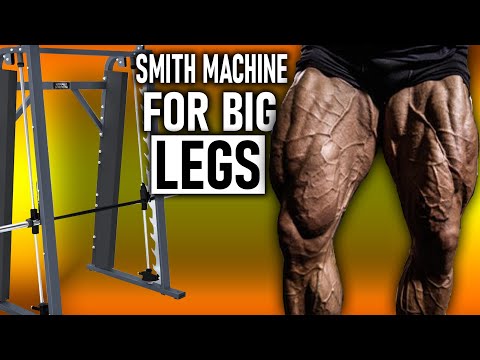
Smith Machine One Leg Squat Overview
The smith machine one leg squat builds your quads. Your quads are the big muscles on the front of your thighs. You rest the bar on your upper back. You stand on one leg and squat down. It also works your glutes, hamstrings, and abs. Your glutes are your butt muscles. This move needs a smith machine. This move is for lifters with some practice. The smith machine bar helps you balance. That lets you push one leg hard. Working one leg fixes weak spots. It also builds strong, even legs. Add the smith machine one leg squat to a leg day. It works well after your main squats.
What Is The Point of the Smith Machine One Leg Squat?
The smith machine one leg squat builds single-leg strength and fixes muscle imbalances. It targets your quads while improving balance and stability.
How To Do The Smith Machine One Leg Squat
- Set the Smith machine bar to about shoulder height and duck under it so it rests across your upper traps, not your neck. The fixed bar path is what makes single-leg work here manageable, since the machine handles side-to-side balance for you.
- Unrack the bar by rotating it out of the hooks, then step one foot forward so it sits under or slightly ahead of the bar. Lift your back foot off the floor, either tucking it behind you or letting the toe rest lightly for a touch of balance.
- Set your working foot flat and drive the mid-foot and heel into the ground. Brace your core hard, keep your chest up, and take a big breath before you descend.
- Lower yourself by bending the standing knee and sitting your hips down and slightly back. Control a two to three second descent and let the knee travel forward naturally over the foot.
- Descend until your working thigh reaches about parallel to the floor, or as deep as you can go with control and no pain. This loads the quads hard while the glutes and hamstrings assist.
- Keep your knee tracking in line with your toes the whole way down. Do not let it cave inward, which is the most common fault under load on one leg.
- Drive through your whole foot and push the floor away to stand back up, exhaling through the hardest part of the rep. Squeeze the glute of your working leg as you reach the top.
- Stop just short of fully locking the knee to keep tension on the quad, then start the next rep. Finish all reps on one leg before switching, and work in the 6 to 12 rep range per leg for three or four sets.
Smith Machine One Leg Squat Form Tips
- Keep your chest up the whole time. Do not fold forward.
- Set your standing foot flat and firm.
- Push through your heel, not your toes.
- Keep your front knee in line with your foot. Do not let it cave in.
- Lower slowly and with control. No dropping down.
- Keep your core tight to protect your back.
- Breathe in as you lower. Breathe out as you rise.
- Lower until your thigh is about parallel.
- Keep a soft bend in your knee at the top.
Common Mistakes to Avoid for the Smith Machine One Leg Squat
- Letting the working knee cave inward as you stand. That inward collapse stresses the knee ligaments and drains power from the quad and glute. Consciously push the knee out to track over your second and third toes on every rep, especially as you fatigue.
- Placing the working foot too far forward. When the foot drifts way out in front of the bar, the machine's fixed path forces you into a lunge-like position that strains the knee and back. Set the foot roughly under the bar so the load stacks cleanly over it.
- Relying on the back foot for support. If your rear leg carries real weight, this stops being a single-leg exercise and your imbalances never get addressed. Keep the back foot light, using it only for a whisper of balance, not for driving the weight.
- Going too heavy too soon. Ego loading on one leg wrecks your knee tracking and tempts you to cut the depth short. Build the movement with a moderate load you can control, then add small jumps as real progressive overload.
- Cutting the depth short with partial reps. Stopping high only trains a sliver of the range and leaves the quads underdeveloped. Descend to about parallel, or as deep as you can control, so the muscle works through its full stretch.
- Rushing the lowering phase. Dropping fast wastes the eccentric, which is prime muscle-building territory, and it throws off your balance. Own a two to three second controlled descent on every rep.
- Losing core bracing and rounding the lower back. When the trunk goes soft, the spine takes strain it should not under a bar. Take a big breath, brace your abs hard, and keep your chest tall from start to finish.
- Leaning the torso too far forward. Excessive forward lean shifts load off the quads and onto the lower back. Keep a proud chest and let the standing knee travel forward so the quads stay in the driver's seat.
- Trusting the machine to catch you and getting sloppy. The fixed bar path helps with balance but will not fix bad knee tracking or depth. Stay strict and treat every rep with the same control you would give a free-weight squat.
- Training one leg noticeably harder than the other. Your dominant side will quietly do more if you let it, and imbalances grow over months. Match reps and effort on both legs, and let the weaker leg set the rep count.
- Bouncing at the bottom to rebound out of the hole. Slamming into the bottom and rebounding yanks the knee and steals the rep. Descend under control, pause briefly if needed, and drive up smoothly through the floor.
Smith Machine One Leg Squat Workout Tips
- The Smith machine's fixed bar path takes side-to-side balance out of the equation, so you can load the quad harder than in a free-standing single-leg squat. Use that stability to push depth and control.
- Set your working foot roughly under the bar, not far in front. Foot placement dials in how much your knee versus hips take the load, so find the spot where the quad drives and the back stays neutral.
- Push the knee out to track over your toes on every rep. This one cue protects the joint and keeps the glute and quad firing through the whole descent.
- Use a controlled two to three second lowering phase. The eccentric on one leg is demanding and hugely productive for building the quads, so never just drop into the hole.
- Start each session with your weaker leg and let it set the rep count. Matching the stronger leg to it keeps your legs balanced over the long run.
- Keep the back foot light. It is there for a touch of balance only, so resist the urge to push through it and cheat the working leg.
- Program this as a main quad builder or an accessory after heavy squats. It hammers each leg individually, which is great for ironing out strength gaps between sides.
- For size, work in the 6 to 12 rep range per leg for three or four sets. For more of a strength focus, drop the reps a little and add controlled load.
- Add weight in small steps over time. Single-leg loading climbs fast in difficulty, so patient progressive overload beats big ego jumps that ruin your knee tracking.
- Brace your core hard before each rep. A tight trunk keeps your spine safe and gives your legs a stable platform to press against.
- Descend to at least parallel when you can do it cleanly. Deeper reps build the quads and glutes through a fuller range, but never trade control for depth.
- Squeeze the working glute at the top of each rep. That finishing contraction reinforces good hip extension and helps balance quad-dominant training.
- Hold a light rail or the frame for balance only if you truly need it. Wean off the assist as you get stronger so the working leg does all the stabilizing.
- Film your sets from the front now and then. Video reveals inward knee collapse and side-to-side leaning far better than how the reps feel in the moment.
- If your knees are cranky, reduce the depth slightly and lower the load. Pain-free full control always beats grinding through a range that hurts.
- Stay patient and consistent. Single-leg strength is slow to build but pays off in balanced legs, a healthier knee, and a bigger bilateral squat down the line.








Questions & Comments
Be the first to ask a question about this exercise.