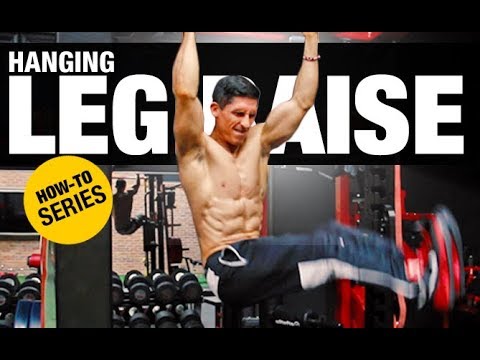
Parallel Bar Twisting Leg Raise Overview
The parallel bar twisting leg raise is a core move. You hang on parallel bars with straight arms. You lift your knees and twist to one side. It works your hip flexors, the muscles at the front of your hips. It also works your abs and your obliques. Your abs are your front belly muscles. Your obliques are the muscles on the sides of your waist. You need parallel bars. This move is hard and builds a strong core. The twist hits your side muscles too. Hanging makes your whole body work to stay still. It is an advanced move. It takes control and strong shoulders. Use the parallel bar twisting leg raise on a core day. It fits well near the end of your workout. It builds strong abs, obliques, and hips.
What Is The Point of the Parallel Bar Twisting Leg Raise?
The parallel bar twisting leg raise builds strong hip flexors while hitting your abs and obliques hard. It's a killer move for core strength and control.
How To Do The Parallel Bar Twisting Leg Raise
- Grip the parallel bars, one hand on each, and lift yourself so your arms are straight and your body hangs down between them. This is the captain's chair style hold, and it demands real shoulder and core strength.
- Press down through the bars to depress your shoulders, pulling them down and away from your ears. Locking the shoulders down protects the joint and gives you a stable base to raise your legs from.
- Brace your core hard and set a slight posterior tilt in your pelvis, tucking your tailbone under a touch. This pre-tension on the abs is what lets the hip flexors and abs lift with control.
- Keep your legs together, either straight for the hardest version or with knees bent to scale it down. Start with your legs hanging directly below you.
- Lift your knees or legs up toward your chest while twisting your hips to one side. The twist is what pulls the obliques into the movement on top of the hip flexors and abs.
- Raise until your thighs are at or above hip height and you feel a strong contraction in the abs and the oblique on the working side. Do not just swing the legs up with momentum.
- Pause for a beat at the top of the twist, squeezing the working side. This is where the obliques do their job, so own the position rather than rushing through it.
- Lower your legs slowly back to the hanging start under full control, taking about 2 to 3 seconds. Resist the urge to let them drop, since the lowering builds a lot of the strength.
- On the next rep, twist to the opposite side, alternating direction each time. Keep your body from swinging and work in the 8 to 12 reps per side range.
Parallel Bar Twisting Leg Raise Form Tips
- Keep your arms straight and strong. Support your weight with control.
- Pull your shoulders down, away from your ears.
- Keep your core tight the whole time.
- Lift your knees high toward your chest.
- Twist smoothly to one side. Do not jerk.
- Lower your legs slowly. Do not drop them fast.
- Keep your body from swinging back and forth.
- Look straight ahead to help you stay steady.
- Breathe out as you lift. Breathe in as you lower.
- Twist the other way on the next rep.
Common Mistakes to Avoid for the Parallel Bar Twisting Leg Raise
- Swinging your body to fling the legs up. Using momentum turns it into a kip and takes the work off your abs and hip flexors. Keep your torso still, brace hard, and lift the legs with muscle, not a swing.
- Shrugging into your shoulders in the hang. Letting your shoulders ride up toward your ears puts the joint in a weak, risky spot. Press down through the bars and keep your shoulders locked down the whole set.
- Only using the hip flexors and skipping the abs. If you just lift with the front of the hips, you miss the ab and oblique work that makes this worth doing. Tuck the pelvis and curl the abs so they drive the raise.
- Neglecting the twist or faking it. A tiny lazy rotation barely touches the obliques. Commit to a real twist of the hips to each side so the obliques actually contract.
- Dropping the legs fast on the way down. Letting them fall wastes the eccentric, which is prime core-building work. Lower slowly over 2 to 3 seconds and stay in control the whole way.
- Cutting the range short at the top. Barely lifting the knees skips the strongest part of the contraction. Raise to at least hip height and squeeze before lowering.
- Arching your low back in the hang. Letting the pelvis dump forward puts the low back under strain and shuts the abs off. Keep a slight tuck and your ribs down so the core stays loaded.
- Holding your breath through each rep. No air makes bracing and control harder on a demanding move like this. Exhale as you lift and twist, then breathe in as you lower.
- Going for straight legs before you are ready. Straight-leg raises are very hard, and forcing them leads to swinging and bad form. Start with bent knees and progress as your strength grows.
- Uneven work between sides. It is easy to twist harder and higher on your stronger side. Match the reps, height, and effort on both directions.
- Rushing the reps to hit a number. Fast, sloppy raises build little and invite swinging. Slow down, control each rep, and treat quality as the goal.
Parallel Bar Twisting Leg Raise Workout Tips
- Lock your shoulders down before every set. Pressing into the bars and depressing the shoulders protects the joint and gives your core a solid base to work from.
- Add the pelvic tuck to bring the abs in. Curling the tailbone under a touch takes the movement past a pure hip flexor raise and makes the abs and obliques the drivers.
- Commit fully to the twist. A real rotation of the hips to each side is what loads the obliques, so do not let it become a token wiggle.
- Use a slow 2 to 3 second lowering phase. The eccentric on a hanging raise builds serious core strength, so resist the drop every rep.
- Scale with your knees. Bent-knee raises are the beginner path, and you straighten the legs as you get stronger to keep progressing.
- Pause and squeeze at the top of each twist. That brief hold is where the oblique contraction is strongest and where the growth lives.
- Program this as an advanced core finisher after your main lifts, when your grip and shoulders can still hold you up cleanly.
- Aim for 8 to 12 controlled reps per side over 3 sets. Chase clean reps, not a high count with swinging.
- Keep your body from swinging by bracing the whole trunk. A still torso is the sign you are using muscle instead of momentum.
- Progress by adding a light ankle weight or dumbbell between your feet once bodyweight straight-leg raises feel easy.
- Build your grip and shoulder endurance alongside this. If your hands give out before your abs, your core is not getting the full stimulus.
- This carries over to any sport with twisting and bracing, since it trains the obliques to control rotation under load.
- Film yourself from the front to check that both sides twist to the same height. Side-to-side differences are easy to miss.
- If your low back arches, reset with a stronger tuck and lighter range. Protecting the spine matters more than height.
- Pair it with anti-rotation work like the half kneeling drills for a complete core. The two train the obliques in opposite ways.
- Be patient with the straight-leg version. It is a genuine strength milestone, so build toward it over weeks rather than forcing it.








Questions & Comments
Be the first to ask a question about this exercise.