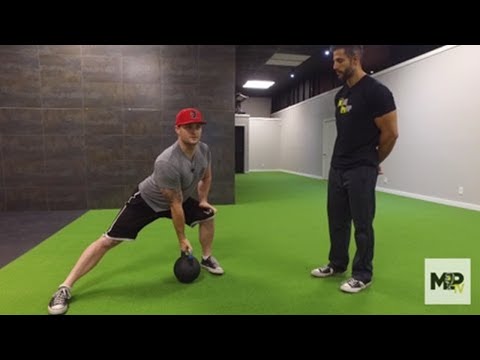
Lateral Lunge to Drop Lunge Overview
The lateral lunge to drop lunge is a two-part leg move. First you lunge out to the side. Then you step back into a cross-behind lunge. It works your quads the most. Those are the big muscles on the front of your thighs. It also works your glutes and adductors. The glutes are your butt muscles. The adductors are your inner thighs. You need no equipment. This move trains your legs in more than one direction. Most moves go straight up and down. This one goes side to side and back. That builds strong, well-rounded legs and hips. It is good for anyone who wants better balance and hip control. It fits well in a warm-up or on a leg day. Move slow and stay in control.
What Is The Point of the Lateral Lunge to Drop Lunge?
The lateral lunge to drop lunge exercise builds leg strength while improving hip mobility and balance. It targets your quads while strengthening your glutes and inner thighs.
How To Do The Lateral Lunge to Drop Lunge
- Stand tall with your feet about hip-width apart and your hands on your hips or clasped at your chest. This combo drill flows a side lunge into a crossover reverse lunge, so start from a balanced, athletic stance.
- Brace your core and set your shoulders down so your torso stays tall through both movements. Take a breath and get set before you step.
- Step your right foot wide out to the side and sit into a lateral lunge, bending your right knee while keeping your left leg straight. Push your hips back and keep your right foot flat as you load the right glute and quad.
- Keep your chest up and your right knee tracking over your foot as you sink into the side lunge. You should feel a stretch through your left inner thigh and a strong load on the right leg.
- Push off your right foot and bring it back toward center, standing up out of the lateral lunge under control. Do not rush the transition into the next phase.
- Immediately step your right foot back and across behind your left leg into a drop lunge, sinking your hips down. This crossover step challenges your hips and balance in a new direction.
- Bend both knees in the drop lunge until you feel your quads and glutes load, keeping your torso tall. Control the depth rather than dropping straight down.
- Push back up out of the drop lunge and return to the standing start, staying balanced through the transition. That completes one full rep of the sequence.
- Repeat the lateral-lunge-to-drop-lunge sequence on the same side for your reps, then switch to the left leg. Aim for 8 to 12 reps per side for 3 to 4 sets, moving smoothly and with control.
Lateral Lunge to Drop Lunge Form Tips
- Step wide for the side lunge, not short.
- Keep your chest up in both parts.
- Push your hips back in the side lunge.
- Keep the straight leg's foot flat.
- Bend both knees in the drop lunge.
- Move smooth from one part to the next.
- Keep your core tight the whole time.
- Breathe in as you lower. Breathe out as you rise.
- Keep your knees tracking over your toes.
Common Mistakes to Avoid for the Lateral Lunge to Drop Lunge
- Letting your knee cave inward in the lateral lunge. A knee that collapses toward the midline stresses the joint and shuts off the glute that should be stabilizing you. Cue the working knee to track over your foot and push it out slightly as you sit in.
- Bending forward at the waist instead of hinging. Folding your chest toward the floor loads your lower back and takes work off your legs. Push your hips back and keep your chest up so the load stays on your glutes and quads.
- Not sitting into the lateral lunge enough. A shallow side lunge skips the range that stretches your inner thigh and loads the working leg. Sit your hips back and down until you feel a real stretch and load on the bent-knee side.
- Losing your balance in the drop lunge crossover. The step behind and across is unfamiliar, so a loose core makes you stumble. Brace your abs, place the crossing foot deliberately, and keep your gaze forward to stay steady.
- Rushing the transition between the two lunges. Racing from the side lunge into the drop lunge turns a controlled drill into a scramble. Move deliberately through each phase so your muscles, not momentum, do the work.
- Keeping your feet pointing the wrong way in the lateral lunge. Letting the straight leg foot turn out or the bent foot roll changes your knee tracking. Keep both feet pointing forward so your knees stay in a safe line.
- Dropping straight down in the drop lunge instead of controlling it. Collapsing into the crossover position jars your knees and hips. Lower under control and bend both knees to absorb the descent.
- Letting your torso twist as you crossover. If your ribcage rotates during the drop lunge, your core leaks tension and your balance suffers. Keep your torso as square as you can while your legs do the crossing.
- Doing uneven reps between sides. People often move better on their dominant side and quietly build an imbalance. Match the reps and quality on both sides and let the weaker side set the standard.
- Holding your breath through the sequence. Locking your air down during a multi-step drill makes you tense and unsteady. Breathe with a rhythm so you stay relaxed and coordinated.
- Going too fast for your current balance. Moving quickly before you own the pattern leads to sloppy, unstable reps. Slow down and groove the sequence until it feels smooth, then add pace.
Lateral Lunge to Drop Lunge Workout Tips
- Treat this as a movement and mobility combo that trains your legs in more than one direction. The side lunge and crossover work your hips and adductors in planes most training ignores.
- Push your hips back in the lateral lunge. Hinging into the side lunge loads your glute and hamstring and keeps your knee from sliding too far over your toes.
- Keep both feet pointing forward. Consistent foot position keeps your knees tracking safely through both the side lunge and the crossover.
- Sit into the lateral lunge to stretch your inner thigh. A deep side lunge builds hip mobility and adductor strength that carry over to athletic cutting and change of direction.
- Move deliberately through each phase. The value is in controlling the two positions smoothly, so a steady pace beats a fast one every time.
- Brace your core throughout the sequence. A tight trunk keeps you balanced and square as you shift between the two lunge patterns.
- Program this as a warm-up, a movement primer, or a light leg-day drill. It prepares your hips for heavier work and builds coordination in multiple directions.
- Aim for 8 to 12 smooth reps per side for 3 to 4 sets. Because it is coordination and mobility work, clean reps beat heavy loading here.
- Fix your gaze on a point ahead during the crossover. A steady visual anchor helps you balance through the unfamiliar drop lunge step.
- Match your reps and effort on both sides, starting with the weaker one. Leading with your weaker side keeps your legs balanced over time.
- Add a light dumbbell or kettlebell once the pattern feels easy. A little load increases the strength challenge while keeping the mobility benefit.
- Keep your chest up and your torso tall. Good posture keeps the load on your legs and protects your lower back through both movements.
- Use this to build hips that move well in every direction. Training the frontal and rotational planes fills gaps that forward-only exercises leave.
- Film yourself from the front occasionally. A caving knee or a twisting torso shows up clearly on video even when it feels fine.
- Warm up your hips and ankles first. Ready joints make the deep side lunge and the crossover smoother and more comfortable.
- Be consistent to improve your coordination and mobility. Multi-directional movement gets smoother with practice, so regular reps make you more athletic and resilient.








Questions & Comments
Be the first to ask a question about this exercise.