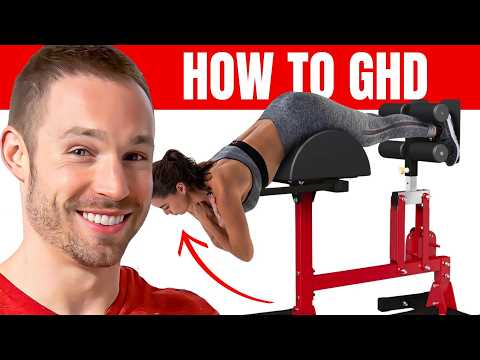
GHD Back Extension Overview
The GHD back extension builds a strong lower back. It works your lower back muscles. Your glutes and hamstrings help too. The glutes are your butt muscles. The hamstrings run down the back of your thighs. You use a GHD machine. It holds your feet and lets your hips hinge over a pad. This move builds a strong, healthy back. A strong back helps with squats and deadlifts. It also helps you stand up straight. This move is for lifters with some training under their belt. It fits well on a leg or back day. The GHD back extension is a great way to build your back chain.
What Is The Point of the GHD Back Extension?
The ghd back extension builds serious lower back strength and power. It targets your entire posterior chain while teaching proper hip hinge movement patterns.
How To Do The GHD Back Extension
- Set up the GHD machine so the pad sits just below your hip bones, with your hips able to hinge freely over the edge. Secure your feet firmly under the foot plates or against the rollers.
- Adjust the machine length for your height so your legs are supported and your hips clear the pad. A good setup lets you hinge cleanly without the pad digging into your stomach.
- Start with your body in a straight line from your head to your heels, arms crossed over your chest or hands lightly behind your head. Brace your core and set your back in a neutral position.
- Begin lowering your torso by hinging at the hips, not by rounding your spine. Keep your back flat as your upper body descends toward the floor.
- Lower until you feel a good stretch in your hamstrings and glutes, usually when your torso is near vertical. Keep your spine neutral the whole way down rather than letting it round.
- Move at a controlled tempo, taking about two to three seconds to lower. Do not drop fast or bounce at the bottom.
- Drive your hips into the pad and squeeze your glutes to raise your torso back up. Lead the movement with your hips and posterior chain, not by yanking with your lower back.
- Rise until your body is back in a straight line from head to heels, and stop there. Do not hyperextend or arch hard past neutral at the top.
- Repeat for 10 to 15 controlled reps. Keep the movement smooth in both directions and stop the set if your lower back starts to take over from your glutes and hamstrings.
GHD Back Extension Form Tips
- Set your hips just over the pad edge. This lets you hinge well.
- Hinge at your hips, not your low back. Your back stays flat.
- Keep your back neutral the whole time. Do not round it.
- Lower slow with control. Do not drop down fast.
- Squeeze your glutes to rise. They drive the move.
- Stop at a straight line at the top. Do not arch past it.
- Keep your belly a little tight. This guards your spine.
- Breathe in going down. Breathe out coming up.
- Keep your neck in line with your back. Do not crane it.
Common Mistakes to Avoid for the GHD Back Extension
- Hyperextending hard at the top. Cranking your back into a big arch past straight compresses the spine and can leave your lower back sore. Rise only until your body is in a straight line and stop there, letting your glutes finish the movement.
- Rounding your spine to reach lower. Letting your back curl to get a deeper stretch loads the spine in a vulnerable, flexed position. Keep your back neutral and hinge from the hips, lowering only as far as you can hold that flat back.
- Bouncing at the bottom of the movement. Using a rebound to reverse direction strains the lower back and cheats the muscles out of real work. Come to a controlled turnaround and lift with your hips and glutes.
- Turning it into a lower-back-only exercise. Yanking your torso up with your spine instead of driving your hips shifts all the load onto the lower back. Lead with your hips and squeeze your glutes so the whole posterior chain shares the work.
- Setting the pad in the wrong spot. A pad too high pins your stomach and limits the hinge, while too low leaves your hips unsupported. Position the pad just below your hip bones so you can hinge cleanly.
- Rushing the reps. Fast, jerky movement relies on momentum and skips the muscular tension. Slow down to a controlled two to three second tempo in each direction.
- Adding heavy load before you own the bodyweight version. Holding a plate too soon, before your hinge and control are solid, magnifies every form fault. Master smooth bodyweight reps first, then add weight held at your chest.
- Not bracing your core. A loose midsection lets your spine flex and extend uncontrolled through the movement. Brace your abs so your spine stays neutral and stable throughout.
- Cutting the range of motion short. Barely hinging and popping straight back up gives the hamstrings and glutes little stretch or work. Lower until you feel a real hamstring stretch while keeping your back flat.
- Cranking your neck up and back. Whipping your head up to lead the lift strains your neck and pulls your spine out of line. Keep your neck neutral and in line with your torso the whole time.
- Ignoring lower-back fatigue. When your lower back starts taking over and aching, the useful part of the set is done. Stop or drop the load rather than grinding out reps your glutes can no longer power.
GHD Back Extension Workout Tips
- Hinge from the hips, not the spine. Keeping your back neutral and moving at the hips loads the glutes and hamstrings while protecting your lower back.
- Stop at a straight line on the way up. Rising only to neutral, rather than hyperextending, keeps the load on your muscles and off your spine.
- Drive with your hips and glutes. Leading the lift with your hips shares the work across your whole posterior chain instead of dumping it on the lower back.
- Control the lowering phase. A two to three second descent with a flat back keeps tension on the hamstrings and builds strength through the stretch.
- Master the bodyweight version first. Own smooth, controlled reps before you add a plate, since load magnifies any form fault.
- Add weight held at your chest to progress. Hugging a plate or holding it against your chest is a simple way to overload the movement once your form is solid.
- Set the pad just below your hip bones. Correct pad height lets you hinge freely without the pad digging into your stomach or leaving your hips unsupported.
- Brace your core throughout. A tight midsection keeps your spine neutral and stable as you move through the range.
- Program it on posterior chain or leg day. It works great as accessory work for the glutes, hamstrings, and lower back, in a rep range around 10 to 15.
- Chase the mind-muscle connection. Think about your glutes and hamstrings pulling your torso up rather than heaving with your back.
- Keep your neck in line with your torso. A neutral neck protects the cervical spine and keeps your whole back aligned.
- Feel the hamstring stretch at the bottom. Lowering into a real stretch, with a flat back, works the muscles through a fuller range.
- Use a controlled tempo both ways. Smooth movement down and up keeps momentum out and the muscles working.
- Do not chase a deeper bottom by rounding. Range is only useful while your back stays neutral, so shorten it before you let your spine curl.
- Build it into your warm up or accessory slot. Light GHD extensions are also a great way to prime the posterior chain before deadlifts and squats.
- Stop when your lower back takes over. Ending the set while your glutes and hamstrings still lead keeps the movement safe and effective.
- Progress patiently. The posterior chain gets strong with steady, controlled work, so add reps and load gradually over the weeks.








Questions & Comments
Be the first to ask a question about this exercise.