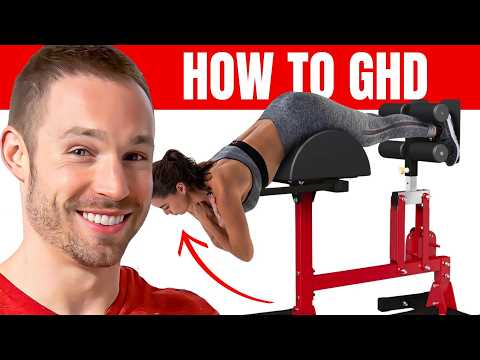
GHD Back Extension Iso Hold Overview
The ghd back extension iso hold builds a strong lower back. It uses a GHD machine, which holds your feet and hips in place. You hold your body still at an angle instead of moving up and down. That still hold is called an iso hold. Your glutes and hamstrings help too. Those are your butt and the back of your thighs. You need a GHD machine. This move builds strength that lasts. Holding still teaches your lower back to stay strong under load. A strong lower back helps your squats and deadlifts. It also protects your spine in daily life. The ghd back extension iso hold is a hard move. Use it on a back or leg day. Start with short holds and no extra weight.
What Is The Point of the GHD Back Extension Iso Hold?
The ghd back extension iso hold builds rock-solid lower back strength and endurance. It teaches you to hold perfect position under fatigue.
How To Do The GHD Back Extension Iso Hold
- Set up on the GHD machine with the pad positioned so your hips sit right at its edge. Secure your feet under the foot plates and adjust the length so you can move freely.
- Start with your torso upright and your body in a straight line from your feet through your head. Cross your hands over your chest or place them behind your head.
- Brace your core hard and set your spine in a neutral, natural position. You will hold this neutral spine the whole time, so lock it in now.
- Slowly hinge at the hips and lower your torso down toward the floor under control. Let the movement come from your hips, not from rounding your back.
- Lower until your torso reaches about 45 degrees below parallel, or wherever you can hold with a flat, neutral spine. Do not round over to gain more depth.
- Stop and hold this bottom position for the prescribed time, usually 20 to 45 seconds. Your lower back, glutes, and hamstrings all fire hard to keep you still.
- Keep breathing steadily throughout the hold rather than holding your breath. Maintain tension in your whole posterior chain and keep the spine neutral.
- Fight the urge to sag or let your back round as fatigue sets in. If your form starts to break, end the hold rather than grind in a bad position.
- When time is up, use your lower back and glutes to raise your torso smoothly back to the upright start. Rest fully and repeat for 3 to 4 holds.
GHD Back Extension Iso Hold Form Tips
- Keep your spine long, not rounded.
- Brace your core the whole hold.
- Squeeze your glutes to help your lower back.
- Hold still. Do not bob up and down.
- Lock your feet firmly under the plates.
- Keep your neck in line with your back.
- Breathe slow and steady. Do not hold your breath.
- Set your hips right at the edge of the pad.
- Rise up slowly when the hold is done.
Common Mistakes to Avoid for the GHD Back Extension Iso Hold
- Rounding your back to reach a lower position. Letting the spine flex to drop deeper puts the load onto your discs instead of your muscles. Keep a neutral spine and only go as low as you can hold it flat.
- Holding your breath the whole time. Bracing without breathing spikes your pressure and cuts the hold short. Keep a steady breathing rhythm while maintaining a firm core brace throughout the isometric.
- Sagging as fatigue sets in. Letting your torso droop below your held angle turns a clean iso into a strained, rounded position. When your form starts to break, end the hold rather than grind on in bad posture.
- Setting the hip pad in the wrong spot. If the pad sits too high on your thighs or up on your belly, the hinge point is off and your back takes strain. Position your hips right at the edge of the pad so you can hinge cleanly.
- Hyperextending at the top or during the hold. Cranking your back into a big arch overstresses the lumbar spine. Hold a neutral, natural spine rather than forcing extra extension.
- Going too deep for your current strength. Dropping below where you can control the position lets your back round and your form collapse. Hold at a height where your spine stays neutral and build depth over time.
- Rushing into a long hold too soon. Attempting a lengthy iso before you have the strength leads to a shaky, rounded position. Start with shorter holds and add time as your posterior chain gets stronger.
- Letting the glutes and hamstrings switch off. Relying only on your lower back to hold you means one muscle group takes all the strain. Squeeze your glutes and engage your hamstrings to share the load across the chain.
- Jerking up out of the hold. Snapping your torso up at the end can strain your back when it is already fatigued. Rise smoothly and under control using your glutes and lower back.
- Not securing your feet properly. Loose feet under the plates make the whole hold unstable and unsafe. Wedge your feet in firmly before you start so you have a solid anchor.
- Craning your neck up or down. Letting your head drop or hyperextend adds neck strain and pulls your spine out of line. Keep your neck neutral and in line with your torso.
GHD Back Extension Iso Hold Workout Tips
- Keep a neutral spine the entire hold. A flat, natural spine loads your muscles instead of your discs, which is what makes the iso safe and effective.
- Brace your core hard before you lower. A strong brace protects your spine and helps you keep the whole trunk rigid during the hold.
- Breathe steadily through the isometric. Keeping a rhythmic breath while braced lets you hold longer without your pressure spiking.
- Share the load across your posterior chain. Squeezing your glutes and engaging your hamstrings takes some strain off your lower back and trains the whole chain to work together.
- Start with shorter holds and build up. Beginning with 15 to 20 seconds and adding time as you strengthen is progressive overload for an isometric.
- Use it to build low-back endurance. The iso hold trains your spinal muscles to resist fatigue, which carries over to holding position under heavy squats and deadlifts.
- Set the hip pad right at your hip crease. Getting the hinge point correct keeps the movement on your hips and off your lower back.
- Hold at a height you can control. Only dropping to where your spine stays neutral keeps the exercise safe and productive.
- Program it as accessory core and back work. It fits well at the end of a session to strengthen the muscles that protect your spine.
- Progress by adding time before adding load. Since it is an isometric, extending the hold is often the smartest first step in overload before you hold a plate.
- Add a light plate once holds get easy. Holding a weight to your chest raises the challenge when bodyweight time no longer taxes you.
- Keep your neck in line with your spine. A neutral head position protects your neck and keeps your whole spine aligned.
- End the hold when form breaks. Stopping a shaky, rounding hold keeps the exercise safe rather than risking your back to squeeze out extra seconds.
- Rise smoothly out of the bottom. A controlled finish protects your fatigued back and completes the movement well.
- Warm up your hips and back first. A few easy hinges prime the posterior chain so the hold feels stable from the start.
- Pair it with dynamic back extensions. Combining the iso hold with moving reps builds both endurance and strength in your lower back and glutes.








Questions & Comments
Be the first to ask a question about this exercise.