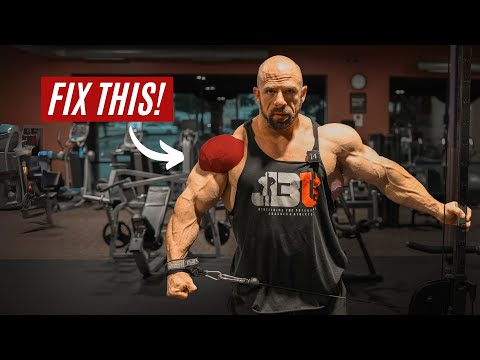
Cable Lateral Raise Overview
The cable lateral raise works your shoulders. It builds the side of your shoulder for width. You stand at a cable machine and lift your arm out to the side. The cable keeps steady tension the whole way. It also works your traps a little. You need a cable machine set to the lowest spot. The cable lateral raise is great for beginners. It gives your shoulders a wide, round look. The cable pulls hard even at the bottom. This makes it better than some free weight raises. Use it on push day or shoulder day. Put it after your big presses.
What Is The Point of the Cable Lateral Raise?
The cable lateral raise builds wide, strong shoulders by targeting the side delts. This exercise gives you that V-shape look and stronger shoulder stability.
How To Do The Cable Lateral Raise
- Set the cable pulley to the lowest position and attach a single handle. Grab the handle with the hand farthest from the machine, so the cable crosses in front of your body.
- Stand side-on to the machine with your feet hip-width apart and a slight bend in your knees. Brace your core and stand tall.
- Let your working arm hang across your body with a slight bend at the elbow. This bend stays fixed the whole rep, so do not straighten or crank it more.
- Take a breath and lead with your elbow as you lift your arm out to the side. Think about raising the elbow, not the hand.
- Raise your arm until it is roughly parallel to the floor, keeping the slight elbow bend. Do not shrug your shoulder up toward your ear.
- Squeeze your side delt at the top and hold for a beat. The cable keeps tension on the muscle even at the bottom, which is its big advantage over dumbbells.
- Lower your arm slowly under control back across your body, taking 2 to 3 seconds. Resist the cable the whole way down.
- Keep your torso still rather than leaning or swinging to fling the handle up. Only your arm should move.
- Finish your reps, then switch sides. Side delts love volume, so aim for 12 to 20 reps for 3 to 4 sets per arm.
Cable Lateral Raise Form Tips
- Keep a slight bend in your elbow the whole time.
- Lift your arm out to the side, not to the front.
- Raise only to shoulder height. Do not go higher.
- Squeeze your shoulder at the top for one second.
- Lower slowly. Keep tension on the cable.
- Stand still and tall. Do not swing your body.
- Lead with your elbow, not your hand.
- Breathe out as you lift. Breathe in as you lower.
- Keep your shoulder down, not shrugged up.
Common Mistakes to Avoid for the Cable Lateral Raise
- Swinging the torso to fling the weight up. Leaning and heaving turns a strict delt raise into a momentum swing and takes tension off the shoulder. Keep your torso still and let only your arm lift the handle.
- Shrugging the shoulder up. When your trap rides up toward your ear, it steals the work from the side delt you are trying to build. Keep your shoulder down and away from your ear as you raise.
- Going too heavy. The side delt is a small muscle, and ego weight forces you to swing and shrug. Drop the load and use strict, controlled reps to actually target the delt.
- Leading with the hand instead of the elbow. Raising the hand first rolls the shoulder and shifts work off the target. Think about lifting the elbow so the side delt drives the motion.
- Lifting way past parallel. Raising the arm too high brings the traps in and can impinge the shoulder. Stop around shoulder height where the side delt does its best work.
- Straightening or over-bending the elbow mid-rep. Changing the elbow angle turns the raise into a different exercise and reduces tension on the delt. Set a slight bend and keep it fixed throughout.
- Letting the arm drop fast. Rushing the lowering phase throws away the eccentric and the constant tension the cable provides. Lower over 2 to 3 seconds and resist all the way down.
- Standing on the wrong side. Using the near cable removes the constant-tension advantage that makes the cable version great. Cross the cable in front by using the far hand.
- Rotating the wrist to pour out a cup. Excessive internal rotation at the top can pinch the shoulder. Keep the wrist mostly neutral and lead with a slightly higher elbow than hand.
- Holding your breath through the set. Locking your air on higher-rep sets spikes blood pressure and makes you lightheaded. Exhale as you raise and breathe steadily throughout.
- Rushing through reps with no control. Fast, bouncy raises use momentum and barely work the delt. Slow down and make the muscle lift the handle every rep.
Cable Lateral Raise Workout Tips
- Use the cable for constant tension. Unlike dumbbells, the cable loads the side delt even at the bottom, which is why many coaches prefer it for shoulder width.
- Cross the cable in front of your body. Grabbing the far handle keeps tension on the muscle through the whole range.
- Lead with your elbow, not your hand. Thinking elbow up keeps the side delt driving the motion instead of the traps.
- Keep a slight, fixed bend in your elbow. A consistent bend targets the delt and takes strain off the elbow joint.
- Stop around shoulder height. Raising to parallel hits the side delt hard, while going higher just brings in the traps.
- Squeeze the delt at the top for a beat. A short pause deepens the contraction and builds the mind-muscle connection with a small muscle that needs it.
- Keep your shoulder down and away from your ear. Fighting the shrug keeps the work on the side delt instead of the traps.
- Use higher reps than for a big lift. The side delt responds well to 12 to 20 controlled reps for 3 to 4 sets.
- Control the lowering for 2 to 3 seconds. A slow eccentric makes the most of the cable tension and grows the delt.
- Program it on push or shoulder day. Wide side delts create the capped-shoulder look that builds an athletic frame.
- Keep your torso still and let the arm work alone. Any swing means the load is too heavy or your ego is driving the set.
- Add reps or small load jumps to progress. Because the delt is small, tiny increases keep your form strict as you get stronger.
- Try a moment pause at the bottom on some sets. Pausing removes any bounce and forces the delt to lift from a dead start.
- Do a few sets even if the weight feels light. Side delts thrive on volume and consistency more than heavy loading.
- Film yourself from the front occasionally. Video shows shrugging and swinging that are hard to feel while you push through reps.
- Superset both arms back to back for a burn. Running one arm then the other with no rest floods the delts and saves time.








Questions & Comments
Be the first to ask a question about this exercise.