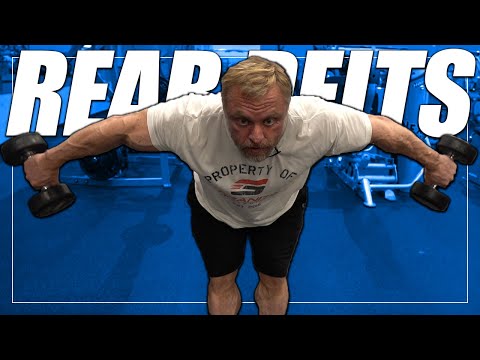
Bent Over Dumbbell Reverse Fly Overview
The bent over dumbbell reverse fly is a back and shoulder move. You bend forward and raise dumbbells out to your sides. It works your middle back. It also works your rear shoulders. You need a pair of dumbbells and some space. It is a simple move for beginners. Use light weight to start. This move builds your upper back and rear shoulders. Those muscles pull your shoulders back. That helps you stand up straighter. It also balances all your pressing work. The bent over dumbbell reverse fly fits on a pull day or shoulder day. Use light weight and slow reps. Feel the squeeze between your shoulder blades.
What Is The Point of the Bent Over Dumbbell Reverse Fly?
The bent over dumbbell reverse fly strengthens your rear delts and middle back muscles. It fixes rounded shoulders and builds better posture.
How To Do The Bent Over Dumbbell Reverse Fly
- Grab a light dumbbell in each hand and stand with your feet about hip width apart. Start light, since this movement targets small muscles and momentum ruins it.
- Hinge at your hips by pushing your butt back and leaning your torso forward to about 45 degrees or a bit lower. Keep a soft bend in your knees.
- Let the dumbbells hang straight down under your shoulders with a slight bend in your elbows. Keep that elbow angle fixed for the whole set.
- Brace your core and keep your back flat with your chest proud. Your neck should stay in line with your spine, eyes down and slightly forward.
- Raise the dumbbells out to your sides in a wide arc by leading with your elbows, not your hands. Think about opening your arms like wings.
- Continue until your arms are roughly parallel to the floor and in line with your shoulders. Do not swing the weights up or use your back to heave them.
- Squeeze your shoulder blades together at the top and hold for a beat. This peak contraction is where the rear delts and mid-back do their work.
- Lower the dumbbells slowly and under control over 2 to 3 seconds back to the start. Keep tension in the muscles rather than letting the weights drop.
- Keep your torso still the whole set and repeat. Because these are small muscles, aim for 12 to 15 reps for 3 sets with light weight.
Bent Over Dumbbell Reverse Fly Form Tips
- Keep your back flat, not rounded.
- Hinge at your hips with soft knees.
- Keep a small, steady bend in your elbows.
- Raise the weights out to your sides.
- Lead with your elbows, not your hands.
- Squeeze your shoulder blades at the top.
- Keep your neck in line with your back.
- Lower the weights slow and controlled.
- Breathe out as you lift. Breathe in as you lower.
Common Mistakes to Avoid for the Bent Over Dumbbell Reverse Fly
- Using too much weight. Heavy dumbbells force you to swing and turn a precise fly into a jerky row. Go light so your rear delts and mid-back can actually do the work with control.
- Swinging the weights up with momentum. Heaving the dumbbells using your back or a body bounce takes tension off the target muscles. Move slowly and lift with a smooth, controlled arc.
- Standing too upright. Failing to hinge far enough changes the angle and shifts work off the rear delts. Bend forward to about 45 degrees or lower so gravity pulls straight down on the muscles.
- Bending the elbows to turn it into a row. Pulling with bent arms recruits the lats and biceps instead of the rear delts. Keep a fixed slight bend in your elbows and lead with them.
- Rounding the lower back. A rounded spine in a hinged position stresses your back under load. Brace your core, keep your chest up, and hold a flat back throughout.
- Shrugging the traps to lift the weights. Letting your shoulders ride up toward your ears takes over the movement. Keep your shoulders down and drive the lift with your rear delts and mid-back.
- Cutting the range short. Not raising the arms to shoulder level shortchanges the contraction. Lift until your arms are about parallel to the floor and squeeze.
- Rushing the negative. Dropping the weights fast wastes the eccentric on muscles that already get little direct work. Lower for 2 to 3 seconds every rep.
- Skipping the shoulder blade squeeze. Not pinching your shoulder blades at the top misses the peak contraction. Squeeze them together and hold for a beat.
- Leading with the hands instead of the elbows. Raising the weights hand-first tends to rotate the shoulders and lose the rear delt. Lead with your elbows so the arc stays wide and clean.
- Craning the neck up. Lifting your head to look forward kinks your spine and strains your neck. Keep your gaze down and slightly ahead so your neck stays neutral.
Bent Over Dumbbell Reverse Fly Workout Tips
- Go light on purpose. The rear delts and mid-back are small, so lighter weight with strict control builds them far better than heavy swinging.
- Lead with your elbows, not your hands. Thinking about raising your elbows keeps the movement a fly and stops it from becoming a row.
- Keep a fixed slight bend in your elbows. Locking the elbow angle keeps the tension on the rear delts and off the biceps.
- Hinge to about 45 degrees or lower. A good forward lean lines up gravity with the muscles so they get properly loaded.
- Squeeze your shoulder blades at the top. A one second pinch at the top maximizes the contraction in your mid-back and rear delts.
- Control the eccentric for 2 to 3 seconds. A slow lower keeps tension on muscles that rarely get direct work, which drives growth.
- Chase the mind-muscle connection. Think about opening your arms like wings and squeezing your upper back, since these muscles are easy to lose in a fly.
- Program this on your back or shoulder day. It is a great accessory to balance out all the pressing that builds the front of the shoulders.
- Use higher reps of 12 to 15. The rear delts respond well to higher reps and constant, controlled tension.
- Try a chest-supported version. Lying face down on an incline bench removes momentum and lets you isolate the rear delts fully.
- Keep your traps down and relaxed. Letting the traps take over is a sign the weight is too heavy or your form has slipped.
- Add small weight jumps over time. Tiny increases you can control keep the movement strict and drive steady progress.
- Balance your pushing with this pulling. Strong rear delts and mid-back improve your posture and shoulder health.
- Pause at the top on some sets. A held contraction with your shoulder blades pinched makes light weight feel much harder.
- Keep your core braced and back flat. A stable, neutral spine protects your back in the hinged position.
- Be patient with the rear delts. They are stubborn and often lag, so consistent focused work over months is what brings them up.








Questions & Comments
Be the first to ask a question about this exercise.