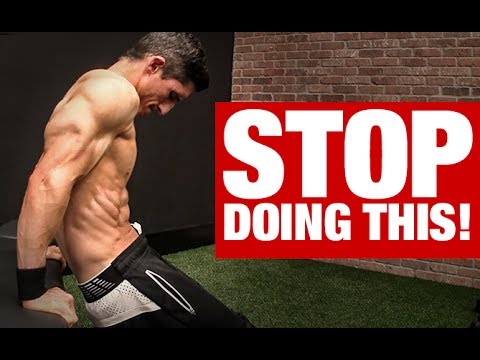
Bench Dip Overview
The bench dip is a bodyweight move for your arms. You lower and lift your body off the edge of a bench. It works your triceps, the muscles on the back of your upper arms. It also works your chest and shoulders. You need a sturdy bench. You use your own body weight for the load. The bench dip is great for beginners. It builds strong triceps with no fancy gear. This helps your arms look and feel stronger. Strong triceps also help your pressing lifts. You can do the bench dip at home or the gym. Any solid bench, chair, or step works. Add it near the end of an arm or push day.
What Is The Point of the Bench Dip?
The bench dip exercise builds strong triceps and adds size to your upper arms. It's a simple bodyweight move that hits your triceps hard while working your chest and shoulders too.
How To Do The Bench Dip
- Sit on the edge of a sturdy bench and grip the edge just outside your hips, fingers pointing forward over the edge. A solid grip gives you a stable base to lower from.
- Slide your butt off the bench so your weight is supported on your hands, with your hips just in front of the bench edge. Keep your torso upright and close to the bench.
- Set your leg position to match your level. Bent knees with feet flat is easier, straight legs out in front add difficulty, and heels on a second bench make it harder still.
- Set your shoulders down and back, away from your ears, to protect the joint. Take a breath and brace your core.
- Lower your body by bending your elbows straight back until they reach about 90 degrees. Keep your back close to the bench so your elbows track behind you rather than flaring wide.
- Descend under control over about two seconds and feel the stretch across your triceps. Do not drop below the point where your shoulders feel comfortable.
- Press back up by driving through your palms and straightening your elbows, squeezing your triceps at the top. Breathe out through the hardest part of the push.
- Stop just short of fully locking out to keep tension on the triceps, then start the next rep. Beginners do well with 3 sets of 8 to 15 controlled reps.
Bench Dip Form Tips
- Keep your back close to the bench the whole time.
- Point your fingers forward over the edge.
- Bend your elbows straight back, not out to the sides.
- Lower slowly and with control. Do not drop fast.
- Stop at about 90 degrees at your elbows.
- Push through your palms to rise.
- Keep your shoulders down and back. Do not shrug them up.
- Breathe in as you lower. Breathe out as you press.
- Keep your chest up and core tight.
- Straighten your arms at the top without locking hard.
Common Mistakes to Avoid for the Bench Dip
- Sinking too low. Dropping until your shoulders are jammed up around your ears puts the joint in a vulnerable, over-stretched position that commonly causes front shoulder pain. Lower only to about 90 degrees at the elbow and keep your shoulders down.
- Flaring the elbows out wide. When your elbows point out to the sides instead of tracking back, the stress moves to your shoulders and off your triceps. Keep your elbows hugging in and traveling straight behind you.
- Letting the body drift away from the bench. Sliding forward puts your shoulders in a rougher position and shifts work off the triceps. Keep your back close to the bench edge so you move straight up and down.
- Rounding the shoulders forward. Letting the shoulders roll up and forward under load pinches the joint and strains the front of the shoulder. Set your shoulders down and back and hold that position through the set.
- Using your legs to cheat the reps. Pushing hard through your feet to help stand up takes the load off the triceps. Use your legs only as much as your level needs and let the triceps do the pressing.
- Bouncing at the bottom. Using a rebound out of the stretched bottom position skips the hardest part and stresses the shoulder. Lower under control and press up from a stable position.
- Going too deep or heavy too soon. Adding weight or extreme range before your shoulders are ready is a common way beginners tweak the joint. Master the bodyweight version at a safe depth first.
- Not fully engaging the triceps at the top. Stopping short and never squeezing means you miss the peak contraction. Straighten your elbows to just short of lockout and squeeze the triceps each rep.
- Holding your breath. Clamping down without breathing raises pressure and weakens you at the sticking point. Breathe out as you press up and in as you lower.
- Rushing the reps. Fast, bouncy dips use momentum and hide poor shoulder positioning. Slow the descent to about two seconds and control the whole range.
- Ignoring shoulder discomfort. Pushing through sharp shoulder pain to finish a set can turn a small issue into a real injury. If your shoulders complain, reduce the depth or switch to a triceps move that feels better.
Bench Dip Workout Tips
- Keep your elbows tracking straight back, not out. This single cue keeps the load on your triceps and off your shoulders, which is the difference between a great triceps builder and a sore joint.
- Match the leg position to your strength. Bent knees make it easier, straight legs add load, and feet on a second bench make it harder, so pick the setting that lets you control every rep.
- Stop at about 90 degrees of elbow bend. Going deeper feels impressive but stresses the shoulder, and 90 degrees already gives your triceps a full, safe range.
- Keep your shoulders down and back the whole set. Packing the shoulders protects the joint and keeps the tension where you want it, on the back of your arms.
- Control the descent over about two seconds. A slow eccentric builds more triceps and keeps you out of the sloppy, shoulder-stressing bounce.
- Squeeze the triceps at the top of each rep. A brief hard contraction just short of lockout teaches you to feel the muscle and adds quality tension.
- Program bench dips as a triceps builder on push day. They pair well after your pressing, when your triceps are warm and ready for focused work.
- Progress by changing leg position before adding weight. Moving from bent to straight legs to elevated feet is a clean way to overload with just a bench.
- Add a plate on your lap once bodyweight is easy. A light weight across your thighs increases the load in a controlled way when the bodyweight version stops challenging you.
- Keep your body close to the bench. Staying near the edge keeps your shoulders in a safer position and your path efficient, so do not let yourself drift forward.
- Do these for higher reps to build triceps endurance and size. The triceps respond well to sets of 10 to 15 here, especially as an accessory to heavier pressing.
- Listen to your shoulders. Bench dips can be tough on the front of the shoulder, so if they nag you, reduce depth or swap in a friendlier move like a pushdown.
- Keep your core braced and hips close. A tight midsection keeps your body moving as one piece so you go straight up and down instead of swinging.
- Breathe out as you press up. Exhaling through the effort helps you brace and finish the lockout strong.
- Pair them with an overhead extension for complete triceps work. Dips hammer the triceps in one position while the overhead move stretches the long head, giving you fuller arms.
- Build toward parallel bar dips over time. Bench dips are a great stepping stone, and as you get stronger you can graduate to full dips for an even bigger challenge.








Questions & Comments
Be the first to ask a question about this exercise.