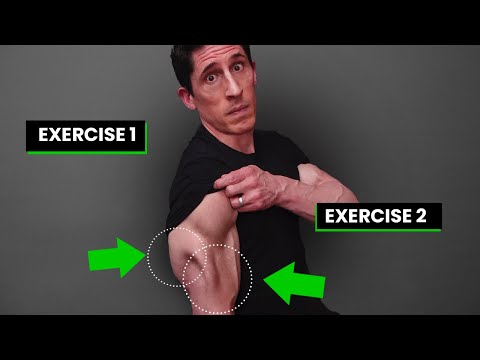
Bench Tricep Extension Overview
The bench tricep extension works your triceps. Those are the muscles on the back of your upper arms. You lie flat on a bench. You hold dumbbells over your chest. Then you bend your elbows to lower the weights. Your forearms help a little. You need dumbbells and a flat bench. The bench tricep extension is best for lifters with some practice. Lying down keeps your body still. That lets your triceps do all the work. Strong triceps help you push and press. They also make your arms look full. Do it on arm day or push day. Use it after your big pressing moves.
What Is The Point of the Bench Tricep Extension?
The bench tricep extension builds bigger, stronger triceps by isolating the back of your arms. It creates serious arm definition and helps with all pushing movements.
How To Do The Bench Tricep Extension
- Sit on the end of a flat bench holding a dumbbell in each hand, then lie back and press the weights up so your arms are straight over your chest. Plant your feet flat on the floor and brace your core against the bench.
- Set your shoulder blades back and down into the pad and keep them there. Turn your palms to face each other in a neutral grip, which is easier on the elbows and wrists.
- Keep your upper arms fixed and pointing at the ceiling. This is the key to the whole lift, since only your forearms should move while your upper arms stay locked in place.
- Take a breath, brace, and slowly lower the dumbbells by bending only at your elbows. Let the weights travel down toward your forehead or just past it for a bigger stretch.
- Aim for a controlled two to three second descent. You should feel a strong stretch along the back of your upper arms as the dumbbells reach the bottom.
- Stop when your forearms are around parallel to the floor or a touch lower, without your elbows flaring wide. Keep them tucked so they point up rather than splaying out to the sides.
- Press the weights back up by extending your elbows and driving through your triceps. Breathe out through the hardest part and squeeze the triceps hard at the top.
- Stop just short of locking out to keep tension on the muscle, then begin the next rep. Most lifters build the triceps well here in the 8 to 12 rep range for 3 to 4 sets.
Bench Tricep Extension Form Tips
- Keep your upper arms still. Point them straight up.
- Bend only at your elbows. That is the only moving joint.
- Keep your elbows tucked in, not flared wide.
- Lower the weights slowly toward your forehead.
- Press up by squeezing your triceps.
- Keep your wrists straight and firm.
- Breathe in as you lower. Breathe out as you press.
- Keep your back flat on the bench.
- Move smooth and controlled the whole set.
Common Mistakes to Avoid for the Bench Tricep Extension
- Letting your elbows flare out wide as you lower. Splayed elbows drag your shoulders and chest into the movement and pull tension off the triceps. Keep your elbows tucked and pointing at the ceiling so the load stays squarely on the back of your arms.
- Moving your upper arms instead of keeping them fixed. If your upper arms drift back toward your head the exercise turns into a pullover and the triceps stop working through a full range. Lock your upper arms in place and let only your forearms hinge at the elbow.
- Using too much weight and cutting the range short. Overloading forces you to shorten the reps and flare your elbows just to move the dumbbells. Drop the weight until you can lower fully to your forehead with control and still press back up cleanly.
- Rushing the lowering phase and dropping the weights. Letting the dumbbells fall toward your face wastes the eccentric and is genuinely dangerous this close to your head. Lower slowly over two to three seconds and stay in full control the entire way.
- Bouncing the weights at the bottom to start the next rep. Using a bounce off the stretch lets momentum spare your triceps and stresses the elbow joint. Come to a controlled stop at the bottom, then extend under your own power.
- Locking out hard and slamming the elbows straight. Snapping into a forceful lockout removes tension from the triceps and jars the elbow. Stop just short of full lockout to keep the muscle loaded and the joint safe.
- Losing your shoulder blade set and shrugging off the bench. When your shoulders creep up toward your ears you lose your stable base and the delts take over. Pin your shoulder blades down and back into the pad and hold that position all set.
- Letting your wrists bend back under the load. Floppy, cocked-back wrists leak force and strain the joint, especially with the weights over your face. Keep your wrists stacked and firm so power flows straight into the dumbbells.
- Lowering the weights straight down to your chest like a press. Bringing them to your chest turns the move into a neutral-grip bench press and loses the triceps stretch. Aim the dumbbells toward your forehead so the elbows bend and the triceps lengthen.
- Holding your breath through the whole set. Bracing is good but locking your breath under weight over your face raises pressure and can make you dizzy. Inhale as you lower and exhale as you press back up.
- Flaring the movement into a swing when you fatigue. Once your form breaks and you start heaving, you load the joints instead of the muscle and risk dropping the weights. End the set when your upper arms can no longer stay fixed rather than grinding out sloppy reps.
Bench Tricep Extension Workout Tips
- Use a neutral, palms-facing grip to save your elbows. The neutral grip keeps the wrists and elbows in a comfortable line and lets you load the triceps hard without the joint pain a barbell version can bring.
- Lower the dumbbells past your forehead for a bigger stretch. Letting the weights travel a little behind your head increases the stretch on the long head of the triceps, which is the biggest and most trainable part.
- Keep your upper arms locked and pointing up as your single most important cue. Fixed upper arms are what keep the triceps under constant tension instead of handing the work to your shoulders and chest.
- Control the eccentric with a two to three second descent. Owning the lowering phase keeps the triceps loaded through the stretch and builds more than dropping the weights toward your face.
- Squeeze the triceps hard at the top of each rep. A deliberate contraction near lockout reinforces the mind-muscle connection and gets more out of the exact muscle you are training.
- Program this after your heavy pressing on push day. The triceps already assist on bench and overhead presses, so direct extension work afterward finishes them when they are pre-fatigued.
- Keep the reps moderate, around 8 to 12. The triceps have a mix of fibers but respond well to that range with controlled tempo and a solid stretch at the bottom.
- Stop just short of lockout to keep tension on the muscle. Grinding into a full hard lockout unloads the triceps and stresses the elbow, so leaving a hair of bend keeps the set productive.
- Progress with small weight jumps once your form holds. Adding a rep or a couple of pounds at a time is progressive overload and beats reaching for dumbbells you have to swing.
- Keep light dumbbells for this until your elbows are used to the stretch. Extensions load the elbow in a lengthened position, so build up gradually to keep the joint healthy.
- Set your shoulder blades down and back into the bench and hold them. A stable base stops your shoulders from creeping into the lift and keeps the work on the triceps.
- Try both dumbbells together or one arm at a time. Single-arm sets let you spot and fix any strength difference between your left and right triceps.
- Film a set from the side occasionally. A quick video shows whether your upper arms are drifting or your elbows are flaring far better than how the reps feel.
- Squeeze the handles firmly throughout. A tight grip stabilizes your wrists so you can focus on driving the extension rather than fighting the weights.
- Pair this with a pushdown or a close-grip press for full triceps coverage. Stacking an overhead stretch move with a locked-out move hits all three heads across a workout.
- Be patient and keep the reps clean. The triceps make up most of your upper arm, so consistent, controlled extensions over weeks are what build genuinely bigger arms.








Questions & Comments
Be the first to ask a question about this exercise.