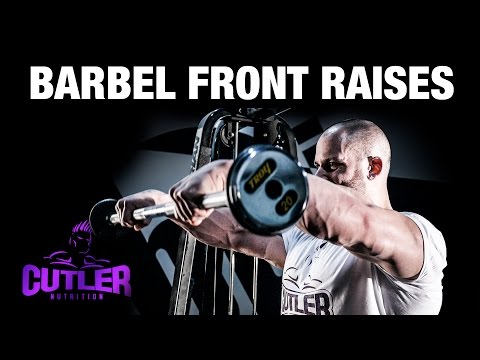
Barbell Front Raise Overview
The barbell front raise is a shoulder move. You hold a barbell and lift it straight out in front. You raise it to shoulder height. It works your shoulders, mainly the front part. Your abs help hold you steady. You need a barbell. The barbell front raise is good for beginners. It builds strong, round front shoulders. This adds shape to your upper body. Do it on your shoulder or push day. Use a light bar and slow control. It is a simple way to grow the front of your shoulders.
What Is The Point of the Barbell Front Raise?
The barbell front raise builds strong, defined front deltoids and improves shoulder stability. This move creates broader shoulders and better posture.
How To Do The Barbell Front Raise
- Load a barbell and stand tall with your feet about hip-width apart. Grip the bar with an overhand grip, hands roughly shoulder-width apart, and let it rest against your thighs.
- Set a slight bend in your knees and pull your shoulders back and down. Brace your core so your torso stays still and cannot swing the weight up.
- Keep your arms straight with just a soft bend at the elbows. This bar hangs at thigh level as your starting position.
- Take a breath and lift the barbell straight out in front of you by raising your arms, leading with the bar rather than your wrists. Keep the movement slow and controlled.
- Raise the bar until it reaches about shoulder height, feeling the tension build in your front deltoids. Do not swing or use momentum to get it up.
- Hold at the top for a second and squeeze your front delts. Keep your wrists straight and your shoulders down, away from your ears.
- Lower the barbell slowly and under control back down to your thighs, resisting the weight over about two seconds. Do not just let it drop.
- Keep tension on your delts at the bottom rather than fully relaxing, then begin the next rep. Keep your torso still throughout.
- Breathe out as you raise and in as you lower. Use a moderate weight and aim for 3 to 4 sets of 10 to 15 controlled reps to build the front delts.
Barbell Front Raise Form Tips
- Keep your arms almost straight. A soft elbow is fine.
- Lift the bar straight out in front of you.
- Raise it to shoulder height, no higher.
- Move slow. Do not swing the bar up.
- Keep your chest up and shoulders back.
- Keep a slight bend in your knees.
- Brace your belly to stay steady.
- Breathe out as you lift. Breathe in as you lower.
- Keep your wrists straight and firm.
Common Mistakes to Avoid for the Barbell Front Raise
- Swinging the bar up with your body. Using momentum from your hips and back takes the load off your front delts and can strain your lower back. Keep your torso still and your core braced, and if you have to swing, the bar is too heavy.
- Lifting the bar too high. Raising the barbell well above shoulder height brings your traps into it and can impinge your shoulder. Stop at about shoulder height where the front delts are doing the work.
- Using too much weight. The front delts are a small muscle, and going heavy forces you to cheat and cut your range. Pick a moderate load you can raise with straight arms and control for all your reps.
- Letting your wrists bend back. A cocked-back wrist leaks force and can strain the joint under the bar. Keep your wrists straight and firm in line with your forearms.
- Shrugging your shoulders up as you lift. When your traps take over, the tension leaves your front delts and your neck can strain. Keep your shoulders pulled down and back throughout the raise.
- Dropping the bar fast on the way down. Letting gravity lower the bar wastes the eccentric, which builds muscle. Resist the weight down slowly over about two seconds every rep.
- Bending your elbows too much. Turning it into a bent-arm raise shortens the lever and changes the exercise. Keep just a soft bend in your elbows and lift with fairly straight arms.
- Leaning back to hoist the bar up. Rocking your torso back uses momentum and puts needless strain on your spine. Stand tall, brace, and let your front delts move the weight.
- Rushing the reps with no squeeze at the top. Speeding through skips the peak contraction where the front delts work hardest. Pause and squeeze at the top of each rep.
- Not bracing your core. A loose core lets your torso sway and shifts strain to your lower back. Brace your midsection to keep your torso stable throughout.
- Ignoring that the front delts already get lots of work. The front delts are heavily hit by all your pressing, so hammering them with too much extra volume can overtrain them. Use front raises as targeted accessory work, not a main focus.
Barbell Front Raise Workout Tips
- The barbell front raise isolates the front deltoids, and control is what makes it work. Keep the movement strict and let your shoulders, not momentum, lift the bar.
- Use a moderate weight and higher reps. The front delts are small, so controlled reps in the 10 to 15 range build them better than heavy, swung loads.
- Keep your torso still and your core braced. A stable trunk stops you from cheating and keeps the tension on your front delts.
- Stop the bar at about shoulder height. Raising it higher brings in the traps and risks the shoulder, so keep the range where the front delts work.
- Use a controlled two second descent. Resisting the weight down keeps tension on the delts and builds more muscle than dropping it.
- Squeeze your front delts at the top of each rep. That deliberate contraction builds the mind-muscle connection with the target muscle.
- Program front raises as accessory work after your main pressing. Since pressing already hits the front delts, use these to add a bit of focused volume, not a ton.
- Progress by adding reps first, then small weight jumps. Because the front delts are small, tiny increases over time are the way to overload them safely.
- Keep your wrists straight and firm. Neutral wrists transfer force cleanly and protect the joint under the bar.
- Try alternating with dumbbells or a cable for variety. Different tools change the tension curve and keep the front delts challenged.
- Keep your shoulders pulled down and back. Depressed shoulders keep the traps out of it and the tension on the front delts.
- Do not overload the front delts with too much volume. They already work hard on every press, so balance them with plenty of rear and side delt work.
- Add a brief pause at the top for extra intensity. Pausing at shoulder height deepens the contraction without adding weight.
- Warm up your shoulders with a lighter set first. A primer wakes up the delts and grooves the movement before your working sets.
- Keep your reps smooth and controlled both ways. Quality reps build the delts and protect the shoulder better than fast, sloppy ones.
- Balance front raises with rear delt and lateral raise work. Training all three heads of the delt builds round, healthy, well-balanced shoulders.
- Be consistent and patient. Shoulder development comes from steady, progressive work over months, so keep the volume sensible and keep showing up.








Questions & Comments
Be the first to ask a question about this exercise.