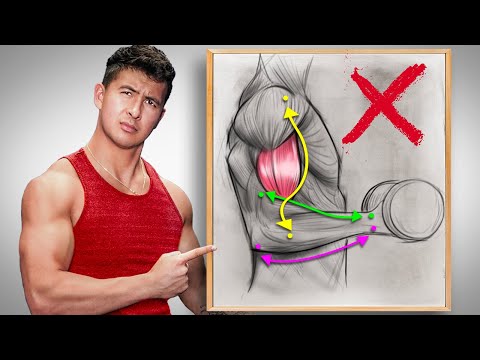
Alternating Standing Dumbbell Curl Overview
The alternating standing dumbbell curl is an arm move. It works your biceps, the muscles on the front of your upper arms. It also works your forearms. You do it standing with a dumbbell in each hand. You curl one arm at a time. You need a pair of dumbbells. This move is great for beginners who want bigger arms. Working one arm at a time helps you focus. It lets you give each arm full effort. It also helps fix a weaker side. You can do the alternating standing dumbbell curl at the gym or at home. It fits well in an arm or upper-body workout.
What Is The Point of the Alternating Standing Dumbbell Curl?
The alternating standing dumbbell curl builds bigger biceps and stronger arms. It lets you focus on one arm at a time for better muscle control and growth.
How To Do The Alternating Standing Dumbbell Curl
- Stand tall with a dumbbell in each hand, arms hanging at your sides and palms facing forward in a full supinated grip. Set your feet about hip-width apart with a slight bend in your knees.
- Pull your shoulders back and down and brace your core. Think about standing tall and proud so your torso stays quiet and your arms do the work.
- Pin your upper arms to your sides. Your elbows should stay glued in place next to your ribs and act as the only hinge for the whole movement.
- Curl one dumbbell up toward your shoulder by bending the elbow, keeping the upper arm still. Lead with a strong bicep contraction rather than swinging the weight up.
- Keep your wrist neutral and firm as you curl so the load stays on the bicep and does not leak into your forearm. Do not let the wrist roll or flop.
- Squeeze the bicep hard at the top of the rep. A deliberate squeeze at peak contraction is where a lot of the growth stimulus comes from, so pause for a beat.
- Lower that dumbbell slowly and under control back to the fully extended starting position. Aim for a 2 to 3 second descent and let the arm straighten all the way.
- As one arm finishes, begin curling the other. Alternate steadily side to side, keeping your torso still and both shoulders quiet throughout.
- Continue alternating for your target reps, breathing out as you curl and in as you lower. Most people build the biceps well here in the 8 to 15 rep range per arm for 3 to 4 sets.
Alternating Standing Dumbbell Curl Form Tips
- Keep your upper arms still and pinned to your sides.
- Curl by bending only your elbow. Do not swing your body.
- Move slowly both up and down. Control beats speed.
- Squeeze your bicep hard at the top.
- Lower the weight all the way down. Let your arm fully straighten.
- Keep your wrists straight and firm. Do not let them bend back.
- Stand tall with your chest up. Do not lean back.
- Breathe out as you curl up. Breathe in as you lower.
- Keep your knees soft and your feet planted.
Common Mistakes to Avoid for the Alternating Standing Dumbbell Curl
- Swinging your torso and using body english to hoist the weight. Leaning back and heaving turns a bicep exercise into a momentum drill and strains your lower back. Stand tall, brace your core, and if you have to swing to lift it, the dumbbell is too heavy.
- Letting your elbows drift forward as you curl. When the elbow travels ahead of your body, your front delt starts helping and the bicep gets a break. Keep your upper arms pinned to your ribs so the elbow is the only hinge.
- Not straightening the arm fully at the bottom. Cutting the descent short keeps constant partial tension but skips the stretched position where the bicep grows well. Let the arm extend all the way each rep unless an elbow issue tells you otherwise.
- Dropping the weight fast on the way down. Letting the dumbbell fall wastes the eccentric, which is one of the most productive parts of the rep for building muscle. Lower under control over 2 to 3 seconds.
- Rolling or bending the wrist to sneak the weight up. A flopping wrist leaks tension into the forearm and can strain the joint. Keep the wrist neutral and firm so the bicep does the lifting.
- Curling both arms at once by accident and losing the point of alternating. The alternating rhythm lets you brace and focus on one clean arm at a time. Keep one arm resting at your side while the other works so you do not start rocking.
- Going too heavy and shortening your range. Ego loading forces you to swing and cut reps in half, which builds less muscle. Pick a weight you can curl through a full range with a still torso.
- Shrugging your shoulders up toward your ears at the top. A shrug pulls the traps into the lift and takes tension off the bicep. Keep your shoulders down and back so the arm works in isolation.
- Rushing to alternate before finishing each rep. Snapping from side to side builds a swing and robs each arm of a full, controlled rep. Complete the squeeze and the lowering on one arm before you start the other.
- Letting the resting arm creep up or stay half-bent. A resting arm that never fully extends means that side is loaded unevenly and you lose your stretch. Let the non-working arm hang straight until it is its turn.
- Holding your breath through the set. A locked breath raises your pressure and can leave you lightheaded. Exhale as you curl and inhale as you lower to keep a steady rhythm.
Alternating Standing Dumbbell Curl Workout Tips
- Keep your elbows pinned to your sides as your golden rule. That fixed elbow is what isolates the bicep and stops your shoulders from taking over the lift.
- Supinate hard, meaning turn your pinky up toward your shoulder at the top. Fully rotating the palm maximizes the bicep contraction, since the muscle both bends the elbow and turns the forearm.
- Squeeze the bicep for a beat at the top of every rep. That deliberate peak contraction and mind-muscle connection is one of the most reliable ways to build the arm.
- Use a slow 2 to 3 second lowering phase. Owning the eccentric keeps tension on the bicep far longer than dropping the weight and adds real growth over time.
- Let the alternating rhythm work for you. Working one arm while the other rests gives you a natural pause to reset your posture and curl each rep with full focus.
- Fix any strength difference between arms by leading with your weaker side. Do the weaker arm first each set and match the stronger one to its reps to even things out over months.
- Program curls after your heavy back and pulling work. Your biceps assist those big lifts, so training arms directly afterward when they are already warm makes sense.
- For size, most people do best in the 8 to 15 rep range for 3 to 4 sets. Drop the reps and add weight if you are chasing raw arm strength.
- Add weight slowly and only when your form stays clean. Small, steady jumps you can actually control drive long-term growth far better than big ego leaps.
- Try a slight pause at the bottom with the arm fully extended. Killing the stretch reflex forces the bicep to start each rep from a dead stop with no momentum.
- Keep your wrists neutral and strong throughout. A firm wrist keeps the load on the bicep and protects the joint from strain under heavier dumbbells.
- Film a set from the side occasionally. A quick video reveals elbow drift and torso swing that are almost impossible to feel while you are grinding out reps.
- Do not train arms to failure every single set. Leaving a rep in the tank on most sets keeps your form crisp and helps the small elbow muscles recover.
- Mix in hammer curls and incline curls across your week. Different angles and grips hit the bicep and the muscles underneath it for fuller, more balanced arm development.
- Stand tall and think about pulling your shoulders back the whole set. Good posture keeps your torso quiet and stops the swing before it starts.
- Be patient and consistent with your arm training. Biceps are a small muscle group, so steady progressive overload over months, not any single brutal session, is what builds real size.








Questions & Comments
Be the first to ask a question about this exercise.