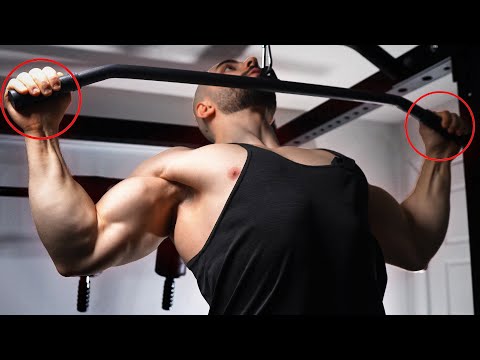
Wide Grip Pull Up Overview
The wide grip pull up builds your lats. Those are the big wing muscles on the sides of your back. It also works your biceps and middle back. You hang from a bar with a wide grip. Your palms face away from you. Then you pull your body up. You need a pull-up bar. The wide grip pulls hard on your lats. It helps build a wide, strong back. This is a harder move for people with some pulling strength. You can do it at a gym or any sturdy bar. Add the wide grip pull up to a pull or back day. Focus on pulling with your back, not just your arms.
What Is The Point of the Wide Grip Pull Up?
Wide grip pull ups build a wide, strong back and create that V-shape look. They target your lats harder than regular pull ups and boost your overall pulling strength.
How To Do The Wide Grip Pull Up
- Set up under a pull-up bar and grab it with your hands wider than shoulder-width, palms facing away from you. A wider grip biases the lats and the width of your back.
- Hang from the bar with your arms fully extended. Before you pull, engage your shoulders by pulling your shoulder blades down away from your ears, so you are not hanging loose in the joints.
- Brace your core and squeeze your glutes so your body stays tight and does not swing. You can cross your ankles behind you to keep your legs still.
- Take a breath and begin the pull by driving your elbows down and back toward your hips. Think about pulling your elbows to your sides rather than just yanking with your hands.
- Lead with your chest and keep it up as you rise. Focus on squeezing your shoulder blades together and down as your body climbs toward the bar.
- Pull until your chin clears the bar, keeping your body from swinging and your core tight. Avoid kipping or jerking to cheat the rep.
- Squeeze your lats hard at the top when your chin is over the bar. Feel the contraction across the width of your upper back.
- Lower yourself slowly with control, taking two to three seconds until your arms are fully extended again. Keep tension in your lats rather than dropping into a dead hang.
- Reset your shoulders at the bottom, then pull again. Intermediate lifters do well with 3 to 4 sets taken close to a clean failure.
Wide Grip Pull Up Form Tips
- Set your hands wider than your shoulders.
- Start each rep from a full hang with straight arms.
- Pull your shoulders down before you rise.
- Drive your elbows down and back.
- Lead with your chest, not your chin.
- Squeeze your shoulder blades together at the top.
- Lower slow. Do not just drop down.
- Keep your core tight to stop swinging.
- Breathe out as you pull. Breathe in as you lower.
Common Mistakes to Avoid for the Wide Grip Pull Up
- Not going all the way down at the bottom. Stopping short of full arm extension cuts the range and skips the loaded stretch where the lats work hardest. Lower until your arms are straight, but keep your shoulders engaged rather than hanging dead.
- Kipping or swinging to cheat the reps. Using a hip swing to fling yourself up takes the lats out and turns it into a momentum drill. Keep your core and glutes tight so your body stays still and your back does the work.
- Only pulling with your arms. When you yank with your biceps and forget your back, the lats barely fire and your arms burn out first. Drive your elbows down and back and think about your back doing the pulling.
- Going too wide with your grip. An extreme wide grip shortens your range and can stress the shoulders without adding much. Set your hands moderately wider than shoulder width, wide enough to bias the lats but still strong.
- Shrugging your shoulders up as you pull. Letting your shoulders rise toward your ears means the traps take over and the joint gets stressed. Pull your shoulder blades down and back before and during each rep.
- Not clearing the bar with your chin. Stopping halfway up skips the top contraction where the lats squeeze hardest. Pull until your chin is clearly over the bar on every rep.
- Rushing the lowering phase. Dropping fast into a dead hang wastes the eccentric, which builds a huge amount of back strength and size. Control the descent over two to three seconds.
- Craning your neck up to reach the bar. Throwing your head back to clear the bar strains your neck and does not count as a real rep. Keep your neck neutral and let your back pull your chest to the bar.
- Letting your shoulders round forward at the bottom. Hanging with rounded, disengaged shoulders puts the joint in a weak, risky position. Keep your shoulder blades set and your shoulders packed even at full stretch.
- Grinding sloppy partial reps once you tire. Pumping out tiny half reps at the end trains you to stop short. When full reps stop, end the set or switch to assisted reps.
- Holding your breath the whole set. Locking your air down each rep spikes your pressure and gasses you out early. Exhale as you pull up and inhale as you lower.
Wide Grip Pull Up Workout Tips
- Engage your shoulder blades before you pull. Setting your scapula down and back at the bottom protects the shoulders and makes sure your lats, not just your arms, start the movement.
- Drive your elbows down and back toward your hips. This cue is what puts the work on the lats and turns the pull into a real back exercise instead of an arm one.
- Chase the mind-muscle connection with your lats. Picture the wide muscles of your back pulling your elbows to your sides, since it is easy to let the biceps take over.
- Use a controlled eccentric. Lowering yourself slowly over two to three seconds builds serious back strength and size, so never just drop into a dead hang.
- The wide grip biases the lats and builds back width. That makes it a top choice if you want that broad, V-taper look from the front and back.
- Program pull-ups early in your pull or back day when you are fresh. They are demanding, so give them your best energy while your grip and back are strong.
- If you cannot do full reps yet, use a band or an assisted machine. Building strength with assistance beats swinging through sloppy bodyweight reps.
- For size and strength, take your sets close to failure for 3 to 4 rounds. Bodyweight moves need real proximity to failure to keep driving progress.
- Progress by adding weight with a belt or vest once bodyweight reps get easy. Loading the movement is your overload path for continued growth.
- Do not go so wide that your shoulders complain. A moderately wide grip hits the lats hard while keeping you strong and your shoulders healthy.
- Keep your core and glutes braced to stop the swing. A tight body means your back does the work instead of momentum.
- Try adding a one second hold at the top with your chin over the bar. Pausing at peak contraction hammers the lats and builds control.
- Use straps if your grip fails before your back on heavy or high-rep sets. Your grip should not be the reason a strong back set ends early.
- Film a set from the side. The camera shows swinging, partial reps, and whether your chin is truly clearing the bar.
- Vary your grip width over time to hit your back from different angles. Rotating wide, medium, and neutral grips builds a fuller, more balanced back.
- Do not sacrifice range to hit a number. A few full-range pull-ups beat many half reps, so chest to the bar and full extension every time.
- Be patient and consistent. Pull-ups are humbling, but steady practice over months turns them into one of the best back builders you have.








Questions & Comments
Be the first to ask a question about this exercise.