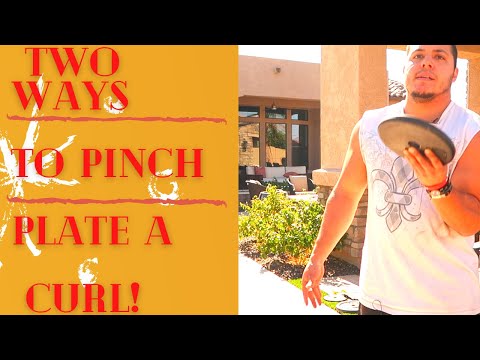
Weight Plate Pinches Overview
Weight plate pinches build a strong grip. You hold two weight plates together with your hand. You pinch them with your thumb and fingers. This works your forearms hard. The forearms are the muscles below your elbow. All you need is a pair of weight plates. Use the smooth sides facing out to make it harder. This move is great for beginners. A strong grip helps with many other lifts. It helps you hold a bar longer on rows and deadlifts. Weight plate pinches also make your hands and wrists tougher. You can do them at the end of a workout. They fit well on a back or arm day.
What Is The Point of the Weight Plate Pinches?
Weight plate pinches build grip strength and forearm power. They help you hold heavier weights in other exercises and improve hand strength for daily activities.
How To Do The Weight Plate Pinches
- Pick two smooth-sided plates and set them together with the smooth faces pointing out, so your thumb and fingers grip flat steel rather than a lip or handle. Start light, around 5 to 10 pounds per hand, because pinch strength lags well behind your regular grip.
- Stand tall with your feet about hip-width apart, brace your core, and let your arm hang at your side. Good posture here keeps the load traveling straight down through your hand and forearm.
- Set your thumb on one smooth face and your four fingers flat on the other. Spread the fingers a touch for a wider, more stable contact patch rather than bunching them together.
- Squeeze the plates hard before you lift, then pick them up off the floor using only that pinch. There is no hook or handle to save you, so the tension in your thumb and fingers is the whole exercise.
- Stand with the plates hanging at arm's length, wrist straight and neutral, and keep your shoulder packed down rather than shrugged up toward your ear.
- Hold the pinch for a set time, usually 20 to 30 seconds, and fight the slow slide as your grip fatigues. When your fingers start to open, that burn is exactly the training effect you want.
- Lower the plates under control before they slip, setting them down softly instead of letting them crash. Dropping them trains nothing and risks your toes.
- Rest at least 60 to 90 seconds so your grip recovers, then repeat for 3 to 4 sets per hand. Train both hands evenly even if one is clearly stronger.
Weight Plate Pinches Form Tips
- Keep your arm straight and still. Let it hang by your side.
- Pinch with your whole hand. Press your thumb hard against your fingers.
- Stand up tall. Do not lean or twist to help.
- Keep your shoulder down and back. Do not shrug it up.
- Breathe slow and steady. Do not hold your breath.
- Squeeze harder if you feel the plates start to slip.
- Keep your wrist straight. Do not let it bend back.
- Look forward, not down. Keep your neck long.
- Keep your belly a little tight to stay steady.
Common Mistakes to Avoid for the Weight Plate Pinches
- Starting far too heavy because your regular grip feels strong. Pinch strength uses the thumb differently and is much weaker than a hook grip, so a plate you can row easily may drop instantly in a pinch. Begin light and add small amounts only when you can hold clean for the full time.
- Letting the plates rest on a lip or edge instead of the flat face. Cheating the contact turns it into a hook and takes the thumb out of the work, which is the whole point of the drill. Keep the smooth faces out and grip flat steel only.
- Bunching your fingers together in the center of the plate. A narrow contact patch gives the plates room to pivot and pop free, and it wastes the leverage your spread hand can provide. Fan the fingers out across the face for a wider, more secure hold.
- Bending the wrist so the plates tilt. A cocked or dropped wrist changes the angle of the pinch and lets gravity peel the plates out of your hand. Keep the wrist stacked straight and neutral so the load pulls cleanly down through your forearm.
- Holding your breath and clenching your whole body for a short hold. A static grip drill still needs steady breathing, and grinding your jaw does nothing for your fingers. Brace lightly, breathe, and pour your focus into the thumb and finger pressure.
- Shrugging the shoulder up as you hold. A hiked shoulder puts the upper trap under needless tension and pulls you out of good posture. Keep the shoulder packed down and back so only your grip is working.
- Racing the clock with sloppy, wobbly plates. Swinging or readjusting mid-hold breaks tension and usually ends in a drop. Set a solid grip once, stand still, and let the isometric tension build steadily.
- Dropping the plates the second they get heavy. Bailing early skips the most valuable part of the set, the slow fight as your grip fails. Hold until you truly cannot, then lower with control rather than releasing over your feet.
- Training only your dominant hand or matching it to the weaker side by accident. Grip imbalances creep in fast and show up in deadlifts and carries. Work both hands for equal time and let the weaker hand set the standard.
- Using plates with a rough or knurled face and calling it a pinch. Texture gives your skin something to bite into and quietly makes the lift easier. Smooth faces are what force real pinch strength, so choose them on purpose.
- Skipping chalk on sweaty hands. Moisture slicks the steel and turns a strength drill into a slip test that ends your set early. A little chalk lets your fingers actually express the strength you have.
Weight Plate Pinches Workout Tips
- Match your time under tension between hands and let the weaker hand set the number. Grip imbalances feed into every pull you do, so evening them out pays off across your whole program.
- Use smooth-sided plates on purpose, since the lack of texture is what builds true pinch strength. If the faces are slick, that is a feature, not a problem to fix.
- Chalk up before heavy holds. Dry hands let your fingers grip the steel instead of fighting sweat, which can add real seconds to your hold.
- Program pinches at the end of a pull or back day when your bigger lifts are done. Grip work fatigues your hands, so doing it first would sabotage your rows and deadlifts.
- Think about crushing your thumb and fingers toward each other rather than just holding on. That active intent recruits more of the muscles and turns a passive hang into real training.
- Progress by time first, then by weight. Add a few seconds to your holds each week, and only bump the plate once you can hold the full duration cleanly.
- Try a wider pinch by adding a third thinner plate in the middle. The extra thickness challenges the thumb differently and carries over to gripping thick objects.
- Keep the shoulder packed and posture tall so the drill stays about your hand. Slouching or shrugging just leaks tension away from where you want it.
- Use pinches as accessory work two or three times a week, since grip recovers quickly and responds well to frequent, brief exposure.
- Lower under control every time instead of dropping. The slow release trains the eccentric side of your grip and protects your toes and the floor.
- Test yourself occasionally with a timed max hold to track progress. Watching your hold time climb is motivating and confirms your program is working.
- Pair pinch holds with open-hand carries and heavy deadlifts for well-rounded grip. Each hits your hands from a slightly different angle for a stronger overall grip.
- Keep the reps and sets simple, around 3 to 4 holds per hand. Grip is durable but still needs sensible volume and rest between sessions.
- Warm your hands with a few light squeezes before your working holds. Cold, stiff fingers grip poorly and are more likely to strain.
- Do not chase failure to the point the plates smash down. Stop the set with control so you protect your fingers and can train grip again soon.
- Be patient with pinch strength, because thumbs are stubborn and improve slowly. Steady weekly work over months is what finally moves your numbers.








Questions & Comments
Be the first to ask a question about this exercise.