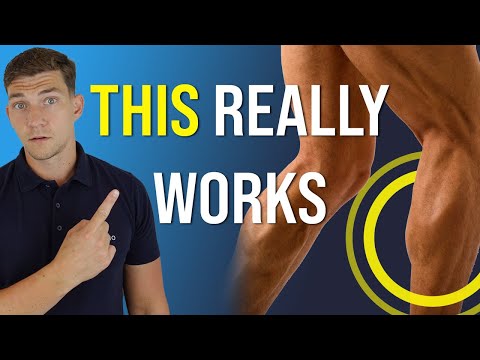
Toes in 45 Degree Calf Raise Overview
The toes in 45 degree calf raise builds your calves. The calves are the big muscles on the back of your lower legs. You stand with your feet together and your heels together. Then you turn your toes out to a 45 degree angle. You rise up on the balls of your feet. You need no equipment. It also works your glutes a bit. This calf raise is simple and safe for beginners. The toe angle changes how your calves work. It helps shape your lower legs. Strong calves help you walk, run, and jump. You can do it at home. Use it at the end of a workout or on leg day.
What Is The Point of the Toes in 45 Degree Calf Raise?
Toes in 45 degree calf raise targets your calves from a different angle than regular calf raises. It builds stronger, more defined calf muscles while improving ankle stability.
How To Do The Toes in 45 Degree Calf Raise
- Stand tall with your feet close together and turn your toes inward toward each other at about a 45 degree angle, so you are slightly pigeon-toed. This inward stance biases the load toward the outer part of your calves.
- Keep your knees straight but not locked, and set your core so your body stays upright and steady. Place your hands on your hips or lightly against a wall for balance.
- Distribute your weight evenly across the balls of both feet, keeping your toes turned in throughout. Take a breath and set a tall posture.
- Rise up onto your toes by pushing through the balls of your feet, lifting your heels as high as you can. Keep the inward toe angle fixed so the outer calves stay in charge.
- Drive up smoothly rather than bouncing, and go all the way to the top of your range. You should feel a strong contraction on the outer part of your lower legs.
- Squeeze your calves hard at the top and hold for a full second. This peak squeeze is where a lot of the growth happens, so do not skip it.
- Lower your heels back down slowly under control over about two seconds, feeling a stretch through your calves. Do not let your heels crash to the floor.
- Keep your torso still and your toes turned in the entire time, letting only your ankles move. Reset your balance if you drift, then continue.
- Repeat for 15 to 20 controlled reps, since calves respond well to higher reps and a full range. Aim for 3 to 4 sets with a hard squeeze on each one.
Toes in 45 Degree Calf Raise Form Tips
- Keep your heels together the whole time.
- Keep your toes turned out at 45 degrees.
- Rise up as high as you can on the balls of your feet.
- Squeeze your calves hard at the top.
- Hold the top for one second.
- Lower your heels slow and controlled.
- Keep your core tight and stand tall.
- Use a wall or your hips for light balance.
- Breathe out as you rise. Breathe in as you lower.
Common Mistakes to Avoid for the Toes in 45 Degree Calf Raise
- Bouncing at the bottom to fling yourself up. Using the tendon rebound to bounce takes the work off your calf muscles and can strain your Achilles. Lower under control and drive up from a controlled position on every rep.
- Cutting the range of motion short. Doing tiny partial reps means your calves never fully stretch or fully contract, which stunts your results. Go all the way up to a high squeeze and all the way down to a real stretch.
- Losing the inward toe angle as you fatigue. If your toes drift back to straight, you lose the outer-calf emphasis that defines this variation. Keep your feet turned in the whole set so the target region stays loaded.
- Rushing the lowering phase. Letting your heels drop fast throws away the stretch under load, which is prime muscle-building time for the calves. Lower slowly over about two seconds and stay in control.
- Skipping the top squeeze. Zipping up and down without pausing wastes the strongest contraction of the rep. Hold the top for a full second and really crush your calves.
- Bending your knees to bounce the weight up. Turning it into a knee-driven hop takes the calves out of the movement. Keep your knees straight but soft so the work stays in your ankles and lower legs.
- Leaning on the wall or your hands for support. Propping yourself up transfers load off your legs and cheats the exercise. Use the wall only for light balance and keep your weight in your feet.
- Letting your weight roll to the inside or outside of your feet. Rolling your ankles is unstable and can lead to a sprain. Press evenly through the balls of your feet and keep your ankles stacked.
- Doing the reps too fast overall. Racing through calf raises turns a strength move into a mindless bounce with no tension. Slow down and make each rep deliberate from stretch to squeeze.
- Holding your breath through the set. Higher-rep calf work can leave you lightheaded if you never breathe. Exhale as you rise and inhale as you lower to keep a steady rhythm.
- Neglecting calves and training them lazily. Half-hearted calf work is why so many lifters have stubborn lower legs. Treat every set with the same focus you give a main lift and the calves will respond.
Toes in 45 Degree Calf Raise Workout Tips
- Turn your toes inward on purpose to shift more work to the outer heads of your calves. This variation helps build width on the outside of your lower leg that a straight stance can miss.
- Use a full range of motion on every rep. Driving all the way up and sinking into a deep stretch at the bottom is the single biggest factor in growing your calves.
- Pause and squeeze hard at the top for a full second. That peak contraction recruits more muscle and turns an average set into a productive one.
- Control the lowering phase over about two seconds. The loaded stretch on the way down is where a lot of calf growth comes from, so never let your heels drop.
- Train calves in higher rep ranges, often 15 to 25 per set. The calves are built for endurance, so they respond well to more reps and constant tension.
- Add these near the end of a leg or lower body day. As a bodyweight move they make a great high-rep finisher after your heavy work.
- Progress by adding reps, slowing your tempo, or holding a dumbbell. Since it is bodyweight, small overload tricks keep the calves challenged over time.
- Pair the toes-in variation with a toes-out version to hit the whole calf. Training different stances builds a more complete, balanced lower leg.
- Stand on a step or block if you want a deeper stretch. Letting your heels drop below the level of your toes increases the range and the stretch.
- Keep your knees straight so the gastrocnemius does most of the work. A straight knee biases the larger calf muscle that gives your lower leg its shape.
- Squeeze your core and stay tall for balance. A steady torso lets you focus on your calves instead of fighting to stay upright.
- Film a set from behind to check your foot angle. A quick video confirms your toes stay turned in and your ankles are not rolling.
- Do not rush your reps just to hit a number. Slow, deliberate calf raises build far more than fast, bouncy ones.
- Train calves two or three times a week for stubborn lower legs. Frequent, quality volume is often what finally makes calves grow.
- Keep your ankles stacked and press through the balls of your feet. Even foot pressure keeps you stable and safe over high-rep sets.
- Be patient, because calves are famously slow to grow. Consistent, focused work over many months is what finally moves the needle for most people.








Questions & Comments
Be the first to ask a question about this exercise.