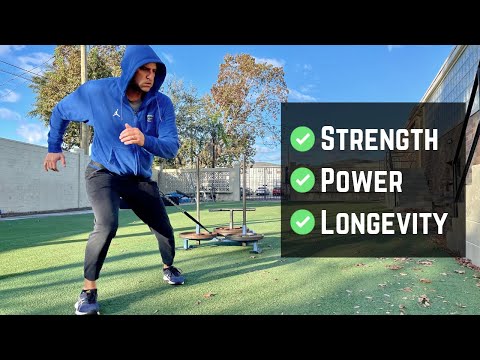
Reverse Fly Sled Drag Overview
The reverse fly sled drag works your shoulders. It hits the back of your shoulders most. These are your rear delts. It also works your middle back and quads. Your quads are the front of your thighs. You use a sled and a cable machine. You pull the handles back as you walk backward. This move is for lifters with some skill. It mixes a rear delt fly with a sled walk. Your legs and shoulders both work. It builds strength and gets your heart going. Use it at the end of a workout. It is a fun way to hit your rear delts. It also builds tough, steady legs.
What Is The Point of the Reverse Fly Sled Drag?
The reverse fly sled drag exercise builds rear delt strength while improving your posture. It combines upper body pulling with lower body power for total conditioning.
How To Do The Reverse Fly Sled Drag
- Attach two cables or straps to a loaded sled and grab a handle in each hand, standing far enough back that the lines are taut. This combines a rear delt fly with a backward sled drag, so you build the shoulders while your legs work to move the load.
- Set your feet about shoulder width in an athletic stance with a slight bend in your knees. Extend your arms forward toward the sled so you feel a stretch across your rear delts at the start.
- Brace your core and set your shoulder blades, keeping your chest up and a soft bend in your elbows. This stable posture protects your shoulders and lets the rear delts do their job.
- Take a step backward to create and keep tension on the sled. You want the sled moving as you perform the fly, so the two actions blend into one continuous effort.
- Pull the handles back and out to the sides in a reverse fly motion, driving your elbows behind you and squeezing your shoulder blades together. Lead with your elbows so the rear delts, not your arms, do the pulling.
- As you pull, keep stepping backward with controlled steps, dragging the sled along the floor. Coordinate the fly and the steps so the movement stays smooth rather than jerky.
- Squeeze your rear delts hard at the peak of each fly, with your arms roughly in line with your torso. Feel the muscles between and behind your shoulders working as you drag.
- Let your arms return forward under control as you reset for the next fly and step, keeping tension on the sled the whole time. Do not let the handles snap back.
- Keep your chest up, core braced, and steps controlled throughout the set. Work for distance or time, around 20 to 40 yards or 30 to 60 seconds per set for 3 to 4 sets, since the sled and rear delts both handle high volume well.
Reverse Fly Sled Drag Form Tips
- Keep your chest up and stand tall.
- Pull the handles back in a wide arc.
- Squeeze your shoulder blades together each pull.
- Keep a soft bend in your elbows.
- Take slow, controlled steps backward.
- Keep your core braced and steady.
- Do not shrug your shoulders up.
- Keep tension on the cables the whole time.
- Breathe in a steady rhythm as you move.
Common Mistakes to Avoid for the Reverse Fly Sled Drag
- Using so much sled weight you cannot fly. Overloading the sled means you just grind backward and never actually perform a clean rear delt fly. Pick a load light enough that you can pull the handles out to the sides with a real squeeze while still dragging the sled.
- Pulling with your arms instead of your elbows. Focusing on your hands brings the biceps and mid-back in and quiets the rear delts. Drive your elbows back and out to the sides so the fly stays on the target muscles.
- Rounding your back as you drag. Letting your torso hunch forward under the pull strains your lower back and kills the rear delt position. Keep your chest up, core braced, and back flat as you step backward.
- Jerking the fly and the steps out of sync. Yanking the handles and stumbling backward turns a smooth movement into a mess and takes tension off the rear delts. Coordinate the fly and your steps so the two blend into one controlled effort.
- Losing tension on the sled between reps. If you let the lines go slack, the sled stops and the rear delts lose their load. Keep stepping back enough to maintain steady tension so the muscles stay under constant work.
- Straightening your elbows into a locked position. Fully locking your arms shifts strain to the elbow and takes the rear delts out of the fly. Keep a soft, fixed bend in your elbows through every rep.
- Shrugging your shoulders up toward your ears. Letting your upper traps take over pulls the focus off the rear delts and tightens your neck. Keep your shoulders down and think about pulling wide, not up.
- Taking huge, uncontrolled steps. Big lunging steps make you unstable and break the rhythm of the fly. Take short, controlled steps so you stay balanced and the shoulders keep working.
- Skipping the squeeze at the peak. Blasting through without holding the fly at the back misses the rear delt contraction. Squeeze your shoulder blades together at the top of each fly before your arms return.
- Letting the handles snap forward. Releasing tension fast on the return wastes the eccentric and loses the rear delt load. Control your arms as they come forward and keep the movement deliberate.
- Standing too upright and stiff. A rigid, tall posture stops you from generating leg drive and staying balanced during the drag. Keep a slight knee bend and an athletic stance so your legs help move the sled.
- Ignoring your footing and the space around you. Dragging backward blindly risks tripping or running out of room. Glance behind you first and keep your steps controlled so you can drag safely for the full distance.
Reverse Fly Sled Drag Workout Tips
- Use this to train rear delts and conditioning at once. The sled drag adds a leg and cardio element while the fly hammers your shoulders, making it a great two-in-one movement.
- Keep the sled light enough to fly cleanly. The rear delt fly is the priority, so pick a load that lets you pull the handles out with a real squeeze while still dragging.
- Lead every fly with your elbows. Driving the elbows back and out to the sides keeps the work on the rear delts, so think elbows, not hands.
- Keep steady tension on the sled throughout. Continuous tension means your rear delts stay loaded the whole set, so keep stepping back to avoid slack.
- Coordinate the fly and your steps. Blending the pull and the backward steps into one smooth motion keeps the movement controlled and the muscles working.
- Squeeze your shoulder blades at the peak of each fly. Holding that contraction makes the rear delts, which are hard to feel, actually fire.
- Work for distance or time rather than heavy reps. Aim for around 20 to 40 yards or 30 to 60 seconds per set, since both the sled and the rear delts thrive on volume.
- Keep an athletic stance with soft knees. A slight knee bend lets your legs contribute to the drag and keeps you balanced as you move backward.
- Program this as a finisher or on conditioning days. It works great at the end of a session to torch the rear delts while getting your heart rate up.
- Keep your chest up and core braced. A tall, braced torso protects your lower back and keeps the rear delts in a strong pulling position.
- Take short, controlled steps backward. Small steps keep you stable and let the fly stay smooth rather than turning into a stumble.
- Use a controlled return on each fly. Resisting the handles as your arms come forward keeps the rear delts loaded and adds to the work.
- Glance behind you and clear your path. Dragging backward safely means knowing where you are going, so check for space and obstacles before you start.
- Use this to build rear delt endurance. The high-volume, continuous nature of the sled drag builds work capacity in the shoulders on top of size.
- Progress by adding weight or distance slowly. Once you can drag and fly cleanly for the full set, bump the load or the distance a little to keep progressing.
- Have fun and push the pace. Sled work is a great change from machines, so lean into the conditioning burn and enjoy training your shoulders in a new way.








Questions & Comments
Be the first to ask a question about this exercise.