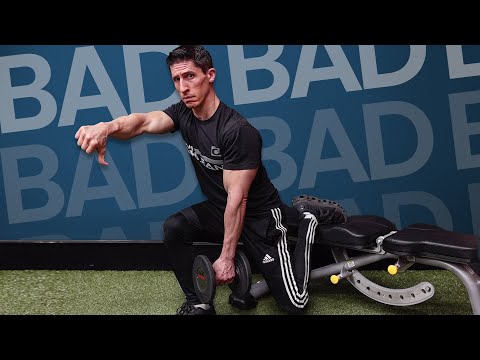
Incline Bench Dumbbell Lunge Overview
The incline bench dumbbell lunge is a leg move. It uses two dumbbells and an incline bench. You rest your back foot on the bench and lower on your front leg. It works your quads, the front of your thighs. It also works your glutes and hamstrings. The dumbbells add weight for more strength. This move builds strong, balanced legs. Working one leg at a time fixes weak sides. It also builds your balance. The dumbbells make it harder than the bodyweight version. It is good for lifters ready for more. It fits well on leg days. Start light and add weight over time. The incline bench dumbbell lunge is a solid leg builder.
What Is The Point of the Incline Bench Dumbbell Lunge?
The incline bench dumbbell lunge builds quad strength while adding instability to challenge your balance and core. It hits your legs harder than regular lunges.
How To Do The Incline Bench Dumbbell Lunge
- Set an incline bench to about 30 to 45 degrees and grab a dumbbell in each hand. Hold them at your sides with a firm grip and stand a couple of feet in front of the bench, facing away.
- Reach one foot back and rest the top of that foot on the bench behind you. This is a rear-foot-elevated split squat, so most of your weight stays on the front leg.
- Hop your front foot forward until you find a stance that lets you drop straight down. Set your posture tall, chest up, with a light brace through your core.
- Lower into the lunge by bending your front knee and dropping your back knee toward the floor. Keep the descent slow and controlled, around two to three seconds.
- Drop until your front thigh is about parallel to the floor and you feel a stretch through the front leg and hip. Keep your front knee tracking over your toes, not caving inward.
- Keep your torso fairly upright, leaning forward only slightly from the hip. The dumbbells hang straight down at your sides throughout.
- Drive up through your front heel to return to the top, squeezing the front glute and quad. Do not push off hard through the back foot.
- Keep the dumbbells steady and your balance solid as you move, avoiding any wobble. Finish all your reps on one leg before switching.
- Aim for moderate reps, often 8 to 12 per leg, and progress the dumbbell weight over time as your strength and balance improve.
Incline Bench Dumbbell Lunge Form Tips
- Keep most of your weight on your front leg.
- Keep your torso tall and upright.
- Let your front knee track over your toes.
- Hold the dumbbells still at your sides.
- Lower slow and stand up with control.
- Drive up through your front heel.
- Keep your core tight the whole time.
- Breathe in as you lower, out as you rise.
- Keep your hips square and facing forward.
Common Mistakes to Avoid for the Incline Bench Dumbbell Lunge
- Putting too much weight on your back foot. The back leg is only for balance, so pushing hard through it shares the load and robs the front leg. Keep the bulk of your weight over your front foot and let it do the work.
- Letting your front knee cave inward. When the knee collapses toward your midline under load, it stresses the joint and shuts off the glute. Drive the knee out to track over your toes on every rep.
- Going too heavy before you own your balance. Grabbing dumbbells that are too heavy makes you wobble and forces you to cut depth. Build stability with lighter weights first, then add load as your balance improves.
- Setting your front foot too close to the bench. A cramped stance shoves your knee far past your toes and beats up the joint. Step forward until you can drop straight down with your shin fairly vertical.
- Rushing the descent. Dropping quickly under load wastes the eccentric and makes you bounce out of the bottom. Lower slowly over two to three seconds and control the bottom position.
- Leaning your torso too far forward. Tipping way over shifts the load off the front leg and strains your lower back, especially with dumbbells in hand. Keep your chest up and lean only slightly from the hip.
- Cutting the range short. Stopping high, before your front thigh reaches parallel, gives your legs much less to work with. Descend until your thigh is about parallel and you feel a real stretch.
- Pushing off the back toe to stand. Using the back foot to help defeats the purpose of elevating it. Drive up through the front heel and keep the back foot passive.
- Letting your hips shift to one side. Drifting your hips toward the working leg unloads the target and twists your pelvis under load. Keep your hips square and level throughout.
- Gripping the dumbbells loosely. A weak grip lets the weights swing and pulls your focus off the legs. Hold them firmly at your sides and keep them steady the whole set.
- Bouncing out of the bottom. Springing up out of the hole uses momentum instead of muscle. Pause briefly at the bottom and drive up with a controlled push through the front heel.
Incline Bench Dumbbell Lunge Workout Tips
- Love the dumbbells for loading one leg at a time. Holding weight at your sides lets you drive the front leg hard while keeping your torso upright and your back safe.
- Keep your weight over the front foot. The back leg is a kickstand for balance, so drive through the front heel and let it own the work.
- Drive your front knee out over your toes. Keeping the knee tracking properly under load protects the joint and keeps the glute firing.
- Use a controlled two to three second descent. The slow lowering builds the quads and glutes and teaches you to control the bottom under load.
- Descend until your front thigh is about parallel. Hitting that depth every rep is what gives your legs a real training stimulus.
- Build balance before you chase weight. Master the movement with lighter dumbbells first, then add load as your stability improves.
- Aim for moderate reps, often 8 to 12 per leg. That range works well for building single-leg strength and size with the dumbbells.
- Do your weaker leg first and match the reps. Most people have a stronger side, so leading with the weak one keeps your legs balanced over time.
- Keep your torso mostly upright. A tall chest keeps the load on the front leg and spares your lower back from a forward lean.
- Use it to expose and fix imbalances. Training one leg at a time reveals side-to-side differences that a barbell squat can hide.
- Progress by adding small increments to the dumbbells. Steady, controlled overload keeps the legs growing without wrecking your balance.
- Fix your gaze on a steady point ahead. A fixed focal point calms the wobble and lets you load the front leg with confidence.
- Grip the dumbbells firmly. A solid grip keeps the weights steady and lets you focus on driving the front leg.
- Keep your hips square and level. Letting them shift toward the working side unloads the target and twists your pelvis.
- Slot it into a lower-body day as a main or accessory lift. It builds serious single-leg strength that carries over to your squats and sport.
- Pair it with a hip-hinge movement for balance. Split squats hammer the quads and glutes, while hinges cover the hamstrings, so together they build the whole leg.








Questions & Comments
Be the first to ask a question about this exercise.